Jump to content
Create New...

G. David Felt

Premium Subscriber
  • Posts

    37,612
  • Joined

  • Last visited

  • Days Won

    434

Everything posted by G. David Felt

  1. I see Brightdrop just started deliveries in Canada. BrightDrop Expands Deliveries Outside U.S. with FedEx Express Canada (gm.com) FedEx Express Canada welcomed its first 50 BrightDrop Zevo 600 electric delivery vehicles at an event in Toronto.
  2. EA in the report has increased construction to ramp up faster than the last few years. As such much of this is expected to come online over the next 18 months.
  3. I would be lying if I did not say that I have thought it might just be a good idea to buy shares in the publicly traded EV charging station companies as the consolidation should help drive the prices of these companies as they get bought up. I do not expect any of the existing charging companies even Electrify America to stay as they are today. Good read on EA: Exploring the Publicly Traded Status of Electrify America - The Enlightened Mindset (lihpao.com) EA has had further investment from VW who is the major shareholder of EA with Siemens being the second largest. Yahoo Finance - Stock Market Live, Quotes, Business & Finance News Current 5 largest Charging Networks in North America are as follows: Electrify America Tesla Superchargers EVgo ChargePoint Blink Fully expect all but the first two to change hands in the future. Interesting is that EA has signed a long term deal with BMW to give first 2 years of BMW EV ownership access to charging stations at EA places that is free charging. EA has released their latest report and it is interesting to notice that they are installing EV charging stations at Truck stations and ports to support EV Class 8 truck use. Microsoft Word - Q1 2023 Electrify America Report to CARB (Public) final
  4. True and many people are Lease now rather than Buy, so that increase in price makes it hard to justify in the short term unlike myself that buys and holds onto an auto for much longer. 2008 Trailblazer SS is now 16 years old 2006 Escalade ESV is now 18 years old 1994 GMC Suburban SLE is now 30 years old Keep in mind these autos all came out the year before their model year.
  5. Some very cool news, those wanting a long life, deep cycle, high cranking amps 12V battery now have a rare earth element free Lithium battery solution. Liacon Unveils “Game Changing” 12V LFP Battery with Superior Performance - Liacon For project as well as new EV applications, an awesome lite weight EV motor solution is now available. EQUIPMAKE SHOWCASES HIGH-POWER-DENSE E-AXLE FOR MAKERS OF PERFORMANCE EVS AT BATTERY SHOW EUROPE - Equipmake You can do single or dual motor per axel applications. Each motor is 220 kW of power or 440 kW or power in a dual motor configuration per axel. That is equal to 295 HP / 590 HP per axel. This would be 1,180 HP in AWD configuration for a 4 motor configuration.
  6. I am sadly not surprised by the amount of misinformation in regard to the cost of EV ownership. Cost misconceptions may be behind waning EV interest (greencarreports.com) Clearly more needs to be done by the auto companies that are selling EVs to debunk this FUD.
  7. Will take pictures next time I am over there as it is by my son's house, but not only is there always a long line for use by Tesla folks due to the huge amount of apartments there, but they have out of order signs on some of the chargers. Tesla is not perfect, but it is amazing how folks think Tesla is to the auto world like Apple to tech. No company is perfect and as such, we are in such early stages of this EV transition that having chargers out of order by everyone is to be expected and I do not see here that the other companies are having any large issues with charging. Clearly this is a regional issue as I have stated due to the support of EVs compared to other areas.
  8. Toyota failed to realize GM's Hydrogen auto test when they had Hydrogen SUVs in NY, DC and LA. People were not comfortable with the fueling and the cost of all the precious metals made a mediocre SUV in mid-size format a $100,000 auto. GM is on record saying that Hydrogen would never work for the entry level to average auto consumer. Toyota failed to understand this even when Honda did a second test in partnership with GM and it showed Hydrogen was not financially viable for consumer auto's. It was a Commercial niche product. Yet Toyota still went down the Hydrogen route and even today after racing a Hydrogen Corolla that just did OK, they have in this plan the belief that they can garner a majority share of the auto market with Hydrogen auto's. They even have a President of their upcoming Hydrogen plant. Toyota is in a bad place due to culture of never saying no and loosing face if something does not work out. I would agree with you that based on Toyota's plan on future stuff that is all Conceptual ideas that they could end up shrinking in size by 2030 if younger people do not ignore the board and old ways of thinking and change fast.
  9. Thank you for posting this, Toyota had a full release of technology you can read about it all here:
  10. Toyota, June 13th 2023 held a technical briefing session that is supposed to support Toyota Motor Company transforming into a mobility company. CTO Hikoki Nakajima was the first to present to the industry and news about how Toyota will be changing to a mobility company through embracing a wide range of technology. The following is what will make Toyota Motor Company, become Toyota Mobility Company. All Solid-State batteries for all EV products coming between 2026 and 2030 Aerodynamic technology based on rocket hypersonic technology. Use of Giga-casting in all Toyota products Use of Small eAxle motors True EV platform that supports multi-pathways for various global market needs from subcompact cars to full size trucks and SUVs. Water electrolyzer systems Next generation voice recognition Manual BEVs On-demand self-modified autos for various driving tastes Standard steer-by-wire Highly Efficient Transportation Operation Support System for fleets e-Palette, self-driving autonomous systems for mass transit e-Palette, freight movement system One-touch wheelchair fixation devices for auto driving JUU (Electronic Wheelchairs Toyota is a multi-faceted company that has always built more than just auto's and with this presentation they have re-enforced that they will continue to be focused on everyone from those in wheelchairs to the most able-bodied human. Toyota seems to have looked at the GM portfolio in that their e-Palette mass transit system resembles the GM Cruise self driving system, but currently the Toyota e-Palette requires a human driver. Cruise e-Palette Toyota was more than happy to show off their e-Axel motors next to current generation electric motors. This was followed by their Giga-casting examples of how things will get simplified and better quality in building autos. Here Toyota also took time to introduce others that have critical roles in the future of Toyota Mobility such as Takero Kato, newly appointed president of the BEV factory. Toyota released a whole slew of videos from various leaders talking about the wide range of areas in the company and the future. Toyota reinforced the Toyota mobility concept three approaches that were presented in April 2023 at an executive and investor briefing. Toyota Mobility believes that the key to the future is electrification, intelligence and diversification. Toyota believes that their Solid-State batteries will allow them to have some EVs that can travel 900 miles on a single charge with this tech going into select EVs by 2027 or 2028. They also reinforced that a full EV lineup will be launched in 2026 with BEV production from the BEV factory in Japan to produce 1.7 million EVs a year out of a global production of 3.5 million EVs they expect to produce and sell in 2030. Toyota also stated that energy-dense batteries will go into EVs in 2026 that will have a 1,000km on a single charge, fully charge in 20 minutes or less and cost 20% less than todays batteries found in the bZ4X. Toyota also stated that they would offer LFP or low-cost lithium-ion phosphate batteries in EVs starting around 2026 or 2027 that would have a 20% increase in range over current bZ4X battery packs and be 40% less expensive. Toyota released the following briefs: Electrified Technologies - Batteries, Fundamental technologies to improve BEV product appeal (global.toyota) Electrified Technologies - Hydrogen, Carbon neutral (CN) fuel (global.toyota) Intelligence Technology (global.toyota) Diversification Technology (global.toyota) This brings up the question that many will ask, is Toyota playing catch up to VW, Audi, Porsche, Ford and GM? Toyota does have a deep bank account to handle dwindling sales as consumers move over to EVs as Toyota now sees what they thought was the future of consumer autos in Hydrogen now go to Commercial use and the future of consumer autos is EVs. What do you think about Toyota Mobility? Toyota Unveils New Technology That Will Change the Future of Cars | Corporate | Global Newsroom | Toyota Motor Corporation Official Global Website Clearly Toyota is playing catch up to everyone else, but can they truly make a difference and catch up to where Tesla, GM and Ford are in regard to battery production, EV productions in the U.S. if they want to capture IRA incentives? The new much younger CEO is making the changes that should see Toyota survive, but at what size and what cost? The boomer leadership of Toyota motor corp clearly missed out on this global change. Sound off on your thoughts about Toyota's plan.
  11. Toyota, June 13th 2023 held a technical briefing session that is supposed to support Toyota Motor Company transforming into a mobility company. CTO Hikoki Nakajima was the first to present to the industry and news about how Toyota will be changing to a mobility company through embracing a wide range of technology. The following is what will make Toyota Motor Company, become Toyota Mobility Company. All Solid-State batteries for all EV products coming between 2026 and 2030 Aerodynamic technology based on rocket hypersonic technology. Use of Giga-casting in all Toyota products Use of Small eAxle motors True EV platform that supports multi-pathways for various global market needs from subcompact cars to full size trucks and SUVs. Water electrolyzer systems Next generation voice recognition Manual BEVs On-demand self-modified autos for various driving tastes Standard steer-by-wire Highly Efficient Transportation Operation Support System for fleets e-Palette, self-driving autonomous systems for mass transit e-Palette, freight movement system One-touch wheelchair fixation devices for auto driving JUU (Electronic Wheelchairs Toyota is a multi-faceted company that has always built more than just auto's and with this presentation they have re-enforced that they will continue to be focused on everyone from those in wheelchairs to the most able-bodied human. Toyota seems to have looked at the GM portfolio in that their e-Palette mass transit system resembles the GM Cruise self driving system, but currently the Toyota e-Palette requires a human driver. Cruise e-Palette Toyota was more than happy to show off their e-Axel motors next to current generation electric motors. This was followed by their Giga-casting examples of how things will get simplified and better quality in building autos. Here Toyota also took time to introduce others that have critical roles in the future of Toyota Mobility such as Takero Kato, newly appointed president of the BEV factory. Toyota released a whole slew of videos from various leaders talking about the wide range of areas in the company and the future. Toyota reinforced the Toyota mobility concept three approaches that were presented in April 2023 at an executive and investor briefing. Toyota Mobility believes that the key to the future is electrification, intelligence and diversification. Toyota believes that their Solid-State batteries will allow them to have some EVs that can travel 900 miles on a single charge with this tech going into select EVs by 2027 or 2028. They also reinforced that a full EV lineup will be launched in 2026 with BEV production from the BEV factory in Japan to produce 1.7 million EVs a year out of a global production of 3.5 million EVs they expect to produce and sell in 2030. Toyota also stated that energy-dense batteries will go into EVs in 2026 that will have a 1,000km on a single charge, fully charge in 20 minutes or less and cost 20% less than todays batteries found in the bZ4X. Toyota also stated that they would offer LFP or low-cost lithium-ion phosphate batteries in EVs starting around 2026 or 2027 that would have a 20% increase in range over current bZ4X battery packs and be 40% less expensive. Toyota released the following briefs: Electrified Technologies - Batteries, Fundamental technologies to improve BEV product appeal (global.toyota) Electrified Technologies - Hydrogen, Carbon neutral (CN) fuel (global.toyota) Intelligence Technology (global.toyota) Diversification Technology (global.toyota) This brings up the question that many will ask, is Toyota playing catch up to VW, Audi, Porsche, Ford and GM? Toyota does have a deep bank account to handle dwindling sales as consumers move over to EVs as Toyota now sees what they thought was the future of consumer autos in Hydrogen now go to Commercial use and the future of consumer autos is EVs. What do you think about Toyota Mobility? Toyota Unveils New Technology That Will Change the Future of Cars | Corporate | Global Newsroom | Toyota Motor Corporation Official Global Website Clearly Toyota is playing catch up to everyone else, but can they truly make a difference and catch up to where Tesla, GM and Ford are in regard to battery production, EV productions in the U.S. if they want to capture IRA incentives? The new much younger CEO is making the changes that should see Toyota survive, but at what size and what cost? The boomer leadership of Toyota motor corp clearly missed out on this global change. Sound off on your thoughts about Toyota's plan. View full article
  12. Road trips will always happen, and people will always need to recharge their EVs, as such, people will go to brand names and just not Tesla. As one who does many road trips, one never knows when one needs to use a bathroom, want a snack or drink and as the convenience of gas stations, converting them to charging stations will give options. Why would I or anyone else that are just blocks away from our local Jackson Shell Mart drive 2.8 miles to a Tesla Charging station if there are chargers at the Jackson Shell Station? Prices will be competitive; I do not see Tesla losing money to get people to only charge at their stations. Tesla has a subscription service for charging, this is no different than all the folks that have Shell credit cards, Mobil Credit Cards, Exxon Credit cards, the end result is convenience and folks will use what is convenient to them.
  13. Have to totally agree that many CEOs that are demanding workers back to the Office are out of touch with reality of productivity and it would seem many have a huge vested interest in Commercial properties. With a 47.6% occupancy rate across the U.S. due to the Pandemic, there is much empty office space. Time to repurpose it into apartments and other uses beside office space. Elon Musk told workers to get off their ‘moral high horse’ — and get back to the office. Others say he’s sorely misguided. (msn.com)
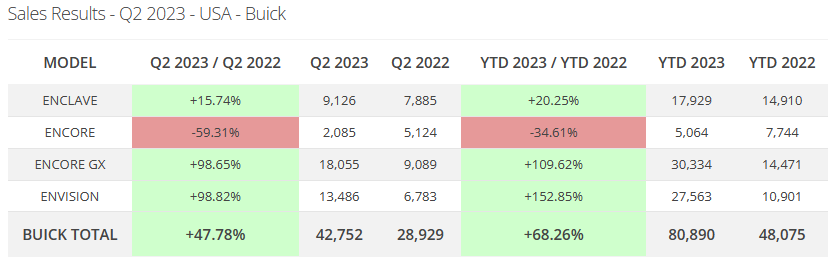
  14. 2024 Buick Envision press release. 2024 Buick Envision First Look: Super Cruise Hands-Free Assistance Coming to Buick Nothing else really new for 2024 model year other than the Super Cruise feature.
  15. 50% charging network I would not expect from Tesla in 10 years. The oil companies and electric supply companies are not going to sit on the sideline and ignore this new energy boom by consumers. As Shell has already done over seas and I have posted about here. Shell Oil Corporation is the one to watch as they have been buying up EV charging station companies in Europe and Asia over the last few years and now here in the U.S. as they plan to add to their gas stations EV charging stations and expand by buying up existing companies. Shell USA, Inc. finalizes acquisition of Volta Inc., scaling up its U.S. public electric vehicle charging network | Shell United States Shell’s new EV smart charging service | Shell United States Shell Invests Heavily Into EV Charging Stations | U.S. News (usnews.com) Shell has jumped to be a major player in just a year with EV charging stations. I expect SHELL to do a much better job at keeping their charging stations online and reliable.
  16. There have been stories posted about the difference between NACS and CCS1. Munro & Associates explain why Tesla’s NACS is superior to CCS [Video] - Drive Tesla (driveteslacanada.ca) Yet the biggest endorsement one can get is the Munro endorsement that shows the NACS is superior to the SAE CCS1/CCS2 standard that was developed. Seems the NACS port has the ability to be used for both home and commercial DC charging reducing the size of the port/charge cord. NACS has also been tested by Munro and surpasses the maximum charging power capability by supporting up to 1 MW (Megawatt) of power. CCS1 is rated at 350 kW (kilowatts) of power. Testing has proven that the CCS specification does not handle more than the rated power safely compared to the NACS. SAE is now saying they will deliver a new CCS specification that would surpass NACS. But like many things when a governing body is slow to respond, too little too late. While the NACS is not the standard that many recognize like the SAE CCS, the public voting with their wallets will end up stating what the standard will become and with NACS already surpassing the CCS, I see no reason why NACS will not become the standard.
  17. All over the news, but the investments as I posted here by GM will keep making them profits as they transition to pure EV by 2035. Analysis: GM could reap billions by building combustion trucks and SUVs through 2035 | Reuters On the positive side, GM and Smasung SDI have moved forward with a new $3 Billion dollar battery plant to be built in New Carlisle, Indiana. GM, SDI will build $3 billion battery manufacturing plant in Indiana | Reuters This will be a 30 GWh battery plant building high-nickel prismatic and cylindrical battery cells for future EV products from GM with room for expansion. Just in the U.S., GM has under construction more battery capacity than Tesla. It will be interesting to see how the market is for EVs in 2025 as GM could replace Tesla as the leading EV builder and seller.
  18. Just saw my first Genesis GV60 American built EV in White.
  19. The last couple of weeks has seen a flurry of announcements in signing on with Tesla corporation around their charging stations and their NACS charging standard. First, let understand that the Tesla NACS was offered to the auto industry that snubbed it and went to the Society of Automotive Engineers (SAE) who developed the CCS1 connector that combined the standard J1772 connector with two high-speed charging pins. Currently the existing EVs other than Tesla and plugin Hybrids use this connector for Level 1, Level 2 and Level 3 (DC fast charging). For those wanting to learn more about this you can read on it here: Combined Charging System - Wikipedia It looks like this: This same SAE governing body has come up with CCS2 for higher speed charging which is still a rather big bulky connection used in Europe. You can read about this at the above link also. With this charging interface of CCS1 in North America, CCS2 in Europe and China having their own proprietary interface you have the following for the existing 3 types that cover 80% of all EVs/Hybrids Globally. While Europe and China have rapidly built out their own charging stations and the only other option has been Tesla where Tesla Ships their EVs with CCS2 in Europe and their proprietary NACS in China along with an adapter for GB/T, North America has been left to the CCS1 standard that has been viewed as Bulky, and has had positive and negative views across Canada and the U.S. as depending on what region one is in, you can either have a good experience or a bad one, especially if the chargers are blocked by petro powered autos known as Icing or they have been damaged and not fixed leaving Tesla to be the only 12,000 strong charging stations across North America. Ford announced on May 25th 2023 that starting with the 2025 model year, all electric vehicles built for the North American market would change to the NACS charging interface. This is a Tesla standard that would allow all Ford Customers instant access to the 12,000 Tesla Charging stations and growing across North America in addition to the 10,000 plus BlueOval Charge Network. Musk has stated that all companies that sign on to support the NACS standard would have the same access and charge rate that Tesla customers have at their stations. Currently according to Tesla, charging stations contributed $9.96 Billion in revenue in 2022 and is expected to generate by 2025 over $25 billion a year annually. Back before SAE ever got involved, Tesla built their own charging stations with their own interface focusing on ease of use and comfort by the user. This NACS allows fast charging while making it easy to use. Tesla has been upgrading their charging stations from version 1 to the current highspeed version 4 using this NACS connector. So how does this connector compare to the CCS specification you might ask? Easy, the black image (NACS) shown below over the grey (CCS) image is the difference in size. For those in Europe that have an Older Tesla where they have the NACS port, they have to use an adapter to connect to the CCS2 plugs across Europe to charge. This puts considerable stress on the small NACS port from Tesla but looks like this. This gives an even better comparison to the electrical charging port standard differences. This understanding of the port differences brings us squarely to the question of this writeup, is the NACS plug the new North American Standard? One might just gather that it is when you have the following announcements to consider about supporting and changing over to the NACS standard. GM with their 2025 Model year EVs will move to the NACS port replacing the CCS1 port. Adapters will be needed for current EVs that have the CCS1 port to allow them to use Tesla stations. Thus giving us EVs for Everyone with NACS ports. Date June 8th 2023 - General Motors Doubles Down on Commitment to a Unified Charging Standard and Expands Charging Access to Tesla Supercharger Network (gm.com) GM's announcement has since been followed over the last four days by the following charging equipment companies that are moving forward with supporting the charging equipment with NACS charging cords replacing CCS1. EVgo Further Extends Fast Charging Network to Tesla Drivers Tritium Announces Support for NACS Connector | Tritium DCFC Limited (tritiumcharging.com) ChargePoint Will Soon Offer NACS Connector Options for Its Charging Solutions | ChargePoint Blink Charging Announces Final Design and Development of New EV DC Fast Charger with Dual-Port CCS and NACS Connectors at EVS36 : Blink Charging FLO Stations to Offer North American Charging Standard (NACS); Supports Broader Use The question to ask is who in the Legacy Auto industry will be next to change over? Hyundai / Kia / Genesis of Korea? VW/Audi/Porsche/BMW/Mercedes of Germany? What about the Japanese who are not only late to the EV market but have yet to launch anything in North America? Is the NACS plug the new standard moving forward ignoring the work done by the SAE group? Sound off on your thoughts on the EV charging standard.
  20. The last couple of weeks has seen a flurry of announcements in signing on with Tesla corporation around their charging stations and their NACS charging standard. First, let understand that the Tesla NACS was offered to the auto industry that snubbed it and went to the Society of Automotive Engineers (SAE) who developed the CCS1 connector that combined the standard J1772 connector with two high-speed charging pins. Currently the existing EVs other than Tesla and plugin Hybrids use this connector for Level 1, Level 2 and Level 3 (DC fast charging). For those wanting to learn more about this you can read on it here: Combined Charging System - Wikipedia It looks like this: This same SAE governing body has come up with CCS2 for higher speed charging which is still a rather big bulky connection used in Europe. You can read about this at the above link also. With this charging interface of CCS1 in North America, CCS2 in Europe and China having their own proprietary interface you have the following for the existing 3 types that cover 80% of all EVs/Hybrids Globally. While Europe and China have rapidly built out their own charging stations and the only other option has been Tesla where Tesla Ships their EVs with CCS2 in Europe and their proprietary NACS in China along with an adapter for GB/T, North America has been left to the CCS1 standard that has been viewed as Bulky, and has had positive and negative views across Canada and the U.S. as depending on what region one is in, you can either have a good experience or a bad one, especially if the chargers are blocked by petro powered autos known as Icing or they have been damaged and not fixed leaving Tesla to be the only 12,000 strong charging stations across North America. Ford announced on May 25th 2023 that starting with the 2025 model year, all electric vehicles built for the North American market would change to the NACS charging interface. This is a Tesla standard that would allow all Ford Customers instant access to the 12,000 Tesla Charging stations and growing across North America in addition to the 10,000 plus BlueOval Charge Network. Musk has stated that all companies that sign on to support the NACS standard would have the same access and charge rate that Tesla customers have at their stations. Currently according to Tesla, charging stations contributed $9.96 Billion in revenue in 2022 and is expected to generate by 2025 over $25 billion a year annually. Back before SAE ever got involved, Tesla built their own charging stations with their own interface focusing on ease of use and comfort by the user. This NACS allows fast charging while making it easy to use. Tesla has been upgrading their charging stations from version 1 to the current highspeed version 4 using this NACS connector. So how does this connector compare to the CCS specification you might ask? Easy, the black image (NACS) shown below over the grey (CCS) image is the difference in size. For those in Europe that have an Older Tesla where they have the NACS port, they have to use an adapter to connect to the CCS2 plugs across Europe to charge. This puts considerable stress on the small NACS port from Tesla but looks like this. This gives an even better comparison to the electrical charging port standard differences. This understanding of the port differences brings us squarely to the question of this writeup, is the NACS plug the new North American Standard? One might just gather that it is when you have the following announcements to consider about supporting and changing over to the NACS standard. GM with their 2025 Model year EVs will move to the NACS port replacing the CCS1 port. Adapters will be needed for current EVs that have the CCS1 port to allow them to use Tesla stations. Thus giving us EVs for Everyone with NACS ports. Date June 8th 2023 - General Motors Doubles Down on Commitment to a Unified Charging Standard and Expands Charging Access to Tesla Supercharger Network (gm.com) GM's announcement has since been followed over the last four days by the following charging equipment companies that are moving forward with supporting the charging equipment with NACS charging cords replacing CCS1. EVgo Further Extends Fast Charging Network to Tesla Drivers Tritium Announces Support for NACS Connector | Tritium DCFC Limited (tritiumcharging.com) ChargePoint Will Soon Offer NACS Connector Options for Its Charging Solutions | ChargePoint Blink Charging Announces Final Design and Development of New EV DC Fast Charger with Dual-Port CCS and NACS Connectors at EVS36 : Blink Charging FLO Stations to Offer North American Charging Standard (NACS); Supports Broader Use The question to ask is who in the Legacy Auto industry will be next to change over? Hyundai / Kia / Genesis of Korea? VW/Audi/Porsche/BMW/Mercedes of Germany? What about the Japanese who are not only late to the EV market but have yet to launch anything in North America? Is the NACS plug the new standard moving forward ignoring the work done by the SAE group? Sound off on your thoughts on the EV charging standard. View full article
  21. GM is investing in the next generation of Full Size Truck/SUV ICE while they work through the transition to EVs. GM Investing $632 Million in Fort Wayne Assembly for Future Truck Production GM Investing $500M+ in Arlington Assembly for Future SUVs
  22. I would say that you then need to celebrate with a big pitcher of your favorite drink in the Hot Tub!!! ? Party at Roberts Place end of Month!!! ?
  23. You continue to INGORE FACTS!!! How many times do I have to point out that Hyundai is moving all EV production to the U.S. to take advantage of the IRA tax breaks! As such they even stated that sales would fall down before going up due to the time to ramp production of U.S. built auto's. Those numbers you post mean NOTHING to the informed person of shifting production. COMMON SENSE, people who want the EV will buy it no matter where it is produced, but for those that want the tax break from the IRA deal, they will buy only U.S. produced EVs. To QUOTE YOU, to get volume. Hyundai did this with crappy product at the start, 10 year warranties that are still here but now with far better quality and they have no problem taking market share from everyone even with losses. Hyundai/Kia/Genesis is a force you are greatly underestimating. I stick with the facts that as EV production ramps up in the U.S. Hyundai, KIA and Genesis will see strong sales and a Pony car will appeal to buyers at both the high end for ultimate performance, a Tesla Plaid Competitor as well as entry and mid level. @oldshurst442 is a perfect buyer for this as he has stated while his wife will drive an SUV, he hates them and only wants a car, so be it from a Korea, European, Japanese or U.S. name plate, he will wait till he find the EV car he likes. It could be this Pony Car or the possible Malibu replacement I also stated above, there is a market for all formats of EVs.
  24. Mary Barra has sat down with Marketplace multiple times already during the Month of June 2023 and to clarify, she has stated to get humanity to all electric all the time is to skip Hybrids. Better for the planet, better for the consumers. GM CEO on reaching EV goal and charging stations - Marketplace The goal here is to be gasoline and diesel free by 2035 with the current plan to be producing 1 million EVs by 2025. This brings us to the whole point of this story on an Ultium BOLT and how Mary Barra is currently driving a BOLT. Here she has stated that she just took delivery of a LYRIQ and how GM is working fast to ramp up battery production and Ultium component production. At 9:40 minutes into the podcast here: GM All Electric, All the Time Podcast Mary states clearly that the current Chevrolet Bolt/Bolt EUV is generation 2 of their electric vehicles and that Ultium is the future with a 40% reduction in the cost of the battery packs alone as to why they will stop building it at the end of the 2023 calendar year. GM CEO goes on to state that people relate and understand what an auto is by the name of the auto and as such, the public will identify with a Chevrolet Equinox EV, BOLT EV and the BOLT EUV. The podcast interviewer for Marketplace asks Mary Barra on this and she answered as follows: Ryssdal: So why are you stopping making it? Barra: Because it’s our second-generation technology. The difference between our second generation and third generation, which is Ultium, is a 40% reduction in battery costs. And we’re leveraging the names of our vehicles that are well understood and known in industry. People, you know, who drive an Equinox today will understand what an Equinox EV, what that delivers to them. But, you know, Bolt is something that has built up a lot of loyalty and equity. So I can’t say more because I don’t discuss future product programs. But, you know, it was primarily a move from second generation to third generation. But that’s [an] important vehicle in our portfolio. Ryssdal: Nudge nudge, wink wink, I guess. So this brings up the case that the brand equity of the Bolt is worth having a generation 3 of the Bolt/Bolt EUV built. If we go with this thinking, then we move to where the Bolt slots in below the Equinox and we gain a ton of options. Electrek did a piece on what they believe a Ultium Bolt would look like and here is there take on that: Ultium will afford the Bolt to have decent charging speeds and other benefits as well. Let’s imagine what we’d get in a basic $25,000 Ultium Bolt: 51kWh battery – GM Ultium batteries tend to come in 50kWh increments Lyriq (102kWh, Hummer/Silverado 204kWh, etc). I imagine the base, $30K Equinox will have a ~51kWh battery and around 215 miles of range. With the Bolt’s smaller size, you might be able to get closer to 240 miles of range out of 51kWh. AWD option – GM showed us a small 30kW motor at the 2020 Battery Day that it said it could use to make any of its vehicles AWD. This wouldn’t necessarily be for performance so much as getting out of snow and mud and maybe adding some efficiency to offset the additional weight and electronics of the second motor. Of course GM could just add 2x150kW Bolt motors and get a 0-60 time in the low 3-second area and sell this for $50k and… just take my money. Charging speed will have to obviously be better than the current Bolt’s 54kW but with such a small battery, it will be hard to get it to 150kWh. Still, though if we’re talking about a $25K car, and I think anything over 100kW is acceptable. Efficiency – The Bolt is already one of the most efficient vehicles on the road but with an added Ultium heat pump, improved electronics, and motors, we could be looking at one of the most efficient EVs ever made. $25,000 without subsidizing? Interestingly, Barra in the interview said that the company could save 40% on the cost of batteries using Ultium vs the Bolts 2nd generation EV system. That means they could likely get to the Bolt’s current price point without having to subsidize anything. Of course Barra also said that GM wouldn’t be able to make a profit on sub $40,000 vehicles until 2030 so the ‘it is coming soon’ piece might be wishful thinking. Electrek’s Take Rejoice, fellow Bolt EV owners! Our favorite car isn’t dead, just going on hiatus. This kind of hidden message would imply that GM is not done with the BOLT name yet for Chevrolet. This also goes hand in hand with the fact that back in December 2022 Mark Russ stated in an Interview with GMAuthority that GM was developing an EV Sedan for the Chinese market, but it could also easily be for any market place globally. GM Working On Potential All-Electric Chevy Malibu Successor (gmauthority.com) Chevrolet shares more details about the FNR-XE Concept - ArenaEV End result is that we should not only see a third generation of the BOLT, but a Malibu replacement could very well happen in the next few years. What are your thoughts on the future of the BOLT and a possible Malibu EV?
  25. Mary Barra has sat down with Marketplace multiple times already during the Month of June 2023 and to clarify, she has stated to get humanity to all electric all the time is to skip Hybrids. Better for the planet, better for the consumers. GM CEO on reaching EV goal and charging stations - Marketplace The goal here is to be gasoline and diesel free by 2035 with the current plan to be producing 1 million EVs by 2025. This brings us to the whole point of this story on an Ultium BOLT and how Mary Barra is currently driving a BOLT. Here she has stated that she just took delivery of a LYRIQ and how GM is working fast to ramp up battery production and Ultium component production. At 9:40 minutes into the podcast here: GM All Electric, All the Time Podcast Mary states clearly that the current Chevrolet Bolt/Bolt EUV is generation 2 of their electric vehicles and that Ultium is the future with a 40% reduction in the cost of the battery packs alone as to why they will stop building it at the end of the 2023 calendar year. GM CEO goes on to state that people relate and understand what an auto is by the name of the auto and as such, the public will identify with a Chevrolet Equinox EV, BOLT EV and the BOLT EUV. The podcast interviewer for Marketplace asks Mary Barra on this and she answered as follows: Ryssdal: So why are you stopping making it? Barra: Because it’s our second-generation technology. The difference between our second generation and third generation, which is Ultium, is a 40% reduction in battery costs. And we’re leveraging the names of our vehicles that are well understood and known in industry. People, you know, who drive an Equinox today will understand what an Equinox EV, what that delivers to them. But, you know, Bolt is something that has built up a lot of loyalty and equity. So I can’t say more because I don’t discuss future product programs. But, you know, it was primarily a move from second generation to third generation. But that’s [an] important vehicle in our portfolio. Ryssdal: Nudge nudge, wink wink, I guess. So this brings up the case that the brand equity of the Bolt is worth having a generation 3 of the Bolt/Bolt EUV built. If we go with this thinking, then we move to where the Bolt slots in below the Equinox and we gain a ton of options. Electrek did a piece on what they believe a Ultium Bolt would look like and here is there take on that: Ultium will afford the Bolt to have decent charging speeds and other benefits as well. Let’s imagine what we’d get in a basic $25,000 Ultium Bolt: 51kWh battery – GM Ultium batteries tend to come in 50kWh increments Lyriq (102kWh, Hummer/Silverado 204kWh, etc). I imagine the base, $30K Equinox will have a ~51kWh battery and around 215 miles of range. With the Bolt’s smaller size, you might be able to get closer to 240 miles of range out of 51kWh. AWD option – GM showed us a small 30kW motor at the 2020 Battery Day that it said it could use to make any of its vehicles AWD. This wouldn’t necessarily be for performance so much as getting out of snow and mud and maybe adding some efficiency to offset the additional weight and electronics of the second motor. Of course GM could just add 2x150kW Bolt motors and get a 0-60 time in the low 3-second area and sell this for $50k and… just take my money. Charging speed will have to obviously be better than the current Bolt’s 54kW but with such a small battery, it will be hard to get it to 150kWh. Still, though if we’re talking about a $25K car, and I think anything over 100kW is acceptable. Efficiency – The Bolt is already one of the most efficient vehicles on the road but with an added Ultium heat pump, improved electronics, and motors, we could be looking at one of the most efficient EVs ever made. $25,000 without subsidizing? Interestingly, Barra in the interview said that the company could save 40% on the cost of batteries using Ultium vs the Bolts 2nd generation EV system. That means they could likely get to the Bolt’s current price point without having to subsidize anything. Of course Barra also said that GM wouldn’t be able to make a profit on sub $40,000 vehicles until 2030 so the ‘it is coming soon’ piece might be wishful thinking. Electrek’s Take Rejoice, fellow Bolt EV owners! Our favorite car isn’t dead, just going on hiatus. This kind of hidden message would imply that GM is not done with the BOLT name yet for Chevrolet. This also goes hand in hand with the fact that back in December 2022 Mark Russ stated in an Interview with GMAuthority that GM was developing an EV Sedan for the Chinese market, but it could also easily be for any market place globally. GM Working On Potential All-Electric Chevy Malibu Successor (gmauthority.com) Chevrolet shares more details about the FNR-XE Concept - ArenaEV End result is that we should not only see a third generation of the BOLT, but a Malibu replacement could very well happen in the next few years. What are your thoughts on the future of the BOLT and a possible Malibu EV? View full article
×
×
  • Create New...

Important Information

We have placed cookies on your device to help make this website better. You can adjust your cookie settings, otherwise we'll assume you're okay to continue.

Hey there, we noticed you're using an ad-blocker. We're a small site that is supported by ads or subscriptions. We rely on these to pay for server costs and vehicle reviews.  Please consider whitelisting us in your ad-blocker, or if you really like what you see, you can pick up one of our subscriptions for just $1.75 a month or $15 a year. It may not seem like a lot, but it goes a long way to help support real, honest content, that isn't generated by an AI bot.

See you out there.

Drew
Editor-in-Chief

Write what you are looking for and press enter or click the search icon to begin your search