



G. David Felt
Premium Subscriber
-
Joined
-
Last visited
Everything posted by G. David Felt
-
 Ford Motor Company rolled out in February 2020 a Nationwide Insurance program for connected vehicles that was designed to reward safe driving. This program was as easy as installing the Ford or Lincoln app on your smartphone and filling out the online form and agreeing to share the driving data from the black boxs with Nationwide. This allowed drivers to save based on their safe driving habits that are reported to the insurance company. No plug-in devices or additional apps required. Insurance was available in 39 states on 2020 modem-equipped models. Per Elena Ford, Chief Customer Experience Officer at Ford Motor Company, “This is the latest way we’re improving the customer experience,” “Insure makes getting insurance easier for connected-vehicle customers to cover one of their biggest investments – their vehicle – while saving money.” This program would also include the Nationwide Accident Forgiveness option also. Per Nationwide, customers buying new autos are wanting to get insurance right away that is simple and easy to sign up for, the new Insure program does that for New Ford and Lincoln autos. We move to December of 2020 and Ford has updated the Ford and Lincoln Insure programs that use State Farm, Allstate, Liberty Mutual and Metromile along with Nationwide to expand coverage to save customers money on premiums based on using the latest Telematics that are auto reported to these insurance companies may be eligible to receive insurance premiums discounts based on their driving habits. Ford has stated that several more insurance companies are under contract and will be announced in the future. For Ford Motor Company customers, how they drive have the potential to earn big discounts on their auto insurance. Alex Purdy, director of Ford Business operations stated the following, “Connected vehicles present new opportunities for us to help customers save money and improve their experience with Ford products,” “Whether customers are purchasing through Ford Insure or working with another carrier, we are committed to giving them the ability to choose the right option for themselves – and to potentially earn big discounts based on how they drive.” We move forward to today, February 15th, 2022 and the Ford / Lincoln Insure program goes live with State Farm where State Farm customers with eligible connected Ford / Lincoln vehicles can now opt into the State Farm UBI Program, "Drive Safe & Save", which will adjust premiums to an individual vehicles mileage and customer driving behavior based on the reporting from the Telematics connected system of the auto. The State Farm with Ford / Lincoln Insurance program will start with Alaska, Idaho, Montana and Oregon as of February 27th, 2022. It will then be rolled out across the nation excluding California, Massachusetts and Rhode Island. Ford believes this will increase safety for all by helping the auto owner improve their driving characteristics as they pay for insurance based on the miles they drive and their habits of how they drive. State Farm says their customers will on average save 10 to 15% on average using this program and could go as high as 40% based on an individual's driving habits. While one can see for those drivers that are very cautious, this can save them money. One does have to wonder about those that opt into this type of program and are a bit more aggressive, could they then see their premiums go higher? This only makes logical sense as Insurance companies could easily use the broadcasted telematics to also ding those that are more aggressive in driving over the speed limit, moving back and forth between lanes, etc. One has to wonder how many people will go for being monitored 24/7 when they drive their auto? How will insurance adjust based on buying a GT Mustang or electric Mach-e? Just as with health insurance and how smokers pay higher premiums than non-smokers, this could tend to create true casts of high insurance premiums for people who are not afraid of speed and lower costs for those that drive slow without taking into account that while there are good and bad drivers in both categories. Many people have seen people who buy powerful expensive auto's get on the freeway, move over the passing lane and then drive 20 mph under the posted speed limit. This to this writer is just as dangerous to other drivers on the road as is the one who buys a performance auto, routinely drives 20 over the posted speed limit and cuts in and out of traffic. Is this the future of all driving? Could we see no matter how fast / powerful your auto is, that the only way to get auto insurance is to eventually agree to monitored driving by the insurance companies? With this telematics, will it require that each person driving logs in so that the driving telematics are clearly associated with each individual as one would have in a large household? One has to wonder how far they will go with connected driving and the options to the buyer about how this data is handled. QUESTION: What are your thoughts on connected driving and insurance? Way of the future or crossing a line on big brother watching you? State Farm® and Ford team up to introduce usage-based insurance to new vehicle owners | Ford Media Center Ford, Lincoln Work with Nationwide to Offer Insurance Program for Connected Vehicles Designed to Reward Safer Driving | Ford Media Center Ford Supports InsureTech Revolution with Insurance Carriers, Ford Insure and Lincoln Motor Company Insure, Using Embedded Telematics to Help Customers Save on Auto Policies | Ford Media Center
 -
@Robert Hall My condolences for your family loss. Never easy to deal with loosing someone even when estranged. I hope things go well for you and your sister as you deal with his life's possessions. Wishing you all the best in this turbulent time.
-
Or for a state where weed is legal, you can use your F150 Lighting for restocking of your weed stores from the weed farm!
-
Latest Fly over of Giga Texas, one big ass building. Yet if Tesla Solar is so superior and great, why is there no solar panels on the plant to help be green in capturing energy? Tesla Electric ATV is another unneeded distraction from building quality autos. Review: Tesla Cyberquad for Kids is so much more than an electric kids toy (electrek.co)
-
For the Tech peeps here, this is too funny. “THE TERMINATOR” graphic tee, pullover hoodie, tank, onesie, and pullover crewneck by Giant Squid Productions. | Cotton Bureau


-
Excited for Buick this year as the summer will have BEV Reveals for the brand. EVs, but this summer we will show you our dreams of a groovy electric future. ⚡️ We’re sure a mastermind who makes his own quasi-futuristic clothes will be impressed. ? https://t.co/e1XzwFEVsJ
-
Very cool rendering of a SS version of the new Chevrolet BEV Truck. We Render A Hypothetical Chevy Silverado EV SS (gmauthority.com)
-
Very cool auction on a 1993 GMC Typhoon with less than 300 original miles. Crazy that someone would buy it and just sit on it, but to each their own as it was his money. Course current bid is at $60,000 and expected to cross 6 figures before the auction closes. 1993 GMC Typhoon With Just 300 Miles Heads To Auction (gmauthority.com) For the Camaro Fans.
-
Not one to watch sports, I missed this but glad to see it on You Tube now.
-
Seems with the upcoming VW ID Buzz electric minivan that VW is working with 3rd party groups to offer life style applications and this one some feel steps up over RIvian for camping. Volkswagen Gets One Up on Rivian Camp Kitchen (cleantechnica.com)
-
Tesla Cam sure makes some interesting video watching of people.
-
Very cool to hear they are getting out. Have seen non here in Washington and non on the dealer lots. Interesting observation as I ran an errand yesterday afternoon. Drove by on Hwy 99 the Hyundai, Honda, Kia, Ford, Lincoln, Toyota, Lexus, Chevrolet, GMC, Tesla and finally the Mercedes Dealerships to where I picked up some stuff the wife had ordered. Interesting observation was a ton of USED auto's all over and so few new autos. Tesla was an empty lot except for a couple of used auto's due to the date on the windshield and the crazy like new prices also. Mercedes had a dozen new commercial vans out front, but nothing new that I could see on the lot. Toyota had a few Hybrid Rav4 at to me crazy prices as posted on the windshields in big numbers. The other dealerships, if they had new auto's they were heavily mixed in with used autos. Usually, I see new auto tractor trailer deliveries, but lately, been seeing used auto deliveries to the dealers. Crazy. Did see an old first-generation Toyota FJ driving up to the pass to ski yesterday. Was in pretty good shape, was a very light blue to funky gray color.
-
I do wonder why Ford brought it here and put license plates on it. ?
-
Seems for car fans that maybe Ford might bring the newest Mondeo Sedan that they just released in China to North America as it was found with plates on in Michigan. New Ford Mondeo Spied In Michigan Again, But It's Wearing Plates Now (msn.com) @oldshurst442 @ccap41 Maybe a car for you yet. This has come and gone many times and Musk has always ignored it, so I have expected this lawsuit. Why is California suing Tesla? (msn.com)
-
Very cool story about doing a modern day Buick GSX. https://www.autoevolution.com/news/modern-buick-gsx-stage-1-rebirth-fancies-camaro-based-return-to-fighting-mopars-179022.html
-
This is an interest take based on Rams executive comments. https://www.yahoo.com/lifestyle/ram-first-electric-truck-could-003008980.html An optional range extender for the BEV pickup.
-
I will say I was impressed that the BOLT has one of the highest resell value after 3 years according to this: Chevrolet Bolt EV Depreciation (caredge.com) Interesting study on value: Electric Vehicle Residual Value Outlook (moodysanalytics.com)

-
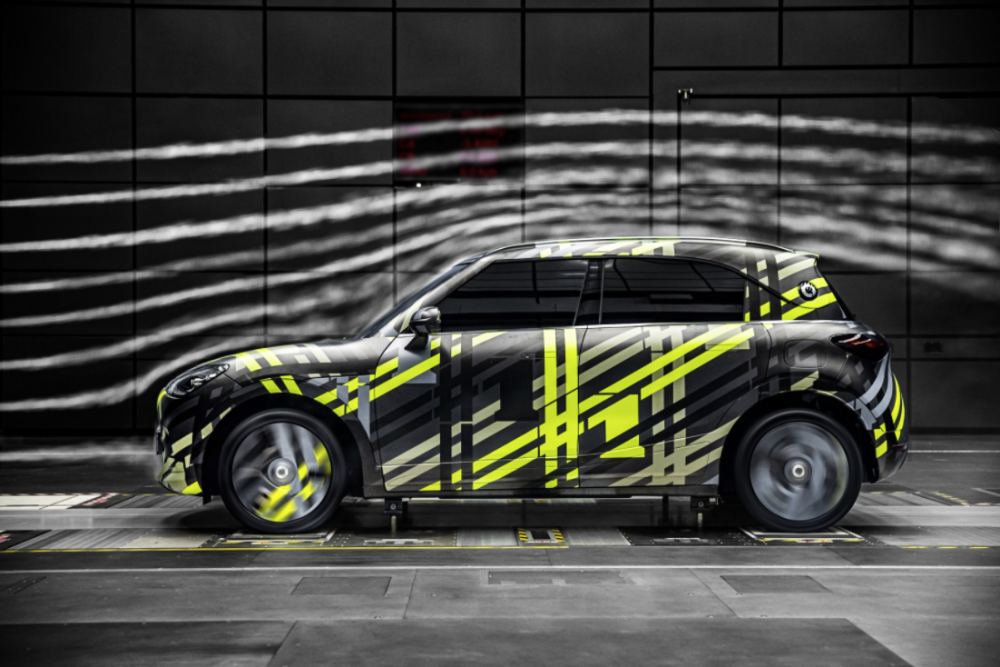
Seems Smart brand now that it has gone all EV is growing up as it readies a first 4 door cuv EV for the global markets. smart officially unveils name for its new generation of all-electric vehicles Seems to be a Mini Competitor. Worst Idea ever is that Mercedes thinks they have hit on the best naming ever as this will be the first in a new series of BEVs using the new portfolio naming system. The Smart BEV you see here is officially the #1 and other models will follow as #2, #3, #4, etc. ?
-
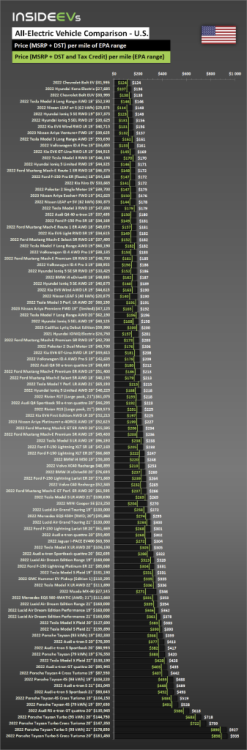
Interesting Read, Seems the Chevrolet Bolt and Bolt EUV lead for the most economical. Electric Cars Compared By Price Per Mile Of EPA Range: Feb 9, 2022 (insideevs.com)
-
Short and sweet, what is not to love about the Superbowl ads. Tell us what you like, as more are released, hopefully we get them all posted here. Seems there is a whole series of Dr. EV-il commercials at the GM Youtube channel. General Motors - YouTube GMC has released a whole series of Declassified videos on new technology. GMC - YouTube While not all auto ads, if you're looking for Superbowl ads, click here: superbowl ads for 2022 - YouTube View full article
-
 Short and sweet, what is not to love about the Superbowl ads. Tell us what you like, as more are released, hopefully we get them all posted here. Seems there is a whole series of Dr. EV-il commercials at the GM Youtube channel. General Motors - YouTube GMC has released a whole series of Declassified videos on new technology. GMC - YouTube While not all auto ads, if you're looking for Superbowl ads, click here: superbowl ads for 2022 - YouTube
 -
While not a Superbowl commercial, but a cool commercial none the less.
-
Very Interesting Spotlight by Stellantis. Seems they are covering everything in the company by brands here. Interesting that while not everyone will have a Superbowl commercial, seems some companies are releasing new product videos.
-
Shirt is different, are we supposed to notice something else?
-
These are very common here in Washington state for people who have property in the mountains, yet still not legal on the public roads here just like your Chevrolet Tank above.


