


Drew Dowdell
Editor-in-Chief
-
Joined
-
Last visited
Everything posted by Drew Dowdell
-
Have you just checked the fluid level at all? It could simply be low. If it's low, you probably need at least a gasket change... but if you're going to do that, do the filter too.
-
OMG, you're always going to be able to find an example of it not working. Air travel has a very high fixed cost that is subsidized by the government! On top of that, it's less energy efficient per passenger. I'm sure you'll return with some obscure statistic about a diesel powered rail line in upstate New Hampshire or something that is somehow less efficient per passenger... but it's not relevant because it isn't indicative of a modern normalized system. If you want to fight against public subsidies, fine, but you can't single out rail while ignoring 41% of the Interstate's yearly budget that DOES NOT COME FROM THE GAS TAX. You can't ignore the massive subsidies given to air travel.
-
It's as if Apple was trying it's hand at making a modern version of Falling Water
-
Lots of great shots..... good shots of Pittsburgh too!
-
Oh yeah... cause I can't think of a better way to deal with claustrophobia than cramming into a two story bus with 1,500 people.
-
A mobile traffic constrictor is what it is.....
-
If this were Price is Right! Reg would be the only partial winner. Aztek - $12,995 Ranger - $9999 Reg gets to pick next.
-
One more guess and I reveal the prices.
-
We should turn this into a game. Guess the asking price! Find an advertisement - Name the vehicle, mileage, and major amenities (drive train, engine, leather or not) and we guess the asking price. I'll start with a few: 2004 Pontiac Aztec - 38k miles - V6 FWD - Cloth interior 2003 Ford Ranger - 135k miles - V6 M/T 4WD - Cloth Interior
-
I wish I could have... I just didn't have the means at the time.
-
The ways trains get more efficient: 1. Add cars - simplest and most effective way to increase fuel economy per passenger. There are of course limits. You can't simply continue to add cars without also adding locomotive power. Still, almost all electric locomotives are far more powerful than generally needed, the high speed ones especially so. A typical electric locomotive can yank around a 15 car train as if it were paper. The second problem with adding cars is station platform length. This is a relatively easy work around since certain cars can be designated for passengers headed to certain destinations. At those destinations, only the designated cars will have platform access. 2. Train splitting and grouping - trains can be scheduled to combine and split at certain stops. For example, a train from Cleveland and a train from Columbus both heading to Washington DC can meet in Pittsburgh. The cars are combined and a single locomotive and crew takes the train the rest of the way to D.C. The process would be reversed for the return trip. 3. Motor Coaches - In electric trains, most of the dirty bits are actually under the locomotive. After space is taken for the engineer, 75% of the locomotive is available for passenger seating. 4. Double Decker and wide body cars - currently few <any?> of the HS rail lines use double decker cars 5. Train "sets" - This concept has been around since the 1930 but never widely adopted in the US until the Acela went into service. Passenger trains sets are actually a set of 3 - 5 permanently coupled cars. Having this arrangement reduces the number of wheels on the rail by 30%. Doing so reduces rolling friction and wear on the tracks. Train sets don't preclude train splitting mentioned in point 2 because independent sets can be controlled from a single cab. Extra locomotives can be left in "neutral" when not needed, engaged if encountering an increasing grade, or engage regenerative braking during a descending grade... which bring us to 6. Regenerative braking - Diesel locomotives have used something called dynamic braking since the 1940s... but all they did was exhaust the excess heat into the air. The Virginian railway experimented, and was successful, with using a descending train to power an ascending train. Most of the modern HS rail trainsets use regenerative braking, but only in their locomotive units. Increasing the regenerative braking to all axles of a train set would greatly increase it's regenerative capacity when used as the primary braking source. Additionally, railroad regenerative braking with electric locomotives suffers no weight penalty from batteries like hybrid automobiles do. The electricity goes back up into the wire and directly feeds another train.
-
I think C4C is only a small factor here. I don't think the market for '89 Devilles that were selling for $3,000 is really going to affect the market for newish Fusions, Tauruses and Malibus... I can see it being a factor for trucks though as C4C probably took a load of 80s and 90s F-150s, CK1500s, and Rams off the road.
-
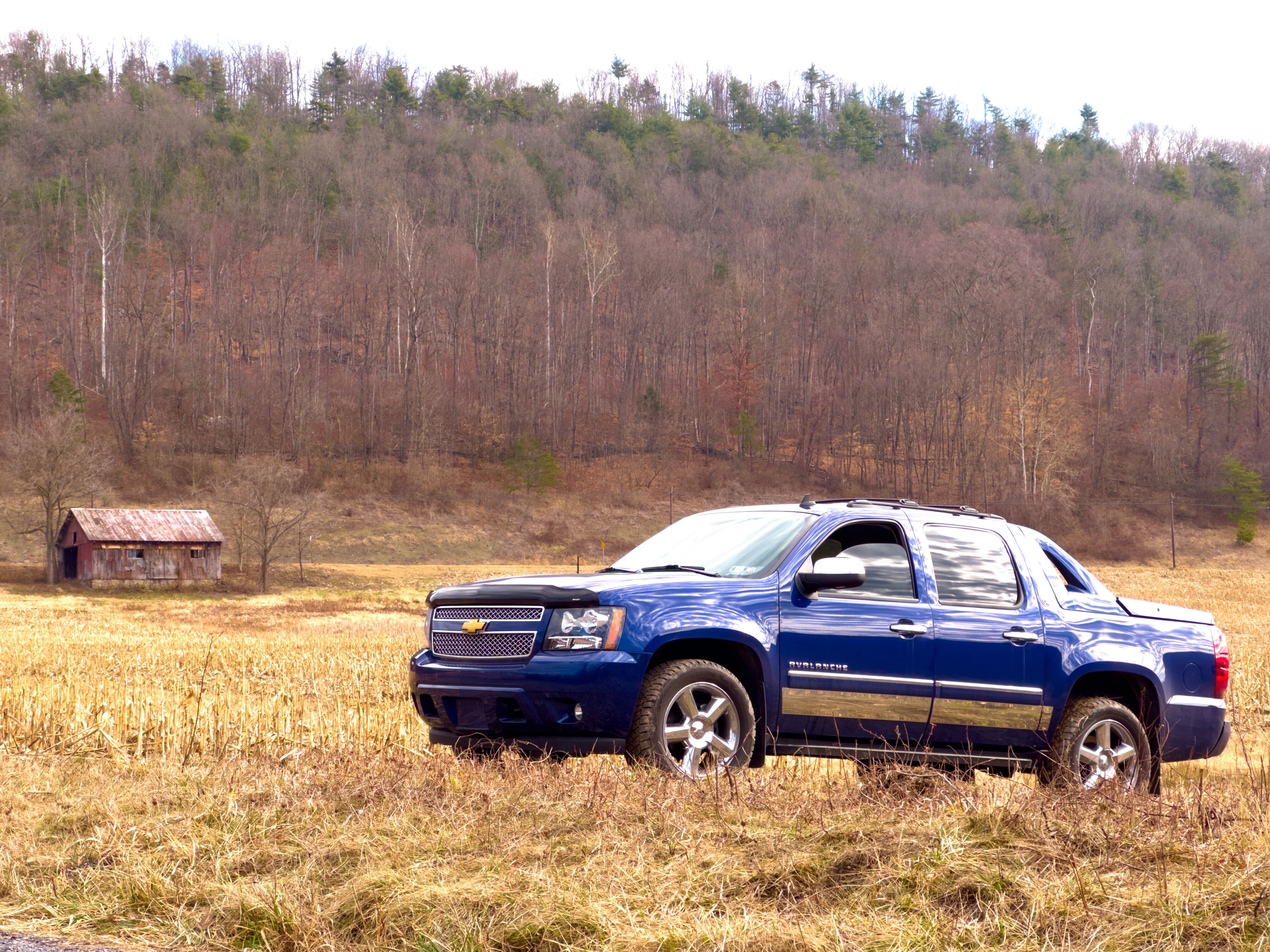
I've seen 2002 Bravadas with 65k miles and they're asking $16k or $17k! Used Avalanche prices are insane, they have to be one of the best residuals out there. 2008s with 35k seem to be asking mid to high 30s for! I nearly spit Dr. Pepper on my screen when a reply to an email about a '07 Ranger 4x4 V6 5-speed and 43k came back with a price quote of $17k!!
-
Mobility is freedom and stimulates the economy... but to your exact point, cheaper for everyone. Cheaper for riders, cheaper for Amtrak, and yes cheaper for the tax payers. In fact, it's even cheaper for drivers as well. As less traffic, there is less wear and tear on the roads. New roads don't have to be sized as large and thus can cost less to develop. You absolutely don't understand why rail failed. It has much more to do with legacy costs and is vaguely similar to GM's march towards bankruptcy than towards any "stuck in the victorian era" fantasy you might have. It's a subsidy because EVERYTHING you buy feeds into that fund in some way. Bought a cell phone? It was shipped by truck, the cell towers are maintained by guys in trucks, the CEO drives to his office on a highway and his fuel costs are expended. If the tax is so vastly ubiquitous that there is no escaping it, it ceases to be a user fee and is just a plain old tax. Fine. Then yank ALL of the taxpayer funded benefits the Airlines get. Your assertions that highways are paid for via user fees is uninformed also: In 2001, 41% of the $133 billion spent on highways came from payments other than the gas tax, tolls, and vehicle taxes and fees, as follows: 15.3% general fund appropriations; 9.5% bond issue proceeds; 5.8% investment income and other receipts; 5.6% other taxes and fees; 4.8% property taxes. So you'll have to yank $54b, at least, from the highway budget to comply with your "user fees only" policy. How do you think that's going to work out? No one is commanding anyone. HS Rail will still have to compete for customers just like any other method of travel. The transporation situation we're in today is because of "statist central planners" heavily favoring air and automobile traffic. You favor a "user fees only" method of funding. That's a perfectly valid point of view.... but are you prepared to have a massive gas tax and/or tolls on major roads to replace the 41% of highway funding that would evaportate? Are you prepared to pay drastically more for your airline ticket to fund the airports, air traffic control, customs, and security? .... just so you can win your little jihad against rail? I think they should be shut down if they're doing things illegally. My suspicion is they are skipping a required maintenance check or driver exam here and there to make ends meet. I'm not against competition. Where the hell did that come from? The city center to city center argument comes from the fact that most metro areas, the center of population gravity is downtown. For the most cities, it is more convenient to get downtown than it is to get to some outskirts airport. My experience with Reagen was that it took me a 45 minute subway ride to get to Union Station... and my hotel was two blocks from there. It is more convenient than most other airports out there.... but it's not like getting to Union Station in DC. The airlines have only recently had an incentive to absolutely maximize fuel efficiency. On top of that, until very recently, there haven't been any major jumps in fuel efficiency since the early 80s. Hybrid locomotives are already being released... and rail has the ability to add energy per passenger efficiency simply by adding cars. (there are often infrastructure limitations to this but there are work arounds). Either way, you're wrong that locomotives aren't getting any more energy efficient. I have a meeting in 10 minutes, so I'll have to provide links when I come back.
-
Yeah, you're essentially coming in the back way. Come from just about anywhere "metro" and you have to cross a river, go through a tunnel, or both. These structure Blow. Pittsburgh. Drivers'. Tiny. Little. Minds.
-
Terrain does indeed play a factor, which is why HS rail isn't suited for all routes. I'm not familiar enough with the proposed route in CA, but I do assume a large part of the extra high cost is tunnel and bridge associated. A big thing would be the need for moderate speed rail (90mph-110mph) in lieu of HS rail (150mph-180mph) to connect those smaller places. Keep in mind that moderate speed rail is still pretty good. A trip from Pittsburgh to DC (my typical benchmark if you've noticed) would be about 3 hours.... it would still beat air time and cost, but would be much cheaper to build. Seriously? Try again. Highways are most certainly subsidized. Just because the tax is paid at the pump instead of out of your IRS withholding doesn't mean it's not subsidized. It's subsidized by every purchase you make that was shipped over the highways. Anything you buy at Amazon.com subsidizes the Interstate. But still, I'm not saying I want to eliminate highways... I want to supplement them. It's adding a choice for travelers. It's allowing more mobility. Aren't choice and population mobility two of your pet causes? Even 150mph is doable and would be competative. It's easy to run super cheap NYC-DC buses when you're doing it illegally. More then one of those buses has been impounded in NYC already. I"m still trying to figure out the economics of them. I don't see how they pay for fuel much less driver, maintenance, and equipment costs. No, not really. Population density around airports is typically a lot lower than downtown areas. Think about getting out to Reagen National... unless you happen to live within a few miles of it, getting to the airport is going to be a chore. You're either going to have to drive yourself (and pay through the ass to park), take a cab, take a car service, or take a Blue line train. If you're limited to public transit in the DC area, you most likely have an easier time getting to Union Station that Reagan National. Same is true here in Pittsburgh. I can be at Pennsylvania Station in 15 minutes by bus... a vast majority of the city can do it in under 30 minutes even with our craptastic transit system. Unless you're in the southwestern part of Pittsburgh, getting to the airport will take you at least 45 minutes by car and over an hour by bus. For me personally, it's a 2 hour trek because I have to change buses in downtown and there is a wait between them. I think CA might be a bit different from the rest of the nation in that regard. The number of roadtrips to Las Vegas alone is enough to distort that number. The increase in Airline fuel economy is only because they are being forced to retire older planes. Most of the "commuter" lines run jets that are at least 15 years old. You could still see 30+ year old 737s coming in and out of LGA (they have a distinctive engine shape and note) as recently as 2008. The 737 is one of the most popular jet liners in service... but it'd been around forever. As they get phased out there will be a large jump in efficiency.
-
4.9 hours? I.C.E. could do it in 3.5 hours or less. Non-stop to LA would be 2 hours flat. Getting to Santa Monica... well you'd need Regional rail most likely, I doubt HS rail would go there from LA.
-
Yes, freight is a LOT more efficient on rail than by truck for long distances. It was so good in fact, that during the run up of fuel costs prior to the market crash, all the major freight railroads were experiencing capacity problems. You can also do some interesting efficiency tricks if it's electric. If you time the schedule properly, you can have decelerating trains feed power back into the wires to power trains accelerating out of stations. Back in the 1930s, The Virginian RR was hauling record amounts of coal. It used electric locomotives for their strong torque. They timed the trains so that as one loaded with coal was headed down the mountain, another train with empty cars would head up the mountain on a parallel track. The descending loaded train would literally power the empty train up the mountain.
-
I picked 800 miles because that is just over the driving distance from NYC to Chicago (788 miles). A DeutscheBahn I.C.E. train could complete the trip in about 4.3 hours non-stop. The I.C.E could even have 6 stops along the way <they usually only stop for 10 minutes> and still tie the airlines in a race. The best flight from LaGuardia is 2 hours 21 minutes "wheels up" to "wheels down" Add: 30 minutes runway taxiing total 1.5 hours at check in, security, and boarding (I'm being charitable here) 30 minutes baggage pickup 45 minutes getting from Mid-town to LGA 45 minutes getting from O Hare to downtown Chicago (again being charitable) edit: You could have the following station stops: New York City, Scranton PA, Binghamton NY, Erie PA, Cleveland OH, Toledo OH, South Bend IN, and Chicago IL. = Total 899 miles, 6 hours
-
I want to be sure to frame the parameters of the debate: High Speed Rail is for connecting urban centers, probably over 200k people, and for distances over 100miles and under 800 miles. ' More than 800 miles, and Air travel is more time efficient. Less than 200k people and regional rail (sub-75mph) is more cost efficient.
-
Except like... now? I've already shown where Amtrak has better than 50% market share in the markets it serves with HS rail. How is that not major? Amtrak's service isn't even as good as it could be because some of it's infrastructure is too old to handle 180mph trains. Once those infrastructure improvements are completed, the Acela's top speed will be even higher. That's like saying "the car will fail because roads have been around since the Roman age" Watch that video I posted and try telling me that's 1930's technology.......
-
True. Quite simply.... false.
-
K... lets look at that "good stuff" 1. "The French travel by car 20 times as much, and by air 3 times as much" As always, lies, damn lies, and statistics....the parameters of their travel aren't defined. It would be rather stupid to travel by HS rail to the grocery store..just as it would be stupid to land a 737 at the mall. Similarly, define the air travel as "in the EU-25". As I've said earlier, HS rail is best when the distance is around 800 miles or below, but Europe offers other problems as well.... two big ones... the Alpes and the Mediterranean. One would NEVER take the TGV from Paris to Rome... Get me the statistics for long distance travel inside France.... 2. Ditto for Japan, except bureaucrats got involved and ran up the debt... You don't run HS rail to every little village out there.. It's for major urban centers. Use slower regional rail for the smaller towns. 3. Page 21 of the PDF you posted cites figures of $25m per mile for high speed in Florida and $67m per mile in California. These numbers are supposed to scare people... but it only works as a scare number if they don't know the cost of highway generally starts at $30m per mile and goes up from there. Want interchanges? Add another $30m per interchange. Need a tunnel? There's another $10 million to start. Need a river crossing bridge? Base models start in the $20 million range. Be sure to ask about rust proof under coating..... 4. On page 41, the author compares travel times of HS rail to Air.... but he only compares the "wheels up" to "wheels down" air travel time.... Do I really need to go over that again? I can drive to DC faster than I can fly there.... don't tell me that rail at 180mph would be slower than total air travel time. 5. On page 41, the author complains that rail travel only serves downtown areas and states that only the wealthy 1% would have access to it. However 78% of American live in a metropolitan area with more then 200k people. Those areas already have strong infrastructure in place to get people downtown and onto a train. Conversely, if you don't drive yourself to an airport, you have to take a cab, hire a shuttle, or take public transit that doesn't enjoy the regularity of service that being in downtown provides. 6. Page 46 just makes $h! up... and you know how I feel about that. It makes up the statistic that most intercity car travel has 2.4 passengers... the only published statistics I could find were in the 1.7 range.... It makes up the statistic that Amtrak trains are only 50% full... I assume he is counting all Amtrak, even the lines with poor service. Again, build a crappy system and it will run crappy. In markets where Amtrak offers good service, the trains are usually packed. I'm not sure how he is even measuring airline efficiencies.... but if he is talking about the seats... they feel way more then 3% smaller. 7. Because of #6, pages 48-54 are bunk. I like this.... you should send me your anti-government Powerpoint presentations more often.
-
Well... 180mph. Most high speed rail caps out at 300kmh... which is 180kmh. There is one line in China on traditional rail that runs up to 350kph which is about 217mph. After that you get the 500kph Chinese MagLev... which is far to costly to be viable. The French TGV can get to within 5kph (3 mph) of Mag Lev speeds on conventional rail, but there isn't any service scheduled that fast. <div style="background:#000000;width:440px;height:272px"><embed flashVars="playerVars=showStats=yes|autoPlay=no|videoTitle=World's Fastest Rail Train TGV 574,8 KPH Inside Footage" src="http://www.metacafe.com/fplayer/508521/worlds_fastest_rail_train_tgv_574_8_kph_inside_footage.swf" width="440" height="272" wmode="transparent" allowFullScreen="true" allowScriptAccess="always" name="Metacafe_508521" pluginspage="http://www.macromedia.com/go/getflashplayer" type="application/x-shockwave-flash"></embed></div><div style="font-size:12px;"><a href="http://www.metacafe.com/watch/508521/worlds_fastest_rail_train_tgv_574_8_kph_inside_footage/">World's Fastest Rail Train TGV 574,8 KPH Inside Footage</a> - <a href="http://www.metacafe.com/">Click here for more blooper videos</a></div>
-
If you build a crap system, it will run like crap. If you build a system that will get people from Philly to NYC in an hour, they'll ride it. DeutcheBahn posts a profit from it's passenger operations. The last time we were there, Albert and I couldn't even sit next to each other because there were no double seats available. I'm sure the Germans have seen the error of their ways in the past 12 months, so I'll let you know how decrepit the system has gotten when I'm back over there next month. Oh yea, our ticket for the 116 mile trip from Frankfurt to Cologne (which takes 55 minutes to complete) will cost 29 euro each (about $37.50) Autobahn robbery I tell you... Autobahn robbery! But still even with the poor state of repair Amtrak is in,you can't claim people aren't riding it in the markets where it offers a competitive time/cost equation. The railroad, which gets operating cash from taxpayers, carried 65 percent of air or rail travelers from New York to Washington and 52 percent from New York to Boston, Boardman said. The previous market-share record was 63 percent to Washington and 50 percent to Boston since Acela began service in 2001, according to Amtrak. Amtrak has better then 50% market share over all the airlines combined! Before you even begin to yelp about subsidies.... the North East Corridor is where Amtrak makes most of it's revenue. It's the lines where service is slow (thus low value cost/time equation) where Amtrak loses money. They wouldn't be running 48 trains per day, one way, between NYC & Philly, if they were losing money on the service. Edit: I have to come back and fix your revisionist history also. The trains died in the 1950s because of heavy government regulation AND the ill effects from the war AND that giant federally paid subsidy called the "Eisenhower Interstate System"
