Jump to content
Create New...
  • đź’¬ Join the Conversation

    CnG Logo SQ 2023 RedBlue FavIcon300w.png
    Since 2001, Cheers & Gears has been the go-to hub for automotive enthusiasts. Join today to access our vibrant forums, upload your vehicle to the Garage, and connect with fellow gearheads around the world.


  • William Maley
    William Maley

    Quick Review: 2012 GMC Sierra Denali HD 2500


    William Maley

    Editor/Reporter - CheersandGears.com

    May 8, 2012

    The war of heavy duty pickups has been raging on for many years with Ford, General Motors, and Ram one upping each other with more powerful engines and towing capabilities that could embarrass certain commercial trucks. Now, a new branch of this war is emerging; the luxury heavy-duty truck.

    Gone are the steel wheels, vinyl seats, rubber floormats, and grey dashboards seen on many a truck. In their place are large chrome wheels, leather seats with heating and cooling, carpeting, and different color dashboards trimmed with wood.

    Ford, GM, and Ram have thrown their competitors into the ring and are now battling for the king of luxury heavy-duty truck.

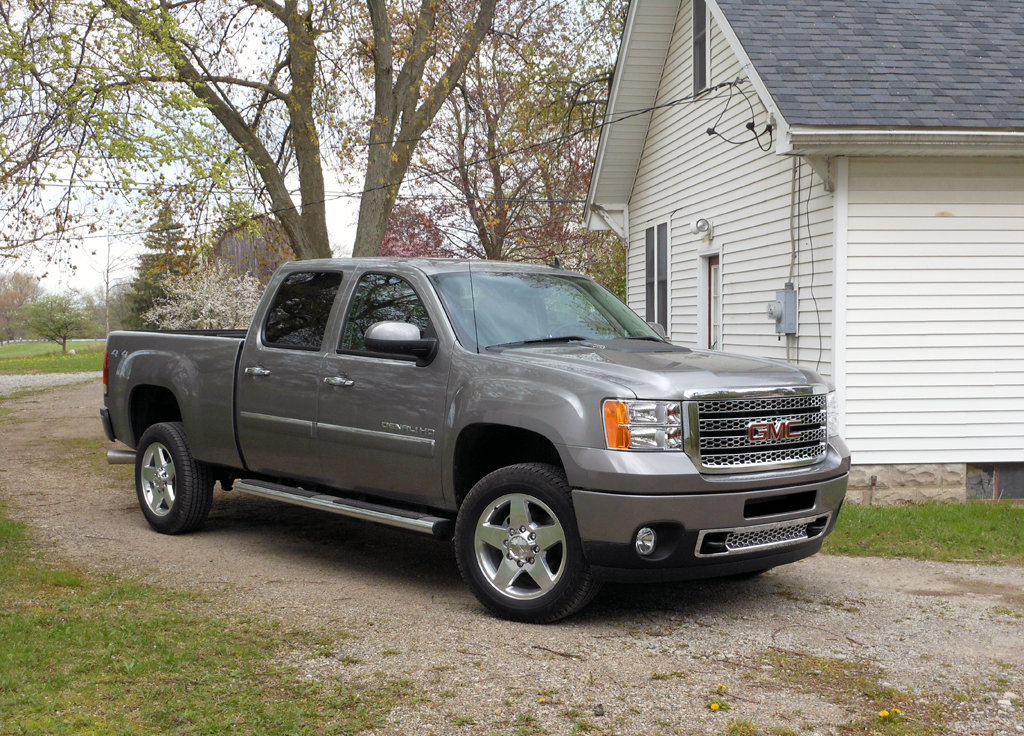
    So when a 2012 GMC Sierra Denali HD 2500 was dropped off for week, it was the perfect time to see if it can be the king or not.
    gallery_10485_419_22569.png

    What has changed?

    Not much since General Motors updated its heavy-duty trucks back in the 2011 model year. The big news for the 2012 model year was GM upping the hauling and towing ratings for the heavy duty trucks. The stats are,

    • Maximum towing capacity of 23,000 pounds
    • Conventional-hitch trailering capacity of 18,000 pounds
    • Maximum payload of 7,215 pounds

    Besides the rise in ratings, GMC has added a new exterior color and some new interior features for the Denali HD line.

    On to the exterior & interior


    So the exterior is pretty much the same as before?

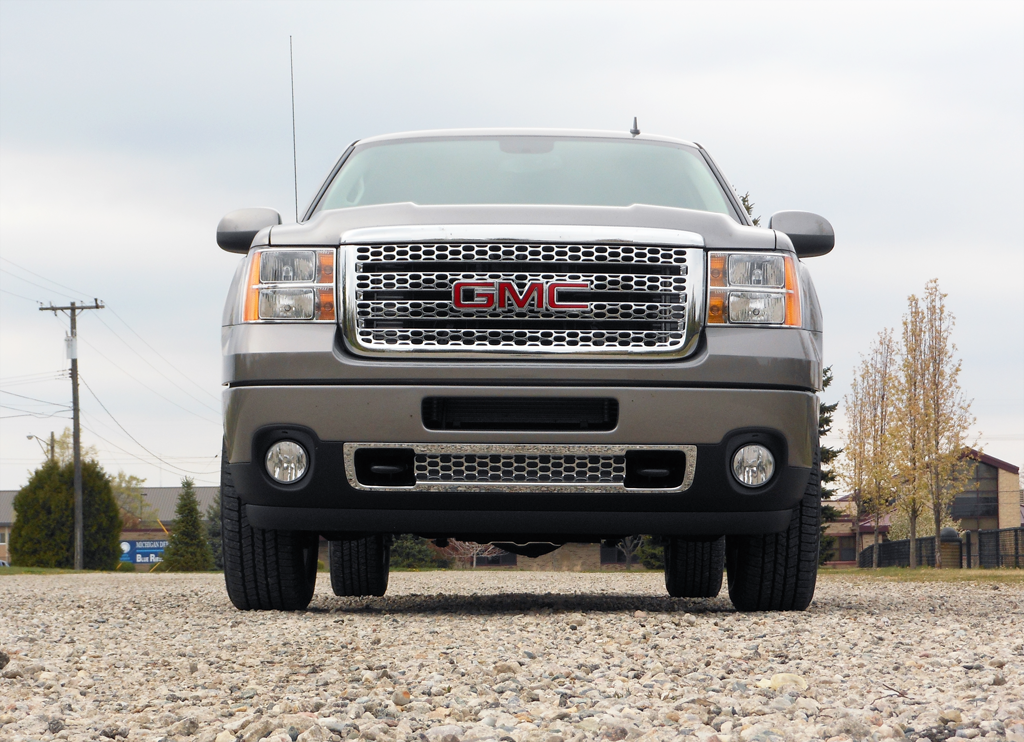
    Yeah, the Denali HD hasn’t changed much since its last appearance in the C&G garage back in December 2010. The blunt front end still has the signature Denali chrome finishing on the upper and lower grilles. Around the side, the front fenders carry some sculpting and chrome bars adorn the doors. Add on the optional 20-inch chrome wheels and the new Steel Gray Metallic paint, and what you get is an understated luxury pickup, a trademark of the Denali line.
    gallery_10485_419_1114902.png

    What about the interior?

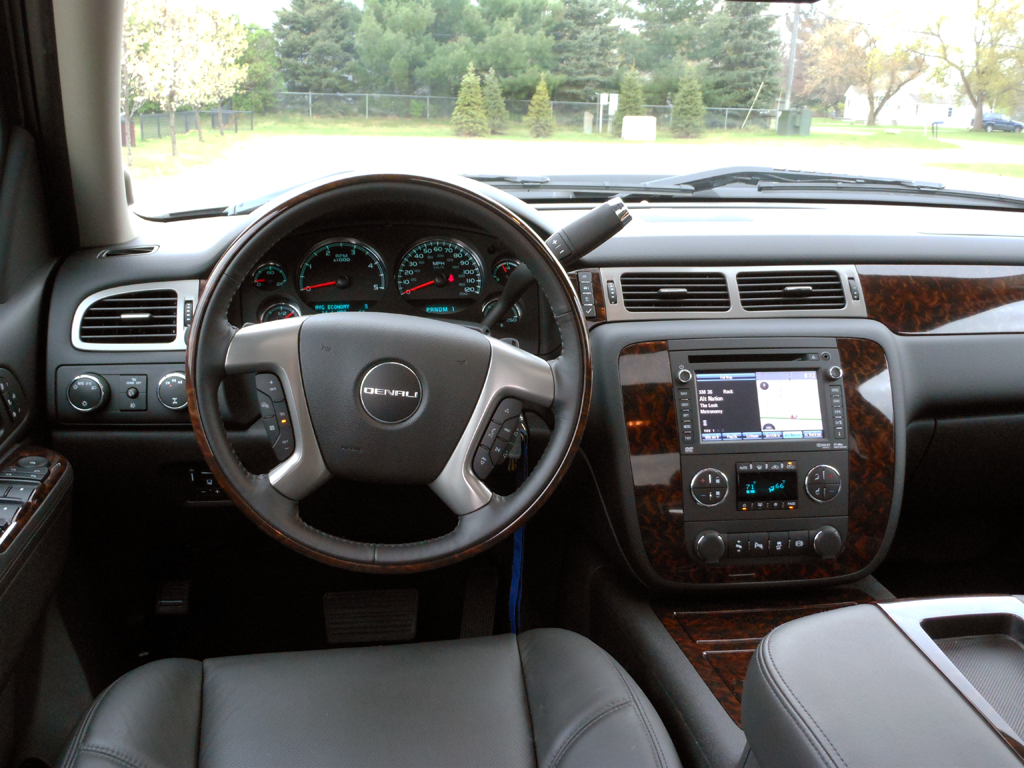
    The Sierra HD Denali’s interior is similar to any other loaded up GMC Sierra, albeit with more leather and “wood” trim. The dash looks and feels outdated with the materials clearly from the "old GM" era of cheap plastics. If the Sierra HD Denali cost $30,000, this would be ok. However, when the Denali HD is pushing $63,000, it falls into unacceptable. Also missing on this truck was the auto-up feature on the power windows. The only auto-thing on it was the auto-down feature on the driver’s side. It left me wondering why certain compact cars have this feature and not this truck.
    gallery_10485_419_145599.png

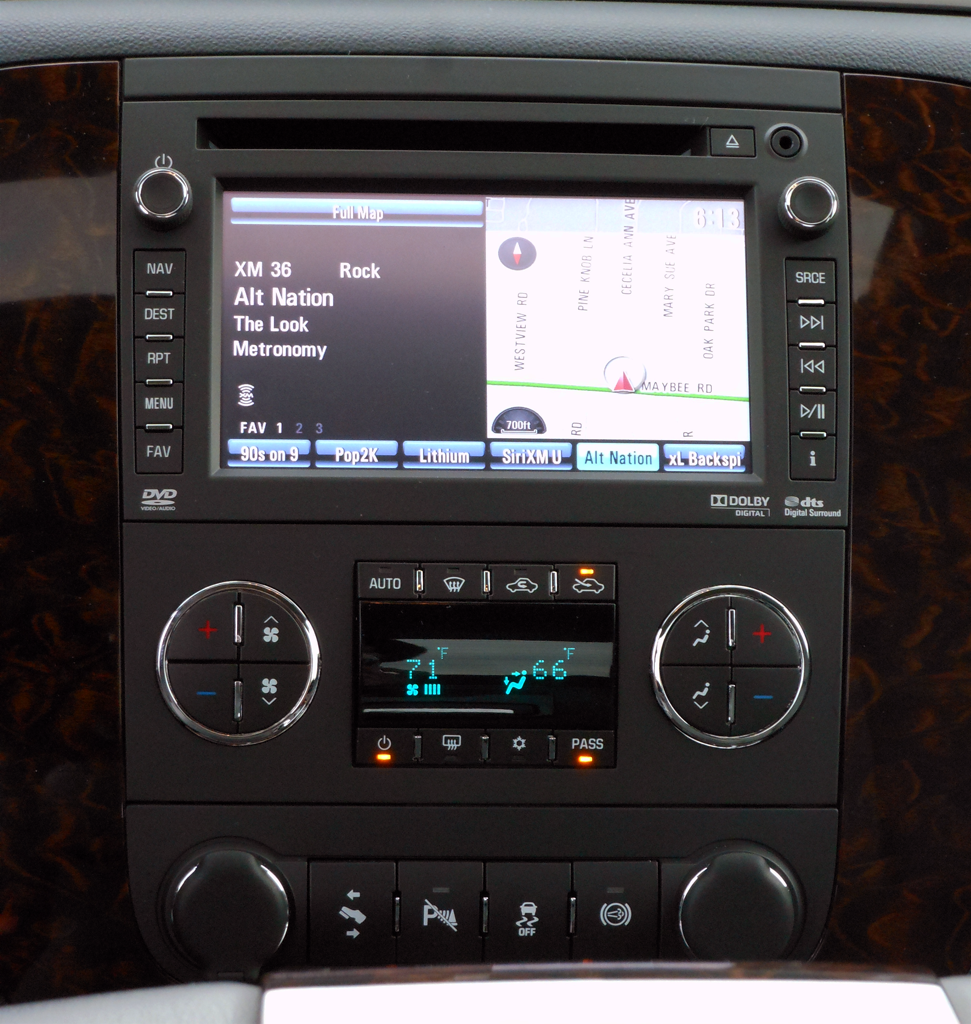
    The optional navigation unit in Sierra HD Denali has been updated this year with new software that solves the problem of outdated software we had in our previous example. But interface issues remain; do I really need two whole rows of buttons to move around the NAV?
    gallery_10485_419_924458.png

    However, all is not lost with Sierra HD Denali’s interior. The leather seats are very comfortable for both front and rear passengers. Front seat passengers will enjoy the heated and cooled seats for whatever season it is. Back seat passengers will like the amount of head and legroom.

    Next: Power, Verdict, and Specs


    What is the powertrain and how does it drive?

    All of GM’s heavy-duty pickups come standard with a 6.0L V8 producing 360 HP and 380 lb-ft of torque. However, this Sierra HD Denali was equipped with the shining star of GM’s powertrain lineup; the 6.6L Duramax turbo-diesel V8. The 6.6L engine produces 397 HP and mind-numbing 765 lb-ft of torque. All of that power goes through a six-speed Allison transmission.
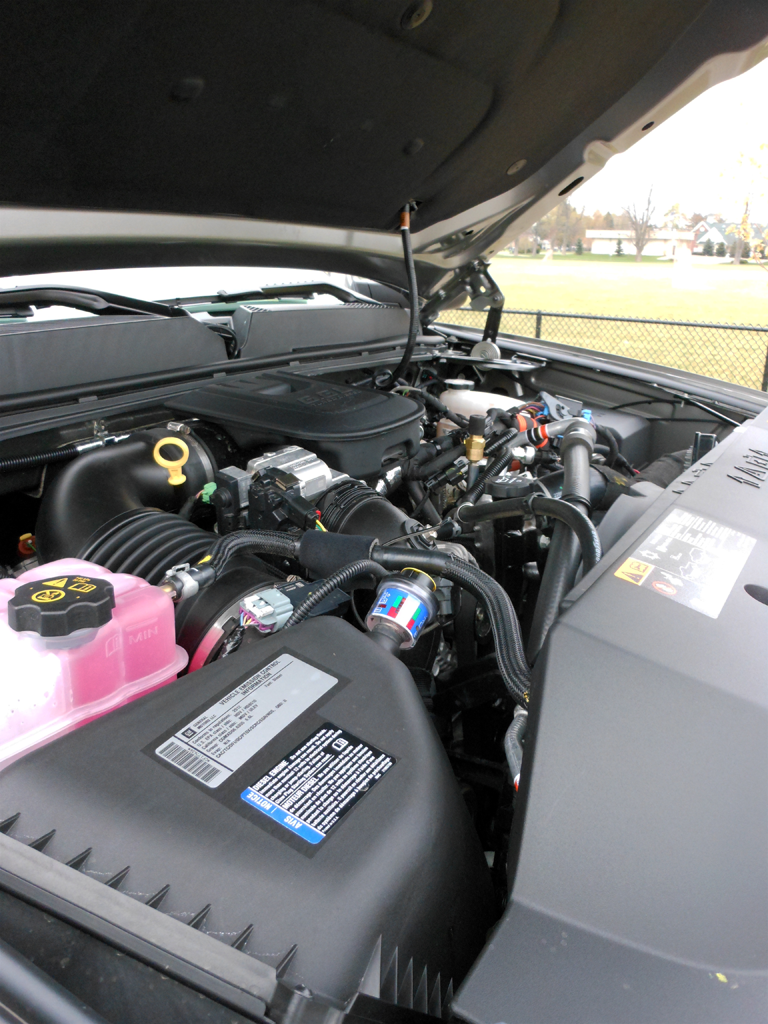
    gallery_10485_419_653239.png

    Driving around with the Duramax and Allison combo was a sublime experience. Power was strong and linear as I left from a stop or while making a pass. The transmission provided buttery smooth shifts.

    Average fuel economy for the week stood at 14.5 MPG. On a 100 Mile highway trip, the Sierra Denali averaged 19 MPG, a surprise since the Sierra Denali HD tips the scales at 7,400 lbs.

    The ride of the Sierra Denali HD varies on the road condition. Smooth roads and Sierra Denali HD provided a comfortable ride. Head onto a rougher road and you can feel every bump. That’s due to good looking 20-inch chrome wheels and the upgraded suspension to handle the weight.

    Maneuverability isn’t the Denali HD’s strongest suit. The long length and wide turning circle make it pain in certain situations. Many a time was spent during the week backing up, steering the truck, and pulling into certain parking spots without trying to cause property damage.

    And the verdict?

    The Sierra Denali HD sits in a precarious spot in the luxury heavy-duty truck market. On one hand, the Denali HD doesn’t match what the Super Duty and Ram Heavy Duty trucks offer in luxuries. Examples include a better quality dash, a newer navigation system, and other little things that make you feel your spent your money well. Plus, maneuverability could be a little bit better.

    On the other hand, the Sierra Denali HD claws back with its superb optional Duramax and Allison Transmission powertrain package. Plus, the Denali has a trick up its a sleeve. Unlike the Ford and Ram’s current luxury trucks which scream, “Look at me, I’m driving a big honking luxury truck,” the Denali HD goes for the understated look.

    The Sierra Denali HD hits 75% of what luxury truck buyers want, it’s the last 25% the truck is missing, which could prove devastating when Ford and Ram launch their true competitors to the Denali HD later this year.

    Cheers:

    • Duramax and Allison powertrain
    • Understated luxury look
    • Hauling and Towing Ratings

    Jeers:

    • Interior doesn't match pricetag
    • Poor maneuverability
    • Ride Quality

    Disclaimer: General Motors provided the truck, insurance, and one tank of diesel.

    Year - 2012

    Make - GMC

    Model - Sierra HD

    Trim - Denali 2500 Crew Cab

    Engine - 6.6L Duramax Turbo Diesel V8

    Driveline - Four Wheel Drive, Six Speed Automatic

    Horsepower @ RPM - 397 @ 3000

    Torque @ RPM - 765 @ 1600

    Fuel Economy: City/Highway/Combined - N/A

    Curb Weight - 7456 lbs

    Location of Manufacture - Flint, Michigan

    Base Price - $48,785.00

    As Tested Price - $62,914.00 (Includes $995.00 Destination Charge)


    User Feedback

    Recommended Comments

    • Conventional-hitch trailering capacity of 18,000 pounds

    Makes the 6,000lb rating on my Suburban seem pedestrian. This is a good thing when we're talking about a "heavy duty truck".

    Link to comment
    Share on other sites


    Join the conversation

    You can post now and register later. If you have an account, sign in now to post with your account.
    Note: Your post will require moderator approval before it will be visible.

    Guest
    Add a comment...

    ×   Pasted as rich text.   Paste as plain text instead

      Only 75 emoji are allowed.

    ×   Your link has been automatically embedded.   Display as a link instead

    ×   Your previous content has been restored.   Clear editor

    ×   You cannot paste images directly. Upload or insert images from URL.


  • Support Real Automotive Journalism

    Cheers and Gears Logo

    Since 2001, Cheers & Gears has delivered real content and honest opinions — not emotionless AI output or manufacturer-filtered fluff.

    If you value independent voices and authentic reviews, consider subscribing. Plans start at just $2.25/month, and paid members enjoy an ad-light experience.*

    You can view subscription options here.

    *a very limited number of ads contain special coupon deals for our members and will show

  • Posts

    • @A Horse With No Name @oldshurst442 You guys are correct, cycle of take off and landing more than age. I should have expanded myself as my brother inlaw is a manager at Boeing with many patents for his specialty which is the airplane engines on the 737, 757, 777, 787 and the king 747. He has stated that the force of the engines cause fatigue in ALL aircrafts that hit 10 years and depending on the flying they have done, passenger versus freight, while a plane can go 20 or 30 years, many should have a very close inspection at 10 years for corrosion, metal fatigue, etc. Could be one reason some airline companies retire their aircraft after 10 years rather than continue to fly them.  Many things make up the age of an aircraft and years is only 1 little part of it, Force makes up a much bigger part.  Thank you for pointing out what I failed to expand on in my original post.
    • As one who deals with AI daily, building training, coding for data lakes to help others understand their data and what it can do for them, I have come to one reason for turning off copilot, the attempt that it makes over and over in correcting my writing and word use when it does not understand technical terms, legal terms, medical terms and then changes the whole meaning of a sentence due to the changes if I do not catch it. AI bots are great for helping find info on processes and configuration of a product such as our Dell PowerScale OneFS filer or our ObjectScale Object storage devices so that admins can quickly get the instructions on how to configure features. Otherwise, the rest of AI trying to tell me how I should do something makes it annoying and worse yet is the incredible amount of memory / CPU cycles it takes that I would rather use on other things that I do with my computer. Personally, I wish AI bots would not use any resources until I click on it and want it to work, once I close it, it should totally turn off rather than idle in the background listening to you.
    • Yes and ummmmm...no.  Yes.   Metal fatigue is a very real thing in aviation.  Its more about how many times the sheet metal has expanded and contracted  under stress rather than the age of the airplane itself.  10 years is somewhat too young for an airplane to be retired as airplanes are engineered fly double and even triple that age.  Unless of course the airplane in question has taken off, flown and landed enough times that would equal its maximum lifespan in 10 years.   This latest accident, UPS had a 34 year old McDonnel-Douglas MD-11 flying around.  Now...at 34 years of age, this airplane should been of concern... yes.   Like I said, airplanes' lifespans reach 30 years.  Sometimes more than that if maintenance is done properly and rigorously.   Using google and Wikipedia, if fact, 2 months prior, the airplane in question HAD been grounded for 6 weeks because cracks were found in the fuel tanks. Corrosion was also found in the structural beams in its fuselage. Repairs were made.  However, with airplanes, age is not a criteria for maintenance. But hours of flight and "cycles".   A cycle is 1 take-off and 1 landing sequence.  The airplane had logged 21000 and change cycles and the maintenance threshold for what had ultimately failed in the airplane was not due until 28 000 and 29 000 cycles.  Now...at 34 years old, maybe more vigilance was needed... This is how the airplane safety industry works. It takes an accident to amend and/or instate new safety regulations.  Maybe with this accident, NTSB will implement an age criteria too alongside flight hours and cycles.  At age 30 and a more rigorous inspection is to happen and not rely solely on cycles and flight hours.    https://en.wikipedia.org/wiki/UPS_Airlines_Flight_2976 The aircraft, N259UP, was a 34-year-old McDonnell Douglas MD-11F with manufacturer serial number 48417. The aircraft was first delivered to Thai Airways International in 1991 with the registration HS-TME,[7] after which it was converted to a cargo aircraft and delivered to UPS Airlines in 2006. It had flown 21,043 cycles and for about 92,992 hours,[8] and was equipped with three General Electric CF6-80C2D1F engines.[9][10][11] The last visual inspections of the left pylon aft mount were performed in October 2021. More rigorous "Special Detailed Inspections" for the mount lugs and wing clevis were not yet due, as the aircraft's 21,043 accumulated cycles were well below the 28,000 and 29,200 cycle thresholds required for those checks. Two months before the crash, it had been grounded for six weeks to repair a cracked fuel tank, and corrosion was later found along two structural beams in the fuselage. The aircraft re-entered service a few weeks before the crash.[12]    
  • My Clubs

Ă—
Ă—
  • Create New...

Important Information

We have placed cookies on your device to help make this website better. You can adjust your cookie settings, otherwise we'll assume you're okay to continue.

Hey there, we noticed you're using an ad-blocker. We're a small site that is supported by ads or subscriptions. We rely on these to pay for server costs and vehicle reviews.  Please consider whitelisting us in your ad-blocker, or if you really like what you see, you can pick up one of our subscriptions for just $1.75 a month or $15 a year. It may not seem like a lot, but it goes a long way to help support real, honest content, that isn't generated by an AI bot.

See you out there.

Drew
Editor-in-Chief

Write what you are looking for and press enter or click the search icon to begin your search