



G. David Felt
Premium Subscriber
-
Joined
-
Last visited
Everything posted by G. David Felt
-
Yes, they apply to both buying and leasing, this is how Hyundai, Kia and Genesis are able to offer the $7,500 rebate on their EVs. As they ramp up production in the US, many of this model year are from Korea and so only leasing gets the rebate, next year they will produce all their EVs in the US having the rebate for both buying and leasing. Cool thing is all those new EVs made in Korea that do not sell can be turned into demo EV's and then sold as used with the $4,000 rebate even when they were made out of the country. Plenty of ways to get around the U.S. built only for new sales rebate.
-
Yes, for me I always hated the idea that you had to wait till the end of the year to get your credit and you had to finance and pay the full amount when it should have been a rebate all along. Now with January 1 2024 the credit becoming an instant rebate at the point of purchase, EVs sales should take off and of course as you pointed out, $4,000 rebate for used EVs makes it very enticing. Another point is that if you have both a 220V outlet for a dryer as well as Natural Gas, and like me your not using the 220V as I use Natural Gas Dryer, then I can easily use that as a home charger circuit breaker to have it in my garage and just change the location. Very excited for this rebate, next year could be the year for my first EV.
-
Very cool that the EV rebates for new and used as well as Leasing vehicles becomes an instant rebate at the dealership starting in 2024. EV tax credit becomes instant dealership rebate in 2024: Here's how (greencarreports.com)
-
Very cool, the rebates become instant starting in 2024 for EV purchases of new and used vehicles plus leasing. EV tax credit becomes instant dealership rebate in 2024: Here's how (greencarreports.com)
-
Agree that it is an interesting choice, I suspect that the ZDX was an easy choice to use since the ICE ZDX never did anything. That was one hideous vehicle in ICE form.
-
We will see as GM has plenty of booked orders, be interesting to see how many actually get converted into real purchases and if we end up with EV inventory sitting on the lot, then we will see a deeper discount I think. AS they say, we are in interesting times. Kia EV9 is a game changer for sure.
-
This should be interesting. https://www.utilitydive.com/news/evs-reach-86-percent-global-vehicle-sales-2030/695324/ This is also interesting I feel: A big EV purchase decision that's not about the car model you buy (cnbc.com)
-
Seems that Tesla NACS take over of OEM agreeing to use the NACS port is causing a huge win for money to be made by Tesla. As such, it seems the competition has finally woke up to the need of reliability and quality charging. EVgo Enhances Charging Network with ReNew™ - The EV Report
-
Knight Rider, A-Team, Dukes of Hazzard, Hart to Hart, MacGyver, Magnum P.I., Miami Vice and LOVED V were the only shows I watched. WOW, Talk about a walk down memory lane. Would love a modern CGI version of V as that would just rock.
-
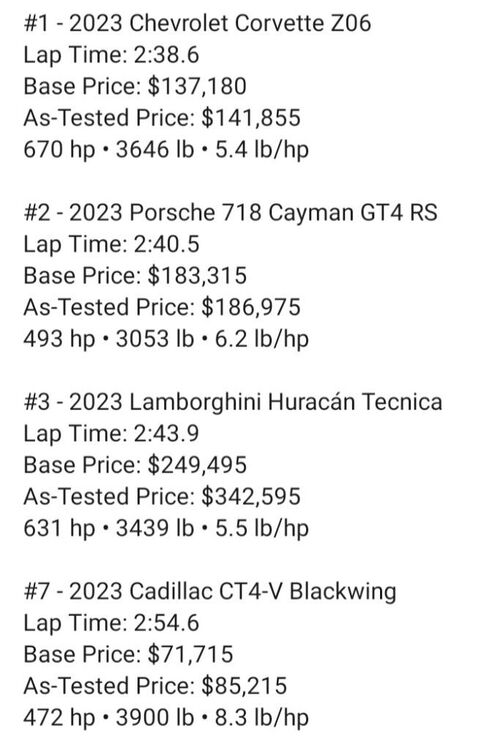
https://www.caranddriver.com/features/a42387169/lightning-lap-2023/ Pretty impressive, what would you.domwith an extra $80K?
-
 Toyota Motor North America and LG Energy Solutions has announced a long-term supply agreement for Lithium-ion/high-nickel NCMA battery modules starting with 20 GWh of production in 2025 for 2026 model year EVs. These pouch type battery cells are a nickel, cobalt, manganese, aluminum cell design that will be produced at LG Energy Solutions Michigan facility and shipped to Toyota's Kentucky assembly site for all Toyota and Lexus EVs. Tetsuo "Ted" Ogawa has stated this is the start of securing a long-term supply of lithium-ion pouch cells to help us reach our goal of contributing to Toyota's expected year sell of 3.5 million EVs globally by 2030. LG Energy Solutions has committed to investing $3 billion U.S. dollars in their Michigan facility for a new production line that will produce these pouch cells for Toyota. This agreement leaves open the opportunity for expanded production as Toyota needs down the road based on EV sales.
 -
 October 5th was a major press release for Genesis-Hyundai-Kia as all three auto companies announced that they would begin shipping their EVs at the start of Q4 2024 with NACS ports on their EVs. With NACS ports, Genesis, Hyundai and Kia EVs will gain access to the 12,000 plus North America Tesla Supercharger stations which have over 50,000 charging stations. Genesis, Hyundai, Kia EVs are built on the E-GMP or Electric Global Modular Platform that is an 800V fast charging platform. The current EV owners that have CCS ports will have access to the Tesla Supercharger network starting the beginning of Q1 2025 and upon receiving their CCS to NACS adapter. This also includes that Genesis, Hyundai and Kia have joined six other global leading auto companies in building their own high power North American Charging Network that has a committed 30,000 chargers. This new network will have the first of the Charging Stations opened in Summer 2024 in the U.S. and later in the year in Canada. All three auto companies have stated that their specific EV applications on the customers cell phone will be updated allowing them to use the Tesla Supercharger stations, pay for their charging and any other needs at the tesla sites giving customers the ultimate experience in a single smartphone app for all their EV needs. Genesis Newsroom (genesisnewsusa.com) Hyundai Electric Vehicles to Add North American Charging Standard - Hyundai Newsroom KIA TO ADOPT NORTH AMERICAN CHARGING STANDARD IN THE FOURTH QUARTER OF 2024 (kiamedia.com)
 -
October 5th was a major press release for Genesis-Hyundai-Kia as all three auto companies announced that they would begin shipping their EVs at the start of Q4 2024 with NACS ports on their EVs. With NACS ports, Genesis, Hyundai and Kia EVs will gain access to the 12,000 plus North America Tesla Supercharger stations which have over 50,000 charging stations. Genesis, Hyundai, Kia EVs are built on the E-GMP or Electric Global Modular Platform that is an 800V fast charging platform. The current EV owners that have CCS ports will have access to the Tesla Supercharger network starting the beginning of Q1 2025 and upon receiving their CCS to NACS adapter. This also includes that Genesis, Hyundai and Kia have joined six other global leading auto companies in building their own high power North American Charging Network that has a committed 30,000 chargers. This new network will have the first of the Charging Stations opened in Summer 2024 in the U.S. and later in the year in Canada. All three auto companies have stated that their specific EV applications on the customers cell phone will be updated allowing them to use the Tesla Supercharger stations, pay for their charging and any other needs at the tesla sites giving customers the ultimate experience in a single smartphone app for all their EV needs. Genesis Newsroom (genesisnewsusa.com) Hyundai Electric Vehicles to Add North American Charging Standard - Hyundai Newsroom KIA TO ADOPT NORTH AMERICAN CHARGING STANDARD IN THE FOURTH QUARTER OF 2024 (kiamedia.com) View full article
-
Where are you getting this information from as that has been debunked already about fast charge speed on modern EV battery packs. This is the same bad info about how fast charging will reduce your cell phone battery life. That also has been debunked especially by Apple and Samsung. For the auto industry, most batteries in EVs or PHEVs have shown that less than a couple % of battery storage is lost when fast charged all the time and we still see Taxi PHEVs that are running strong 10 years after being produced such as the hybrid Ford Escapes that are used as taxis in NY. Fast Charge Reduce Battery Life? https://carsofelectric.com/do-fast-chargers-shorten-electric-vehicle-battery-life/ Fast charging, also known as quick charging, can contribute to battery degradation1. This is because fast charging uses high voltage and current to charge the battery quickly, which generates heat that can cause damage to the battery’s cells and reduce its overall lifespan1. However, the impact of fast charging on battery life is not substantial2. The physics behind the technology means you shouldn't expect the battery to last longer than using a conventional "slow" charging brick2.
-
I loved the large concerts in my college days, and am not whining about it, but stating what i see as way too many people thinking these 80 year old prunes are worth your hard earned money when they cannot dance, sing or over all perform like they did 30 to 40 years ago. Perfect example is Queen, Awesome music and if they come to Seattle I would pay money to see Adam Lambert sing those songs. The music is great even still for the old band mates and same with Rolling Stones, Who, etc. Musicians tend to have a longer better life in playing the music than the singers do. Find a young man who can perform the way Mick Jagger did 30 to 40 years ago and have them sing the songs while the current band plays and I am there to rock out. Your right that Jazz and the Frank Sinatra types would not do well in a Cement style large multiple thousand stadium. Depending on what you put into your Home Theater, the experience can be every bit as good if not better than a Theater. Yes, screen size does matter, surround sound and add On's such as chair vibrators help to really send home the experience. Considering how dirty and smelly the theaters are, even the new ones that have leather chairs and serve food with adult beverages, I have not seen a reason to see any Movie anymore at a theater. But then most do not have a theater like I have, so as you say, the experience is very different from home to theater for most people.
-
This discussion reminds me of a cool movie from the 1981. Heavy Metal Heavy Metal (1981) - IMDb
-
You can enjoy the old prune of a performer which is your right and the freedom we enjoy; I also will enjoy my higher expectations of an enjoyable night. Rather have a dinner performance at a jazz club now or a small venue with an artist than in a large cement block with thousands of others in terrible acoustic presentations. Just my personal preference versus yours or Roberts or anyone else. Like others here, I would rather sit in the comfort of my home theater chair and watch my James Bond collection on my Theater system where I can pause the movie, hit the bathroom, get food I want of higher quality and relax than go to a public theater or performance hall. Guess as I have gotten older, I expect better quality of performance and experience than to try and live in my college days of loud concert venues.
-
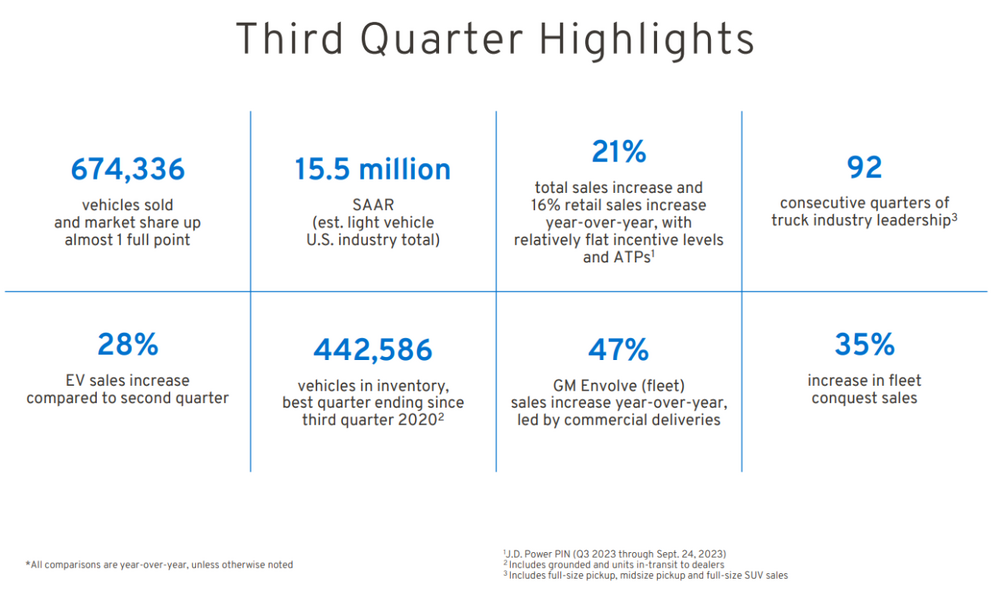
Very cool to see how well GM is doing for third quarter highlights. PowerPoint Presentation (gm.com)
-
I love it when I can see Keiko Matsui in concert at Jazz Alley. She usually comes every two years for a week. Keiko Matsui Toshio Kadomatsu OFFICIAL SITE (toshiki-kadomatsu.jp) Fell in love with his jazz especially the Sea is a Lady Album. Married my wife who walked down the isle to June Bride in December. At 40:33 is June Bride, great song, Love this as enjoyable background music.
-
Personal choice as I would not spend the money to see them now, rather watch earlier recordings of them performing and listen to the songs when they were in their prime, but then I know I am an odd duck in comparison to those that go to the concerts. I also have moved to much smaller venues for enjoyment. Have not been to a major concert since my college days in Japan when I saw Depech Mode Music for the Masses concert that was awesome. Now I enjoy going to Jazz Alley in Seattle for a meal show. This is just a much more enjoyable experience IMHO. Dimitriou's Jazz Alley - Home
-
Personal style will always be a personal preference, the bigger issue I have with the Honda is why limit the charging speed to 155kW compared to the blazer that can like the Acura do the full 190 kW of power. If auto companies are going to convert folks over, they need to give all the benefits of fast charging at all levels of an auto line. In other words, I see no benefit to GM if they gave the full recharge speed to Cadillac and 2/3rds to GMC/Buick and half to Chevrolet. Slow charging is one of the biggest issues with folks considering EVs. We have seen the discussions over the past few years with so many stories of people bitching about charging speed.
-
April 2020 Honda / Acura signed a deal with GM to use the Ultium Platform to produce two SUVs, one for Honda and one for Acura that would target the 2024 model year with an end of 2023 on sale date. Today we give you the Honda Prologue and Acura ZDX: Let's dive into how much these two vehicles are the same and yet different. Both are built on the GM Ultium platform and will come off the same assembly line according to Honda. We will present a bullet list here for quick comparison of the basic info that folks like to know about these two vehicles: Pricing Honda Prologue to start upper $40K with top end hitting $60K Acura ZDX to start around $60K and top end hitting $70K range Mileage Honda Prologue to have an EPA range rating of 300 miles Acura ZDX to have an EPA range rating of 325 miles Charging Both models will handle 800V DC fast charging Honda will recharge 65 miles of range per 10 minutes, charging rates up to 155 kW Acura will recharge 81 miles of range per 10 minutes, charging rates up to 190 kW Battery Capacity Honda - 85 kWh Acura - 102 kWh Powertrain details Honda - 288 HP / 333 lb-ft AWD - 2WD TBA Acura - ZDX 340 HP RWD / TBA AWD - ZDX Type S 500 HP torque for all models TBA Trim Levels Honda - EX, Touring and Elite Acura - A spec and Type S TouchScreen Auto Android Snap Dragon system powered by Android that will allow Apple CarPlay & Android Auto cell phone connectivity use Honda and Acura will have 11" instrument display and 11.3" central touch screen Safety systems are marketed under the Honda or Acura name, but include things like a 360-degree vision camera system, blind spot detection of autos and humans, a various assortment of Smart technology Cargo Space Honda - 25.2 cu-ft behinds rear seats, with seats down 57.7 cu-ft and a .5 cu-ft hidden space under rear cargo area Acura - TBA Wheel options Honda 19" or 21" depending on trim Acura 20" or 22" depending on trim Suspension Honda - multi-link, fixed coil Acura - A spec multi-link, fixed coil with amplitude reactive damper system. Type S multi-link Air suspension with High-performance Adaptive damper system EV Size Honda Wheelbase - 121.8" Length - 192" Width - 78.3" Height - 64.7" Acura Wheelbase - 121.8" Length - 197.7" Width - 77" Height - 64.4" Towing Capacity Honda - 5,000 lbs Acura - 3,500 lbs Audio Systems Honda - 12 speaker Bose system with subwoofer Acura - Bang & Olufsen Surround sound system Charging ports - 3.0A - USB C 45W charging ports for both brands Brakes Standard Honda Brakes Acura has an option to upgrade to Brembo brakes from a premium brake More details can be found at either website: 2024 Honda Prologue – All-Electric SUV | Honda 2024 Acura ZDX Type S | Electrified Performance With having taken a crash comparison course between the two SUV's based on the GM Ultium platform, let's see visually how these two vehicles stack up. Interior Dashboards Back storage area Acura has been very limiting in their interior pictures of the ZDX compared to Honda. With what is available, one can say that interior space and layout will be pretty identical in many ways from the 60/40 split rear seat to the dash and sky roof. Honda has talked highly about how the SUV will have a very open green house feel. One noticeable area of identicalness between Honda and Acura is the blah black and white two-tone interior both models seem to be sharing. This is what GM had on the Chevrolet Bolt and makes one wonder why Honda and Acura are doing this blah, cold interior? Style is as expected with Honda taking a very conservative approach to their exterior look compared to Acura more aggressive look. The final part of Honda/Acura EV approach is that they have also joined the NACS party. While the 2024 model year will come with CCS ports, in 2025 as a 2026 model year, they will move to the NACS ports. They have also joined the other auto companies that are planning to build out a large North American charging company to compete with Tesla Super Charging stations and with other companies like ChargePoint and Electrify America. Depending on what a person seeks with their EV, it is a personal choice about spending more or less for an auto and both have a wide variety of options for buyers with these two SUVs. View full article
-
 April 2020 Honda / Acura signed a deal with GM to use the Ultium Platform to produce two SUVs, one for Honda and one for Acura that would target the 2024 model year with an end of 2023 on sale date. Today we give you the Honda Prologue and Acura ZDX: Let's dive into how much these two vehicles are the same and yet different. Both are built on the GM Ultium platform and will come off the same assembly line according to Honda. We will present a bullet list here for quick comparison of the basic info that folks like to know about these two vehicles: Pricing Honda Prologue to start upper $40K with top end hitting $60K Acura ZDX to start around $60K and top end hitting $70K range Mileage Honda Prologue to have an EPA range rating of 300 miles Acura ZDX to have an EPA range rating of 325 miles Charging Both models will handle 800V DC fast charging Honda will recharge 65 miles of range per 10 minutes, charging rates up to 155 kW Acura will recharge 81 miles of range per 10 minutes, charging rates up to 190 kW Battery Capacity Honda - 85 kWh Acura - 102 kWh Powertrain details Honda - 288 HP / 333 lb-ft AWD - 2WD TBA Acura - ZDX 340 HP RWD / TBA AWD - ZDX Type S 500 HP torque for all models TBA Trim Levels Honda - EX, Touring and Elite Acura - A spec and Type S TouchScreen Auto Android Snap Dragon system powered by Android that will allow Apple CarPlay & Android Auto cell phone connectivity use Honda and Acura will have 11" instrument display and 11.3" central touch screen Safety systems are marketed under the Honda or Acura name, but include things like a 360-degree vision camera system, blind spot detection of autos and humans, a various assortment of Smart technology Cargo Space Honda - 25.2 cu-ft behinds rear seats, with seats down 57.7 cu-ft and a .5 cu-ft hidden space under rear cargo area Acura - TBA Wheel options Honda 19" or 21" depending on trim Acura 20" or 22" depending on trim Suspension Honda - multi-link, fixed coil Acura - A spec multi-link, fixed coil with amplitude reactive damper system. Type S multi-link Air suspension with High-performance Adaptive damper system EV Size Honda Wheelbase - 121.8" Length - 192" Width - 78.3" Height - 64.7" Acura Wheelbase - 121.8" Length - 197.7" Width - 77" Height - 64.4" Towing Capacity Honda - 5,000 lbs Acura - 3,500 lbs Audio Systems Honda - 12 speaker Bose system with subwoofer Acura - Bang & Olufsen Surround sound system Charging ports - 3.0A - USB C 45W charging ports for both brands Brakes Standard Honda Brakes Acura has an option to upgrade to Brembo brakes from a premium brake More details can be found at either website: 2024 Honda Prologue – All-Electric SUV | Honda 2024 Acura ZDX Type S | Electrified Performance With having taken a crash comparison course between the two SUV's based on the GM Ultium platform, let's see visually how these two vehicles stack up. Interior Dashboards Back storage area Acura has been very limiting in their interior pictures of the ZDX compared to Honda. With what is available, one can say that interior space and layout will be pretty identical in many ways from the 60/40 split rear seat to the dash and sky roof. Honda has talked highly about how the SUV will have a very open green house feel. One noticeable area of identicalness between Honda and Acura is the blah black and white two-tone interior both models seem to be sharing. This is what GM had on the Chevrolet Bolt and makes one wonder why Honda and Acura are doing this blah, cold interior? Style is as expected with Honda taking a very conservative approach to their exterior look compared to Acura more aggressive look. The final part of Honda/Acura EV approach is that they have also joined the NACS party. While the 2024 model year will come with CCS ports, in 2025 as a 2026 model year, they will move to the NACS ports. They have also joined the other auto companies that are planning to build out a large North American charging company to compete with Tesla Super Charging stations and with other companies like ChargePoint and Electrify America. Depending on what a person seeks with their EV, it is a personal choice about spending more or less for an auto and both have a wide variety of options for buyers with these two SUVs.
 -
@oldshurst442 @ccap41 Lets just call them Datsun! Thank you for posting this, great info on the engine. Interesting about the freedom to develop the electrical system. In this regard, I wonder how much of the Ultium electrical system might make it into the Cadillac racing auto since they have the freedom if I am understanding it to use their engineering knowledge to power the team to wins. This will favor those companies who are ahead on the EV front in applying it to Hybrid applications.
-
@oldshurst442 @Robert Hall Love the music you guys are talking about but would not waste any money to see them in concert now, way over the hill and the songs do not sound anything like they did when they were in their prime. At Dell Technology World 2019 we had for our customer appreciation party Eric Clapton. I have always loved his music and guitar playing. Brought the wife that year, so spent the $145 for an extra ticket for her to see him in concert. She had spent the day relaxing and listening to all his music online. We went to the concert and left after the 3rd song, was the biggest let down and worst performance of his music ever. He was 74 then and just as I have seen broadcasts of Jagger and others, they just are not what they used to be and need to retire IMHO. There comes a time when you can appreciate the desire to perform and do what you did when you were younger, but need to pass the baton on to the more youthful and be more of a mentor.


