


Drew Dowdell
Editor-in-Chief
-
Joined
-
Last visited
Everything posted by Drew Dowdell
-
They could platform share the Peugeot RCZ right into Chevy dealerships and I wouldn't complain. The Citroen C1 and Peugeot 107 would share with the Spark. The Peugoet 206+ and Citroen C3 - C3 Picasso could ride with the Chevy Sonic. Peugeot 308 and Citroen C4 line are a dead ringer for the Cruze platform. The Peugeot 508 and Citroen C5 and C6 go on Epsilon II. Peugeot 407, which is in major need of a makeover could go on Alpha.
-
Everyone will get to this eventually
-
I wonder if Mercedes would be interested
-
-
Fine, say that the auto makers had a collective yawn (save volvo which is looking at it seriously) but don't go around saying that electric cars with decent range and decent power can't be done. As for the batteries, the packaging of cars has changed tremendously since the Electrovair such that the installation of the batteries in that car didn't compromise interior space. I can find plenty of room in various parts of my Toronado to install battery packs as well especially after swapping out 5 liters of Iron Block for a Tesla motor the size of a watermelon. The main developments in batteries have been in size and weight. Had the Electrovair used modern batteries that took the same volume/weight of today's high tech LiO batteries along with modern electric powertrain, it is likely its performance and range would increase dramatically. You can't simply say that the since the Electrovair and the Leaf have the same range then battery technology hasn't improved at all in 50 years. You are leaving out far too much data to come to that conclusion. But hey, the Model-A Ford got 30 mpg and the 2012 Camaro V6 automatic gets 29mpg.... there hasn't been any improvement in fuel economy in 80 years!!!!!1!!!!!11eliventy!!!!!
-
Fine, but actually have the car to be bold with. The ATS doesn't start rolling down the production line for another 4 months at least.
-
GM wants something out of Citroen-Peugeot... they didn't just do this to blow through their allowance.
-
Well, aside from the fact that that Mini does recharge itself, since when do gasoline cars refill themselves?
-
But what is GM getting out of this?
-
I have to say, the setup of the Scion FR-S sounds rather smashing. The styling is tepid, but who can argue with a low mount, flat four, 200hp, RWD coupe weighing less than 2800lbs? I've had a thing for the Infiniti G-Coupe since the start. The current Accord coupe is also rather attractive for a Honda. They accidentally got that one right. My issue with BMW is how over-hyped they are, but a 7-series could probably steal my heart. The E39 5-series remains one of the best looking sedans on the road, stark contrast to the E60. there hasn't been a Benz I've liked since the W210 E-class
-
I like it better than the Eqqus or Genesis...
-
All five of them!! On paper this seems like a good idea. In practice, I'm pessimistic it'd work. Unless BMW mandated joint SAAB/BMW or SAAB/Mini dealerships, the Scandanavian brand's limited dealer network would hinder the brand. Going toe-to-toe with the Buick's, VW's and Acura's would be a challenge. Mini had immediate brand awareness that BMW could milk from the get-go. SAAB has nowhere near the brand cachet. That being said, if they could pull it off, it'd be a really cool revival for a brand that even I believe deserved a lot more love than it got. The current Saab network would have no affiliation with the "new Saab" at all. BMW could offer Saab franchises to whomever it chooses from the old network, but would more likely team them up with their existing network.
-
Battery development is not at a standstill. Electric motor development is not at a stand still. You guys want range? The 640hp AWD electric mini-cooper has a range of 200 - 250 miles. Or... roughly Pittsburgh to D.C. If they made it just FWD *cough* sorry, if they made it just RWD and 320hp, and only increased the range to 350miles, that would still be a longer cruising range than I have on my Toronado or CR-V or my old CTS. I realize it is just a concept, but it is also proof of concept.
-
The equus is already being used in black car service here in NYC. I counted 6 today..... along with 3 new A8s oddly.
-
One of the reasons I supported BK writing this article is because of the white flag of surrender that the manufacturers are waving now. Look at the "fog lights" on that Ford Edge above. How effective are those going to be at lighting anything? They aren't even all that effective at increasing your visibility to other drivers because their lumens are so low.
-
But those aren't fog lights. Those are perimeter lights as you said. If the distance that headlights let you see is an issue, than the answer is more likely to be active headlights that adjust up and down and not just side to side. At slower speeds, the headlights can angle down slightly for more immediate vision while at higher speeds they can raise up to normal
-
Leafs are still wait listed. So if Leaf sales are pathetic, it is a supply issue and not a demand one.
-
Toyota went in there with the Pruis and was charging 5-series pricing for that crap trap. It is unsurprising to me at all that the Germans took no notice. The only redeeming quality of the Pruis is its powertrain, the rest of the car is crap, handles like crap, drives like crap.
-
I'm not willing to say that we shouldn't pursue EVs just because Camino says so. I think at this point we keep all options open and be willing to admit that it might take a combination of these technologies to make it work. I see no reason that we need to pick just one.
-
You don't learn unless you make mistakes. Suppose you are right and EVs can't be developed beyond their current level. What harm is done? A few city dwellers drive their leafs around and eventually give them up once all the charging stations are removed. What I described above is a multi-prong approach. Diesels, 3 cylinder turbos, eAssist... It is getting to be far more diverse out there in engine technology than it has been in 7 decades. The only thing we're missing at this point (to my sadness) is steam vehicles. Eventually one will become (or remain) the dominant technology. Mistakes might be made, but we will learn from them and move on.
-
Who, besides Tesla, has put all of their eggs in an electric basket? Not one single manufacturer has. The Spark EV will arrive about 18 months after the Cruze diesel. Ford is talking about 3 cylinder turbos to compliment the Focus EV in the lineup. The transit connect comes in standard, electric, and natural gas. The Sonic and Cruze are both getting upgraded 1.4t power plants. If there is a misunderstanding here, it's how you came up with this idea we are going all electric anytime soon.
-
And a miata is an unsuitable primary vehicle on a farm, and a GMC Sierra Denali is an unsuitable primary vehicle for the average NYC dweller. And a SMART is an unsuitable primary vehicle for Octomom, and a Suburban is an unsuitable vehicle for a middle aged female office worker to commute 50 miles each way in..... And yet, those vehicles are still built and sold. For some people, the leaf is a suitable vehicle. You complain, loudly, when there is the threat of someone taking a V8 out of production. You feel that such the removal of choice is a disease to be stomped out. Physician, heal thyself!
-
If you're more than 100 miles round trip from a hospital, you're probably not buying a leaf in the first place. You can come up with all of the strawmen you want, I'll still be here to set them on fire.
-
Lots (all?) of the electric card articles that I or Mudmonster have written added value to the site as they are news of the current direction of the auto industry. That hasn't stopped you from rating them down. Clearly you feel that my and mud's writing don't contribute to the site.
-
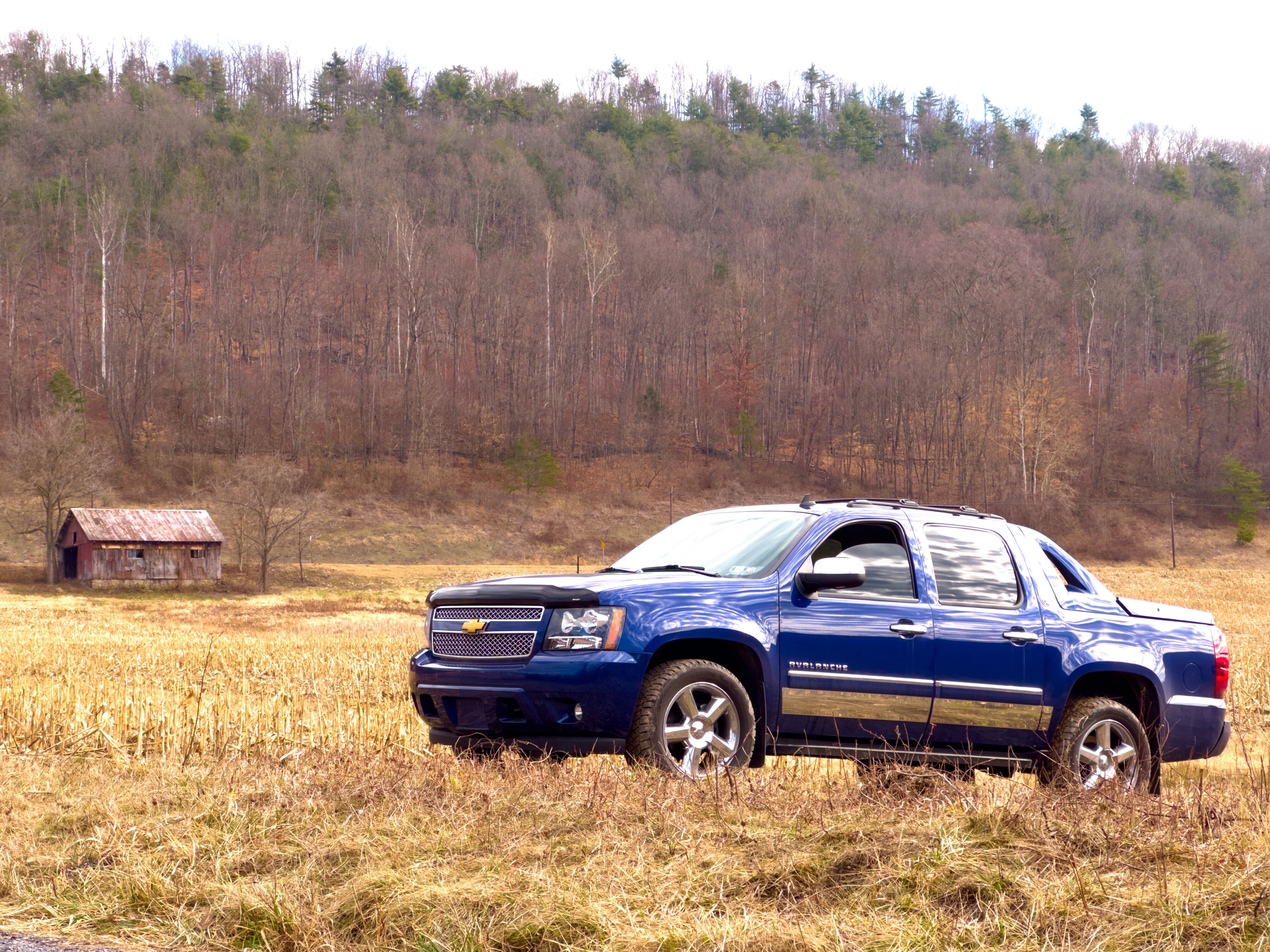
Situations change all the time. The cts fit my daily routine until it didn't. Suddenly I needed a truck so I bought the Avalanche. Then my financial situation changed and I had to sell the avalanche and end the CTS lease and drive a $750 Buick Wagon that I borrowed. Then I went with no car for a while and just used Alberts CRV and the bus. You don't buy a car today based on what you think you might need in 5 years. Lots of families are 2 vehicle families, thus the leaf or focusEV or SparkEV do make sense.

