


Drew Dowdell
Editor-in-Chief
-
Joined
-
Last visited
Everything posted by Drew Dowdell
-
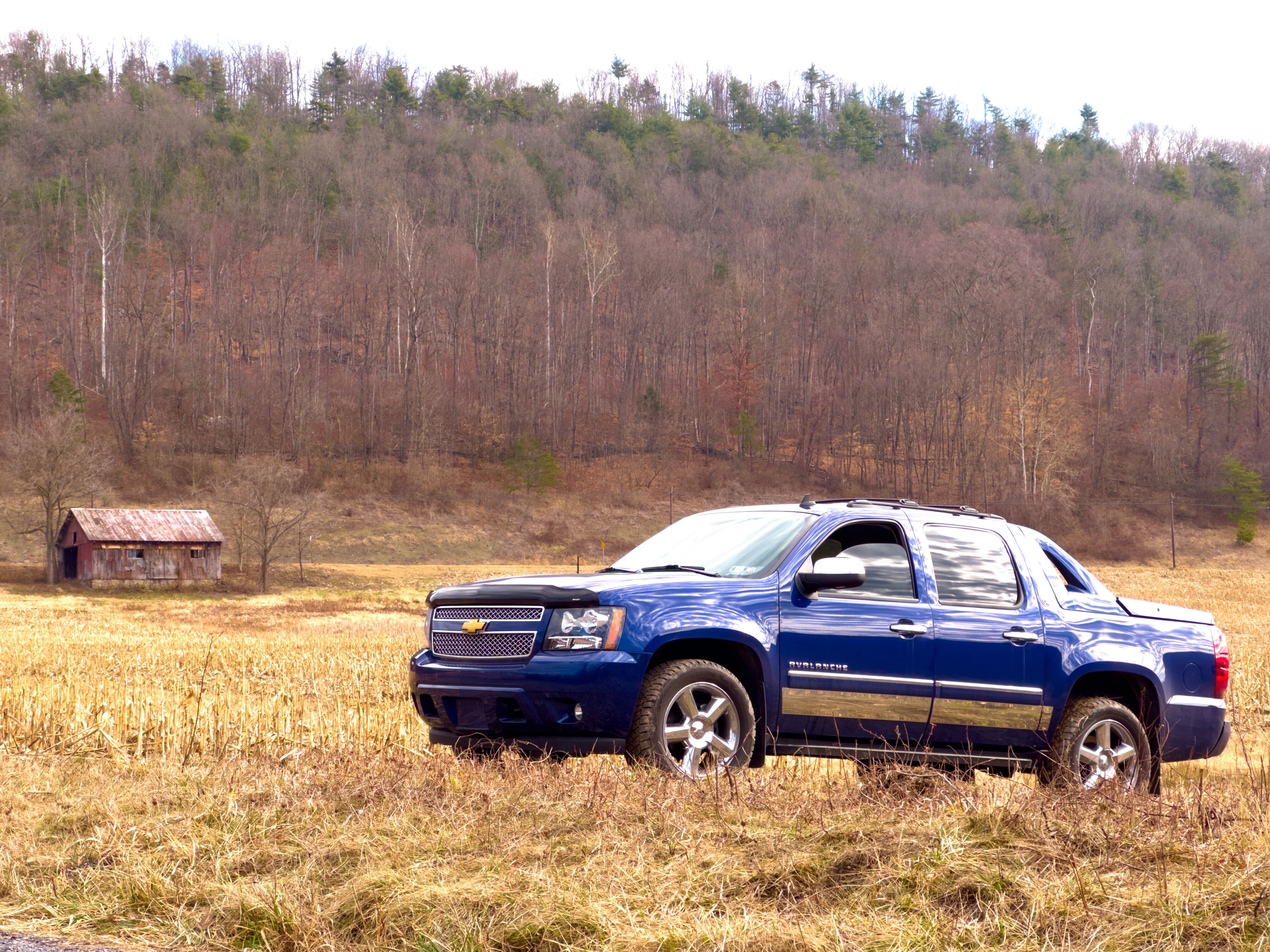
*Denali has entered the chat* *F-150 King Ranch has entered the chat* *F-150 Platinum has entered the chat* *Ram Limited has entered the chat* The Lincoln Blackwood was a limited edition truck, available only in a shortbed with a wooden liner and only in 2wd. The Lincoln LT was a victim of badge engineering.. it offered nothing but a grille and a navigator dash over the F150. The suspension and transmission were the same. The only hardware difference is that it was AWD rather than 4WD. The Escalade EXT was more than a badge job most years. It came with a bigger motor (6.0L) than the Avalanche (5.3) in the first generation. The second generation got the 6.2 while the Avalanche only got the 5.3 and for a couple years an optional (and very rare) 6.0. The Escalade had AWD instead of 4WD and they got air shocks (air shocks were only an LTZ option on the Avalanche, I have them) In addition to the Escalade dash, the door panels were upgraded as well. The only reason the Escalade EXT died was because the Avalanche died... and the Avalanche died due to GM stupidity. The Avalanche and EXT for some reason were not built on the Suburban/Tahoe line, instead they were built on the Silverado/Sierra line. GM wanted to sell more Sierras and Silverados to compete with Ford. They decided there wasn't enough room to build the Avalanche/EXT in Arlington next to the Suburban, so it got canceled. I think there absolutely is a market there for a luxury truck. Denali and the premium offerings from Ram and Ford prove that. Plus there's the luxury 250/2500 series trucks as well... I see a LOT of Denali 2500 Duramaxes around me. The reason there's no Lexus version of the Tundra is because Toyota has enough trouble moving the Tundra as it is. It isn't a compelling offering in the truck market and it is the second worst fuel economy after the Titan. Toyota had hoped to sell 200k Tundras a year and they barely crack 100k. The Titan sells a pathetic 26k a year, but the only reason it survives is because it rides on the same frame/platform as the Armada/QX80 and the NV Vans... but with the NV getting discontinued and Armada/QX80 sales under 45k.. I wouldn't be surprised to see the Titan discontinued entirely in a few years.
-
Trailboss is diesel standard and turbo4 optional with no V8? Or is the 6.2 still there and just not a change?
-
That just points back to my original statement of laziness. They didn't want to spend money to develop technology that all of us can see was a big improvement to both performance and fuel economy, and eventually reliability. It took Ford until the 80s as well... but when they finally got around to it, the results were drastic. The '83 Continental had the carbed 302 with 131 horsepower and 230 lb-ft. By 85 they added throttle body fuel injection that brought hp to 140 hp and 250 lb-ft. In '86 they went to multi-port fuel injection and that brought power up to 150 hp and 270 lb-ft in the Continental, but with other modifications could go as high as 225 hp / 300 lb-ft in Mustangs with less restrictive / dual exhausts. That big of a swing on essentially the same block shows what they could have done had they just put fuel injection on there in the first place instead of stubbornly sticking with carbs. I can attest from personal experience that the '85 Continental with throttle body fuel injection was good for 26 - 27 mpg highway. GM didn't fair as well because they went on the misguided trip of downsizing engines (something they're repeating today) to gain fuel economy and they went so far that not even adding fuel injection could help. Tiny 135 hp HT4100 V8s with 190 lb-ft of torque trying to move Sedan Devilles and Fleetwood Broughams and working so hard it defeated any fuel economy gains they might have gotten. It took multiple upsizings of the engines to get back to... 4.9 liters just to get 200 hp and 275 lb-ft... and those required premium to do it. The Chevy 350 went through a similar metamorphosis as they added fuel injection ranging from 145 hp in 1976 to up to 330 hp in the LT1 in 1996.
-
If it was done right, then yes. A lot of forums will tell you to just snip a wire and it disables the system and while that's true, it also means you don't get torque converter lockup so your fuel economy suffers and eventually (I hear) you do damage to the torque converter and/or transmission. Apparently one needs to route that wire back under the dash and tap it into another wire there so you get the full transmission functionality back.
-
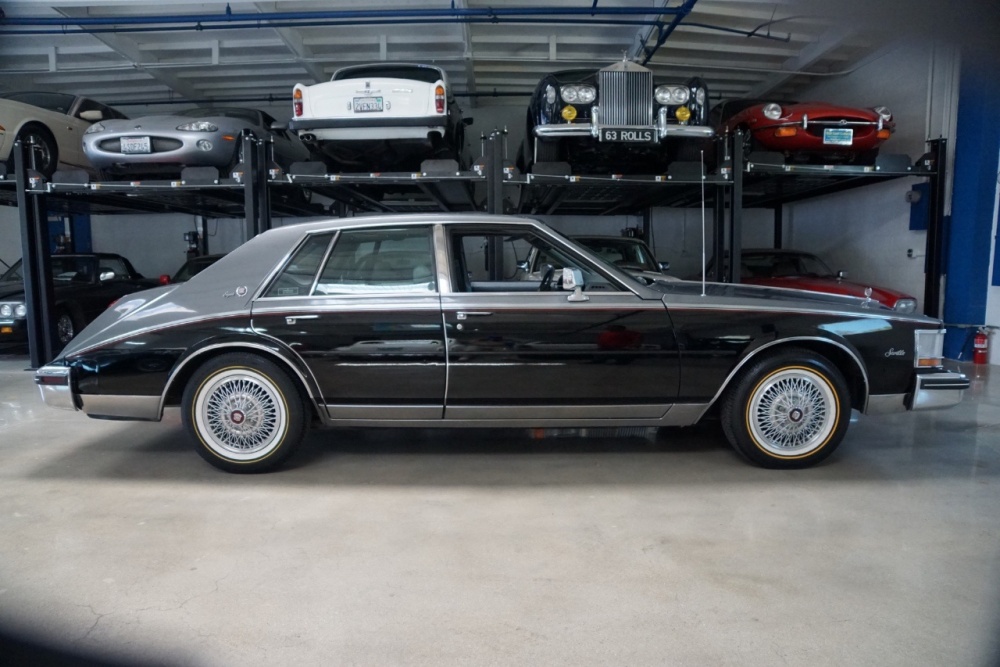
ah, yup, I did get the year off for the 8-6-4 in the Seville, but the power numbers are the same. The gas 368 was a zero-cost option... so "standard" didn't really mean any difference... it's just the box that got checked by default.
-
Fuel injection had been around for decades by '76. If it was an option on a '58 Plymouth Fury, it should have been standard on a Cadillac 3 years post fuel crisis in '76. You and I both know that just slapping a TBI on a previously carbureted engine takes the bare minimum of engineering to do. Heck, I can retrofit my 307 today for about $1500 or about $312 in 1976 using aftermarket parts... GM's total cost would likely be less than half of that and they would have passed that on to consumers as a "new fuel saving technology that increases power". Also, making the 500 the standard engine in all Cadillacs (minus Seville) in 1975 was extraordinarily tone deaf on Cadillac's part. Cadillac did introduce the 425 as a new engine. While the overall design was based on the 472/500, with the smaller displacement they were able to shave 100lbs off the block. But the fact that the carbed 425 made the same horsepower as the FI 350 should have told them something right there. In 1980, the Seville got a fuel injected 368 (it was the 8-6-4) with 145hp, but in California it got the fuel injected 350 and even though it was smogged for California emissions, it still made 180hp, carbed and unsmogged versions also made 180 hp. But outside of Cadillac it was just as bad. They weren't spending money on development.. it was the era of malaise after all. Most of the "new" engines of this era are just lipstick on old pigs that failed to keep up with the times.
-
They were being lazy. Even though the first oil crisis happened in 1973, they didn't take that as a sign of the times and start developing more efficient engines. The Cadillac 8.1 remained in production until the end of the 1976 model year run. They replaced it with a 7.0 liter but still put old fashioned carbs (180hp) on it in base form. The fuel injected form it got 195 hp. The Olds 5.7 in the '76 Seville also got 180hp though at a higher RPM than the 7.0.
-
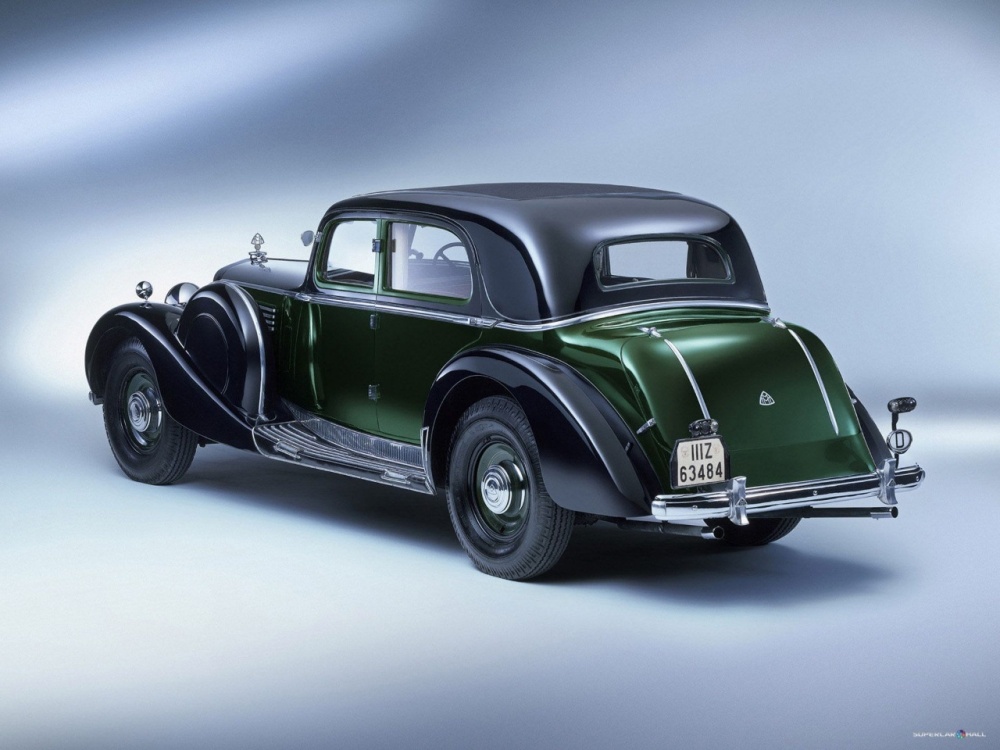
Well Maybachs are supposed to be one-offs. They’re sold as bespoke cars like Rolls and Bentley. You don’t buy one off the lot, you order to your exacting standards. 2 tone done perfectly
-
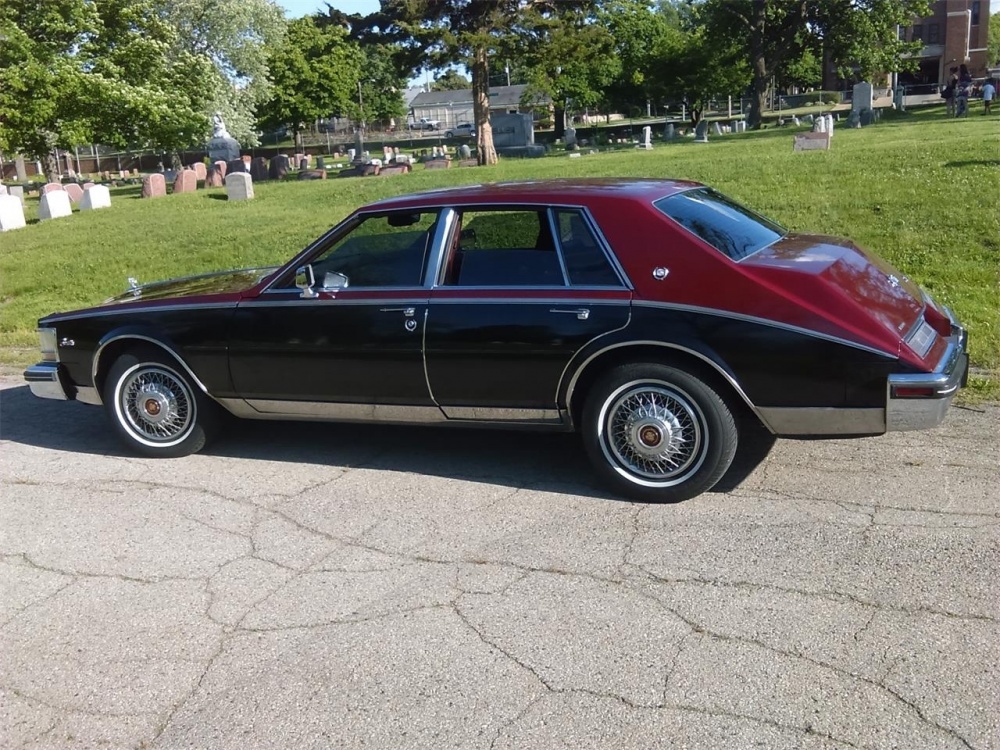
I think they look more 30's 2-tone.

-
Maybach couldn't even keep itself open as its own brand... I'm surprised that trucking company hasn't gotten a tap on the shoulder from Mercedes-Benz yet. Even funnier.... I browsed their website and they use almost exclusively Volvo trucks and not Freightliners... Different markets. S-Class Maybach is all about soft, posh, silent. Sure they have good horsepower... but that isn't the point... the point is the built in champagne cooler in the back. V-Series/Blackwing are performance vehicles. Both have their place. I would love a CT6-V Blackwing, but I certainly wouldn't refuse an S-Class Maybach either. I LOVE the two-tone they can come in.
-
CVTs are cheap to build and can sometimes gain a manufacturer a mpg or 2 in the EPA test (real world, your mileage may vary of course) CVTs are also not great with large amounts of torque. The first few years Nissan was putting them behind the VQ V6 there were a lot of failures below 60k miles. Subaru with the 2.0T and Nissan with the VQ are the two torquiest engines I can think of with a CVT. CVTs perform great with a lot of torque, they just can’t handle it from a durability aspect.
-
Isn't this how the original Hummers are set up?
-
He doesn’t post here often, but @HoLottaBuicks is my Buick-GMC salesman and friend of 20 years
-
Come on Dyna…. Floooooow! Anyway, the reason people usually hate CVTs is that with a few exceptions, they’re paired with absolutely gutless and unrefined engines. Then the nature of the CVT means you get this awful noise from under the hood as this underpowered engine spins within an RPM of its life just to get moving at a good clip. The CVTs in the Maxima, Murano, and Pathfinder are perfectly acceptable because the VQ V6 isn’t straining to move the vehicle.
-
-
Well that can't be true... even on my V6 300C I spin the tires on dusty roads before the AWD kicks in... and I'm not even trying.
-
Don't forget the lube. November, 23rd 1951, over a year after the accident. July, 27th 1950, and Milwaukee Road F7 no. 102 is in a phenomenal clip, pulling the “North Woods Hiawatha” at over 95+ mph when suddenly, the engineers side cross head seizes up in its guide, immediately overheating, and breaking! In all the horror of the running gear failing, air hoses were severed sending the train into emergency. Poor 102 was astronomically damaged, ties and road bed were obliterated, and debris from the accident were found (including the main rod) as far as 1400 feet west of Edgebrook Station. Several reports from the time account for a handful of injuries, one such was as she flew through Devon Avenue crossing, an automobile driver was injured by flying debris. Regardless, while not the best day for those involved, no one was killed. The locomotive stayed railed and traveled another 10,000+ feet before finally coming to a rest. The cause of the incident was later found to have been caused by the failure of a connection link between the valve gear's combination lever and a Nathan mechanical lubricator. They also discovered that both cross heads had been running dry, the engineers side just failed first.
-
Ah okay... so the 63 model as a LaSalle. I was confused because I was thinking of the '67 Eldorado and I thought that would be too close to comfort for the Riviera to co-exist.
-
I have some hearing difficulties, not enough to impede my daily life, but enough that music and specifically lyrics give me difficulty. I enjoy music immensely, but I need to feel it and lyrics are difficult for me to discern. Albert hates it because I need the bass pumping or the pipe organs at full. That said, one of the best vehicle audio systems I've encountered was the Fender system that VW was putting into the Jetta a few years back. Bose is just the bare minimum, Bose Panarey is slightly above that. Harmon Kardon is meh. The Burmester and B&O systems were good but didn't blow me away... but to be fair, no car audio system has. I would say that the Sony system that Ford used in some of the Flex/Explorer/Edge models was pretty good too... a worthwhile upgrade. They seem to have since moved to B&O. The super high end luxury audio houses don't seem to be doing much more than throwing more speakers in a car in yet another dick waving race. It seems about as much of an upgrade as a fake LV bag.... only good for the bragging rights of saying you spent $3k extra for someone else to put branding in your car. Also @ccap41 Cadillac was putting surround sound in the seats in 2008 before Benz did. Benz did have surround available, but it was just a 10 speaker system with nothing in the seat unlike the 15 speaker system in the STS.
-
Same: Avalanche, 12 months and 14,000 miles later, yet I paid $32k Chrysler 300C - 10 months and 10k miles later, I paid $23k
.png.a5db660195061c8e8bebf0015c9048d5.png)
.png.97cd23e0a03345eeacac83acf51f0c0c.png)
-
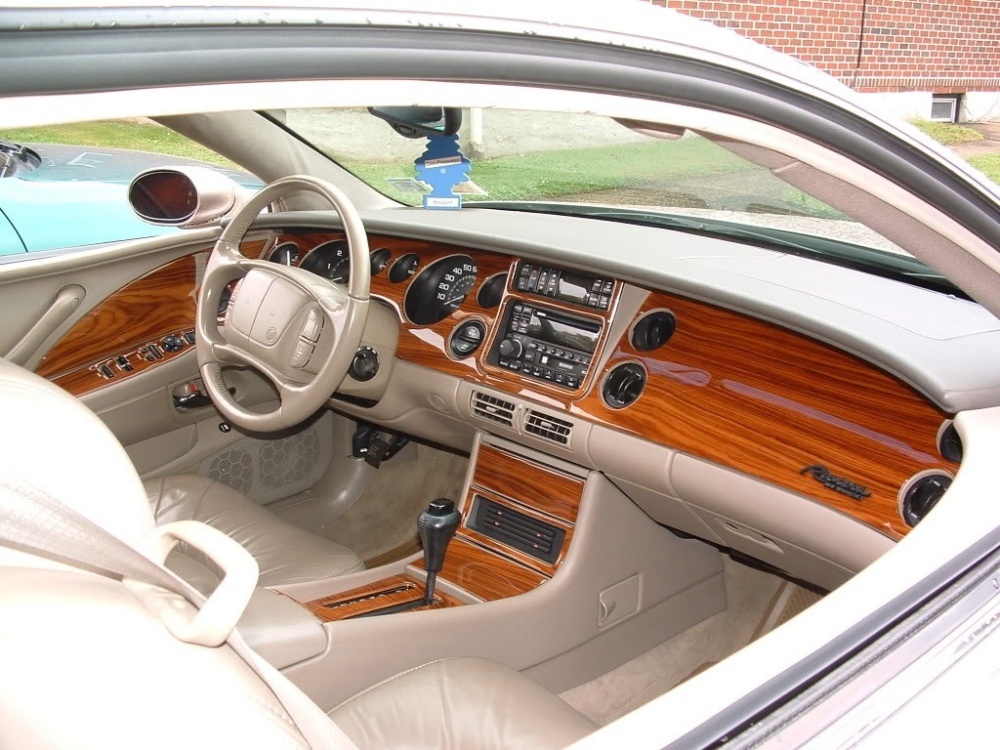
Ever notice that in the search for intelligent life, all of the sensors are pointed away from earth? There was an aftermarket wood paneling kit that gives it a Jaguar feel. soo much richer looking. If I had one of these I would do it. I like the burled one better. I'd need to swap out that Cavalier shifter though.

-
Interesting! Wouldn't it have collided with Eldorado though? Or would there have been a large enough size and content difference to leave room for both?
-
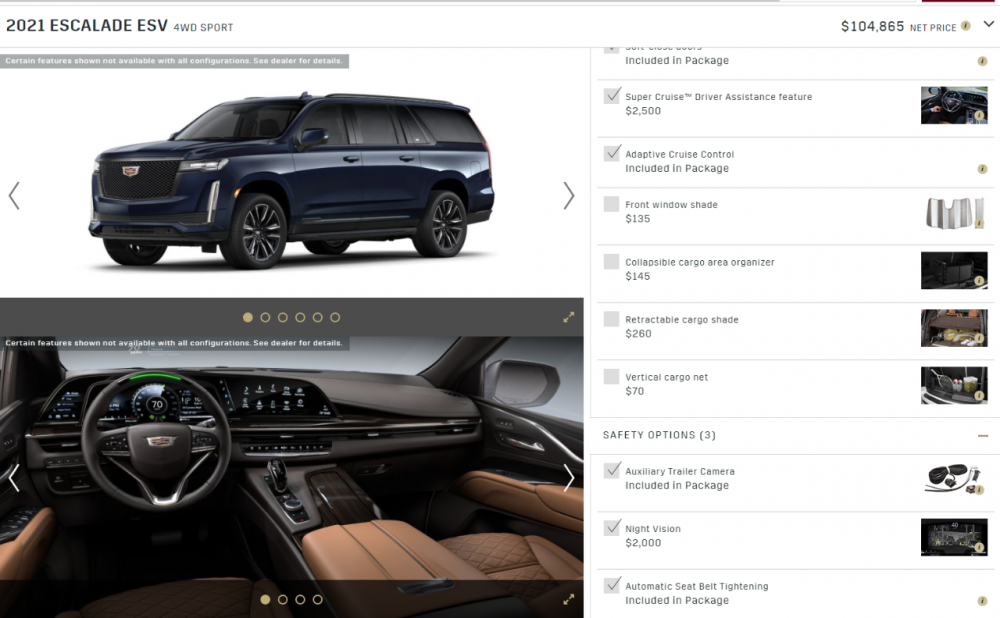
I think they look ungainly and awkward. If I'm spending $110k plus on a 3-row full size SUV, I'm getting something with pedigree, has night vision, and that can drive itself.
-
The unfortunate reality is that's what the plood in my Avalanche looks like... they matched the existing stuff pretty well. So it's what I'm stuck with.
-
I agree on the terms that it's just too big for the space. 1 inch shorter on the screen and it would be fine. That said, I've been interested in this unit for a while, but they still have a lot of software bugs and it takes over the hardware HVAC controls. I wouldn't mind the HVAC takeover so much at long as the system isn't buggy. But maybe they'll have some software upgrades for them eventually. I *really* want a nicely integrated apple carplay unit.


.png.a5db660195061c8e8bebf0015c9048d5.png)
.png.97cd23e0a03345eeacac83acf51f0c0c.png)


