

Leaderboard
-
Drew Dowdell
Editor-in-Chief15Points56,342Posts -

Robert Hall
Premium Subscriber10Points32,446Posts -

G. David Felt
Premium Subscriber6Points38,396Posts -

trinacriabob
Members2Points11,594Posts


Popular Content
Showing content with the highest reputation on 06/07/2022 in Posts
-
4 pointsan EV SUV would be fine for you then. 10 minutes on a fast charger while you take a bathroom/food break and you'll keep it going After multiple round trips to Florida... I stopped trying to do those marathons of driving without stopping. I stop when I feel the need to stop. It's not a race and there's probably slow traffic in Georgia anyway.4 points
-
3 pointsYup, I agree, I must have been a long haul trucker in my past life as I could easily go 500 miles in the Escalade before I would stop for fuel and bathroom break, then off again. In the last couple years with Covid, the road trips the wife and I took are now very much like @Drew Dowdell stated, about 200 to 300 miles before a stop for the bathroom and stretch the legs. Crazy how the body changes as we get older. Your going to be like me, hit 52/53 and everything changes, now at 55 200 to 300 miles at most before either need to stretch the legs or bathroom break.3 points
-
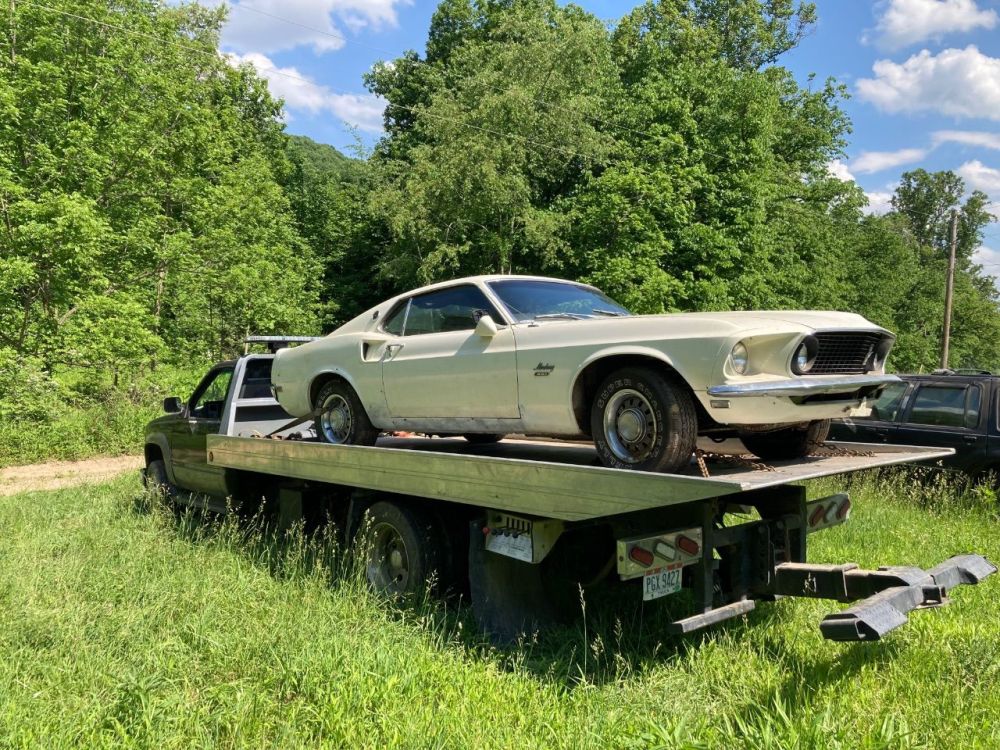
3 pointsYeah, a lot of good memories with my 5.0. Been all over the country with it, had in Colorado for 7 years, road trips to Florida and Boston/Cape Cod, trips to Az, NM and Wyoming. It was the last fun car my Dad bought, and my first fun car. I want to save it and restore it along with my Dad’s ‘69 Mustang that he brought new. Got it out last week.
 3 points
 -
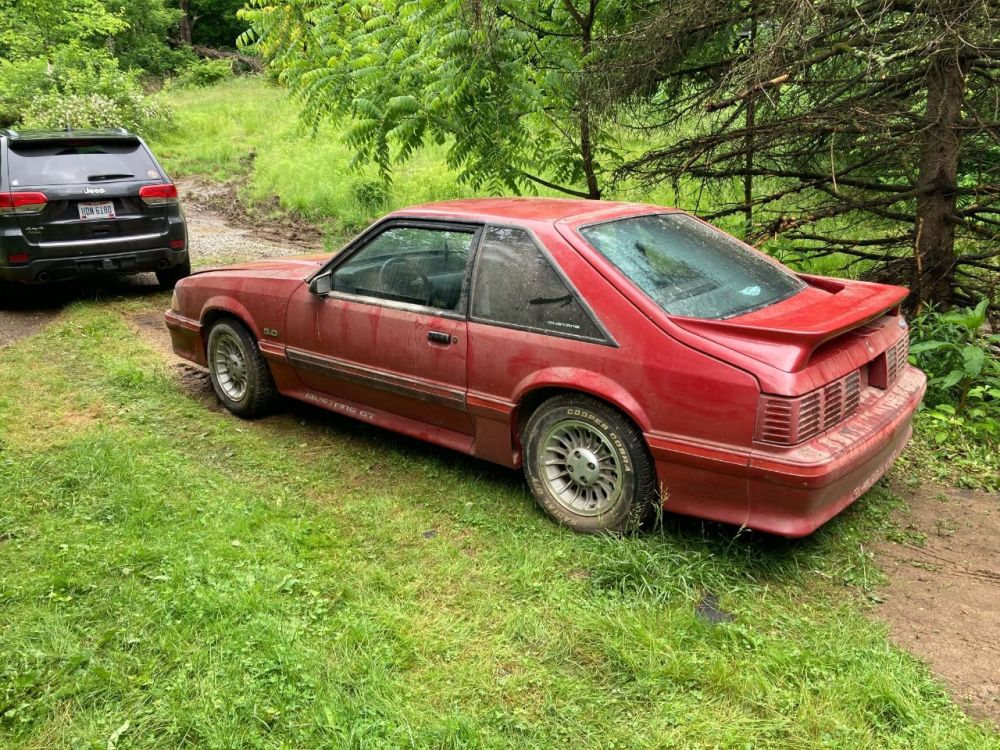
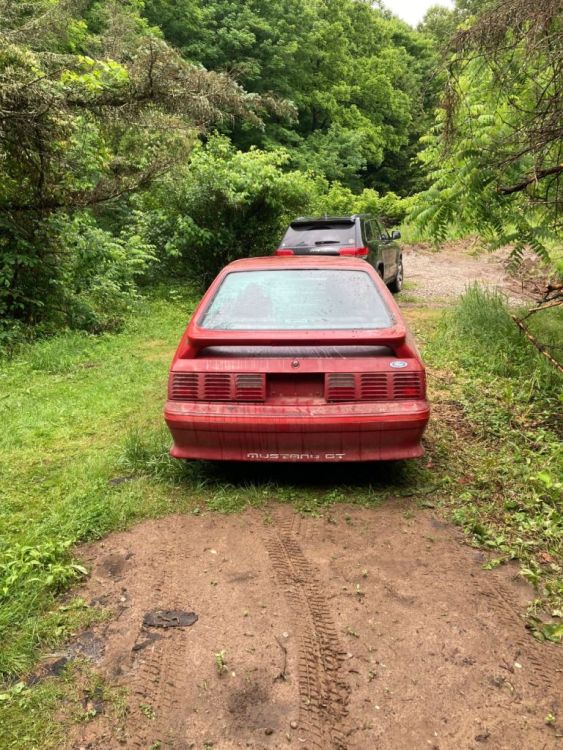
3 pointsOn today’s installment of #MudFarmLife, I came down and put a new battery in my Mustang, aired up the tires, it fired right up. Drove it out of the barn. Needs a new exhaust. Going to get it hauled to my mechanic and gone over. Hasn’t been on the road in maybe 7-8 years. I last drove it in 2013. 64k miles. I want to be able to drive it again and feel like it’s 1987….:)


 3 points
 -
2 pointsThere are a lot of "messed up" people because they like both New York and California and, because they get into these moods, they tend to move back and forth. This would be people who have that sort of money. And some of these people have residences in both places. Say it all with a New York accent: When in New York: "the weather is awful" When in California: "there is no culture here," "you can't get good food at 1 a.m." They love to whine. - - - - - The second photo looks more like La Jolla (San Diego) even though I was thinking it could be near Palos Verdes or Laguna Beach, but I'm not sure.2 points
-
2 pointsAgree that is sharp looking. WOW, I totally forgot that they had offered it in a Diesel version. Proves our point as to how terrible GM marketing is. Actually, they could have totally passed on the diesel and should have put the VOLT powertrain into the Equinox when version 2.0 came out as that would have sold like hot cakes for GM.
 2 points
 -
2 pointsI used to be able to do that in my younger years... I'd do Pittsburgh to NJ in one shot. I just can't make it more than about 200 miles anymore.2 points
-
2 points10 min every hour and a half and you’d never need a full recharge stop until your destination I don’t think the EUV has the new Ultium batteries.2 points
-
2 pointsGiven the time span between when @Robert Hall trades vehicles, his next one will be in 2033 anyway, by that point $80k will be entry level. But I hear you on range. I physically can’t go more than 200 miles without stopping. My bladder doesn’t have that range. The new GM and Tesla batteries can add 100 miles in 10 minutes. That’s enough to keep me on the road at the same pace my bladder needs.2 points
-
1 pointNot much seen yet this month, but this pic popped up in my FB timeline--my Jeep in my carport in Phoenix, as I was packing up 5 years ago today. That was the day I left the desert void for good...starting a 2100 mile drive to Ohio that evening. All in all, I've enjoyed life in green, rainy NE Ohio way more than desert life.
 1 point
 -
1 pointIm so happy for you for your Mustang!!! When I read this post this morning, I was all smiles!!! Im so glad that the Mustang fired right up and was ready to be driven again...as you said...like it was 1987!!! Perfect Mustang songs, from the year 1987 and of course something from Hysteria maybe a love song a pop song and a classic '80s synth1 point
-
1 point
-
1 pointVery cool, a quality detail inside and out, new tires and a tune up and that baby will be ready to Rock! Sweet Ride, fully worth restoring and driving again. Time for a new house with a 4 car garage it sounds like Robert.1 point
-
1 pointYeah, for most of the length it is still 2 lanes each direction. There's room to expand it, but they just haven't.1 point
-
1 pointAhhh yeah, I do remember like the cheapest way to get the diesel was like 35-38k or something pretty nuts, because it was only available on the top trim. Whoa, just looked up a C&D test of the diesel 'Nox and I remembered it being slow...but this is real slow. 0-60 in 9.4 seconds and 1/4 mile in 17.2 @ 80mph. I still think it would be a fantastic vehicle but you can't be in a rush if you own one of these.1 point
-
1 pointThat suggests you haven't been on 95 in Georgia lately. It is, by far, the worse part of the trip for traffic. Regularly down to 55-60 in the left lane with no opportunity to pass. Jacksonville to Brunswick is fine, but from there through Savannah until the interchange with 26 is awful. North of Charlotte to the VA border is the second worst.1 point
-
1 pointI must have been a long haul driver in a past life. I have done the I-40 drive from NC to AZ five times and I don’t stop unless I need gas or if the rare bladder emergency comes up, I will stop but overall, I will drive 300-400 miles without stopping. I do not F around on highway once I get going lol.1 point
-
1 point
-
1 pointAs with everything, there's an App for that.... several in fact. This is from the Plugshare app. Any EV with a 350 mile range and fast charging ability should be sufficient
 1 point
 -
1 pointIt is highly dependent on the chemistry of the battery. Batteries can have extremely long lives though, so even when a battery is done in an EV, it can go on to serve as a household solar power storage unit for another decade or more. A gas engine can't really compete with that. Gas engines, and their transmissions, are incredibly complex even just from a metallurgy standpoint. The amount of time and energy that goes into creating and transporting all of those parts is mind blowing. That said, there have been some relatively recent battery breakthroughs that will, in future, reduce the amount of rare earth metals used in batteries. Telsa has already implemented them in some of their cars. The batteries are smaller and lighter for the same power output and range. There are two main points to EVs: 1. It makes the method of propulsion fuel agnostic. It doesn't matter if you have coal, natural gas, wind, hydro, solar, rooftop solar, nuclear, or a hamster running on a wheel generating electricity. The car doesn't care. If all of the sudden we can't use coal anymore, there's 5 or 6 more options to switch to and you don't even have to think about it, your power company does that. 2. Even if you charge your EV from a coal plant (which the vast majority don't, coal use has fallen below 20% in this country), it is still cleaner from a CO2 standpoint because EVs are just that much more efficient. Additionally, it is far easier to make sure that a few power plants are burning cleanly than it is to make sure 200 million cars are. You live in NY, so you have emissions checks. Ohio doesn't bother with that, so cars can pollute however much they want and I get to breathe it all.1 point
-
1 point
-
1 pointHad a good quick trip to Syracuse...left yesterday just before noon at got back at 8am this morning. The Paul McCartney concert was great...amazing to see a 79 year old sing and perform for almost 3 hours..his backing band was solid. Great laser show and pyrotechnics on ‘Live and Let Die’. The pre- and post-concert traffic was awful--huge crowds on a college campus and narrow streets.. (took 1 1/2 hrs to get from the U of Syracuse Carrier Dome back to where I'd parked the rental car).... about a 6 hr drive home on I-90. First time I'd drive a current-gen Equinox--a very pleasant CUV. Easy to get in and out of, easy to see out of, comfortable (the seats had plenty of adjustment, not-over bolstered, didn't pinch my back). Easy to use controls. The pano roof w/ power shade works nicely. Good on gas I think--made it from Cleveland to Syracuse (about 350 miles) on a little over 1/2 a tank. (Alas, no CD player or CarPlay but did use Sirius XM to listen to the Beatles channel. I'd rent another.1 point
-
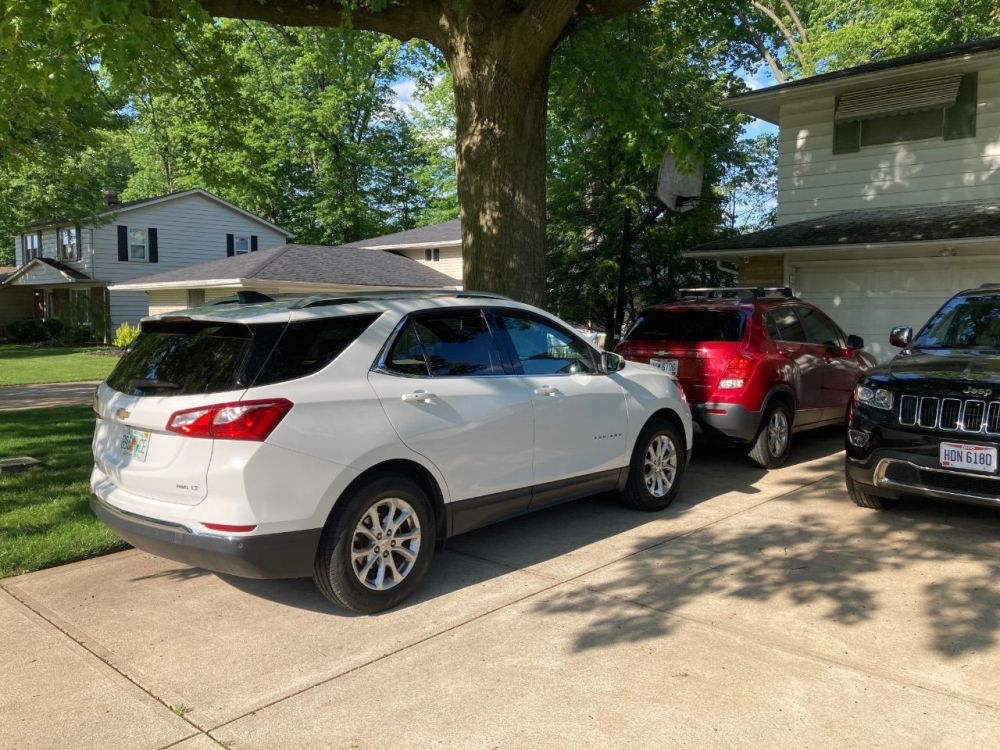
1 pointPicked up from Hertz for the weekend trip. Equinox LT AWD w/ a Florida plate. Did that because my sister hates long trips in my Jeep and I find her Trax too small. Did a brief local drive, seems comfortable. Seems like the seats are wider and more hiproom than my Jeep. Huge pano sunroof.
 1 point


This leaderboard is set to New York/GMT-04:00