Jump to content
Create New...
  • 🚗 Your People Are Here. Get In.

    The internet is full of car content. This is the community.

    Cheers & Gears has been bringing enthusiasts together since 2001. Join the conversation, show off your garage, and find your people.

  • Chris_Doane
    Chris_Doane

    2012 Volkswagen Passat TDI

    By Chris Doane

    January 7, 2013

    It’s midweek and I’m cruising down the interstate when I come up behind one of the Passat TDI’s diesel brethren from a few decades prior: An early 1980’s Mercedes 300D.

    The tortured Benz was loud, emitting a smoke screen, and judging from its’ lack of ability to pass a semi-truck, the non-turbocharged 300D. A quick look at the trunk lid badging confirmed that.

    Back in the 1980’s, I’m not really sure what the appeal of the 300D would’ve been. Gasoline was around $1.20 a gallon and luxury buyers wouldn’t have thought twice about filling up at that price. The 300D had 83hp, 120 lb-ft of torque, and without the turbocharger, looked to have “John Deere” acceleration qualities. Fuel economy usually fell between the high 20’s and low 30’s.

    As it turned out, the biggest redeeming quality, realized years later, was that the diesel motors in the 300 were built to be absolutely bombproof. The first 100,000 miles on these motors was simply the break-in period. These days, Mercedes 300D’s reaching half a million miles, or more, is not uncommon. The one I saw looked as though it might be past the half-million mark, but there it was, still going. Well, sort of.
    gallery_10485_524_46141.jpg

    Pulling my mind back into the cabin of the Passat TDI, the contrast is pretty stark. I’m driving at a casual 72mph, and the car isn’t even breaking a sweat, humming along at 2200rpm. No diesel racket, no smelly gray cloud, no lack of ability to pass at highway speeds.

    Thirty years of diesel technology advancements had now turned a car that roared, coughed and smoked into a sedan that behaved like all the rest and sipped diesel at a minuscule rate.

    Same, but different

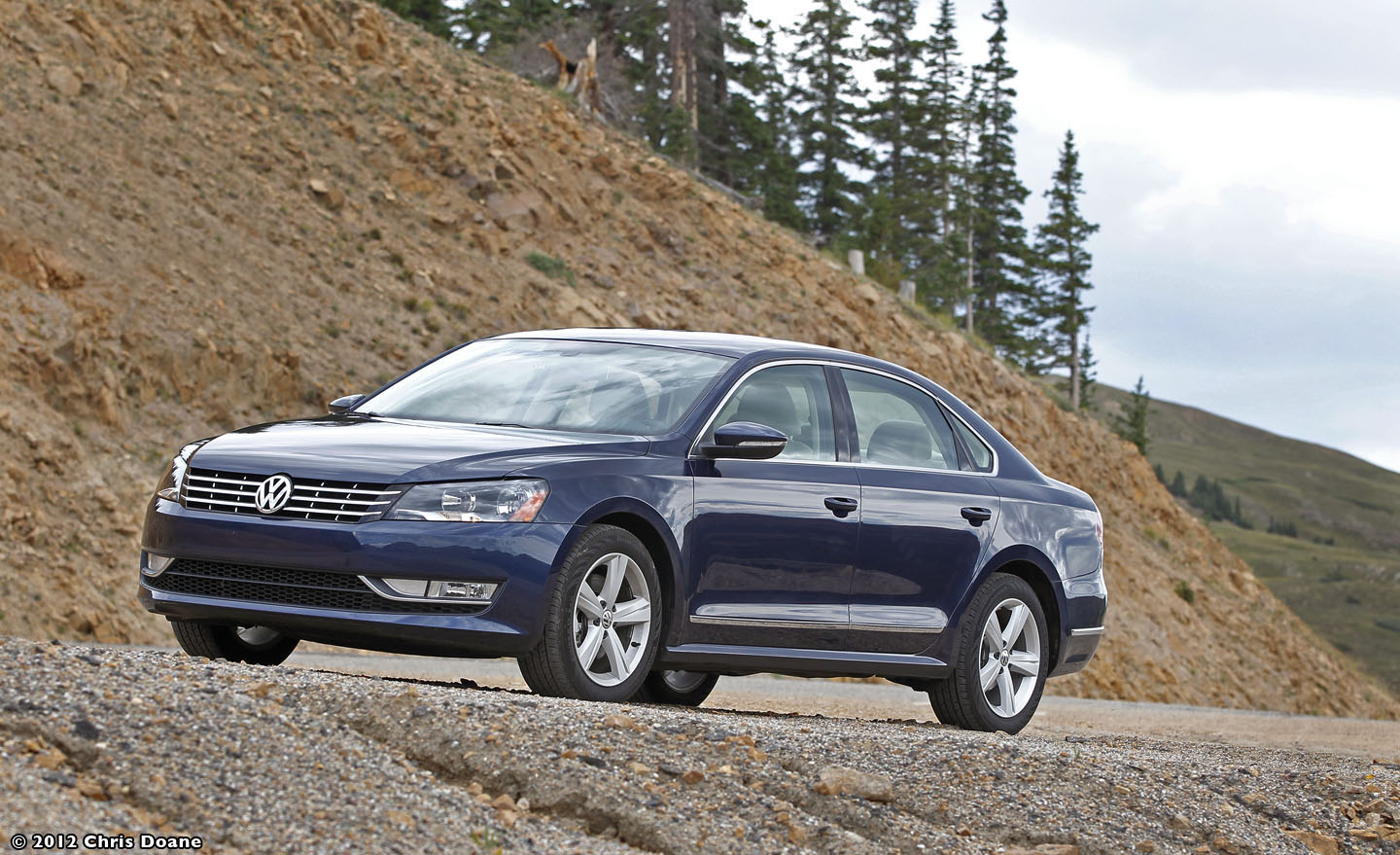
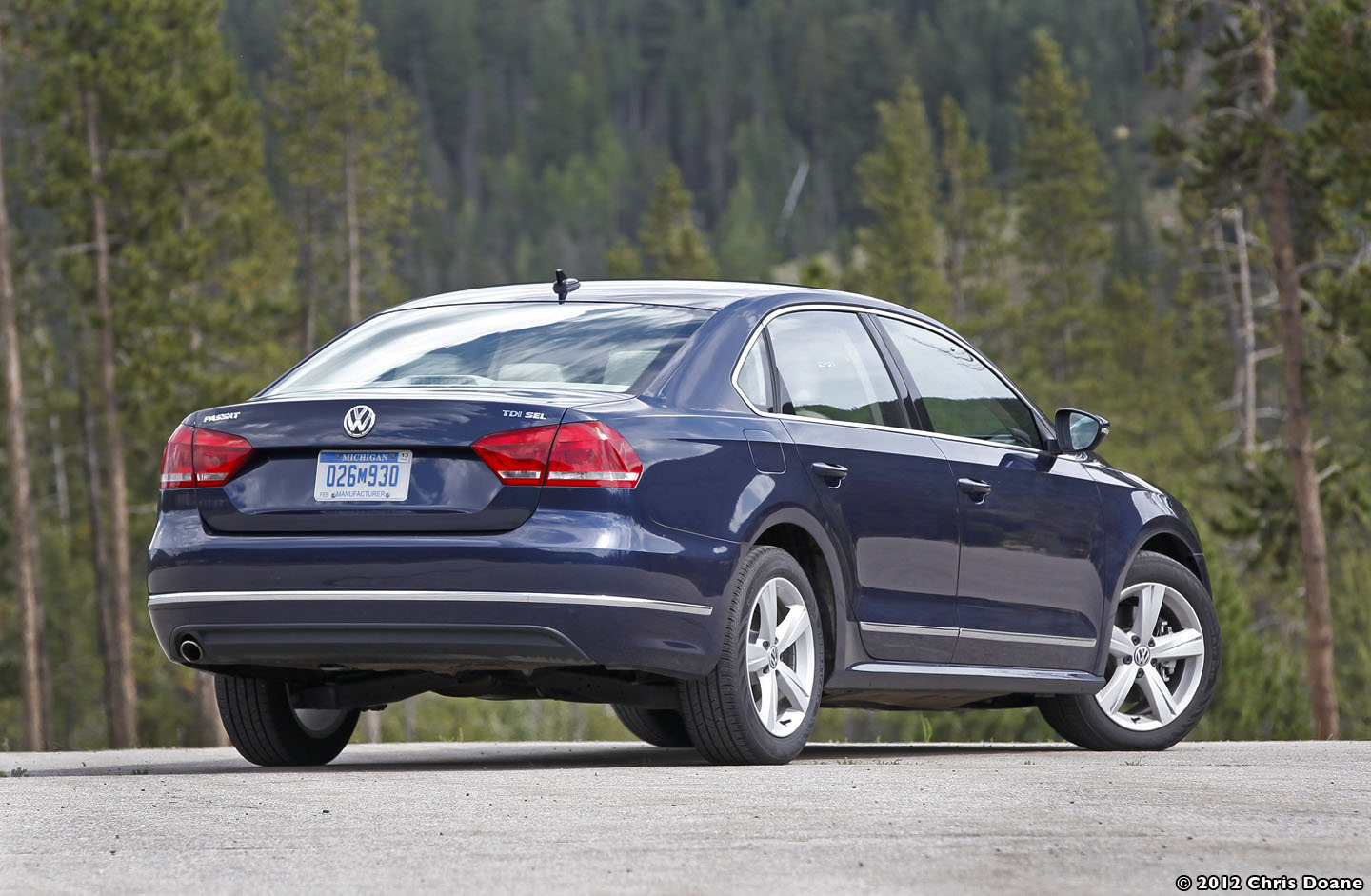
    Walk onto a Volkswagen dealer lot, and the only real visual cue to tell the diesel Passat apart from the gasoline model is “TDI” badge on the back.

    Once you pop the hood, you’ll be face to face with the TDI’s biggest change: The 140hp, 2.0L four-cylinder turbo-diesel engine. As with all diesels, it’s the 236 lb-ft of torque that really gives the Passat TDI its’ oomph.

    Past the different power plant, the other significant change is waiting for you in the trunk where the urea filler spout is located. Urea, or AdBlue as VW dubs it, is a liquid that is injected into the exhaust, greatly reducing the terribleness of diesel exhaust and allowing the car to meet U.S. emissions regulations. That might sound like an added hassle, but one tank of urea in the Passat should last you 10,000 miles, and is timed to be part of your regular oil changes.

    If the urea tank does happen run low, as it did during my week with the Passat, the car gives you somewhat of a stern warning, but it comes well in advance of the urea tank going dry. With 800 miles of urea range remaining, the warning light advised the engine would not be able to start once the tank was empty.

    The good news is a gallon of urea cost me only $6.99 at a local auto parts store and took all of three minutes to buy and pour into the tank. If you can’t manage to do that within 800 miles, the problem might be sitting in the driver’s seat.
    gallery_10485_524_173567.jpg

    Both the diesel and gasoline-powered Passats feature a smooth shifting, 6-speed DSG transmission. You’ll barely feel the first two shifts, and you’d have to have your eyes glued to the tachometer to know the cogs are swapping once you’re into third gear.

    MPGs

    The Passat TDI is a pretty purpose driven vehicle. It’s meant to be a comfortable, mid-size cruiser that gets phenomenal fuel economy, and it reaches those goals with ease.

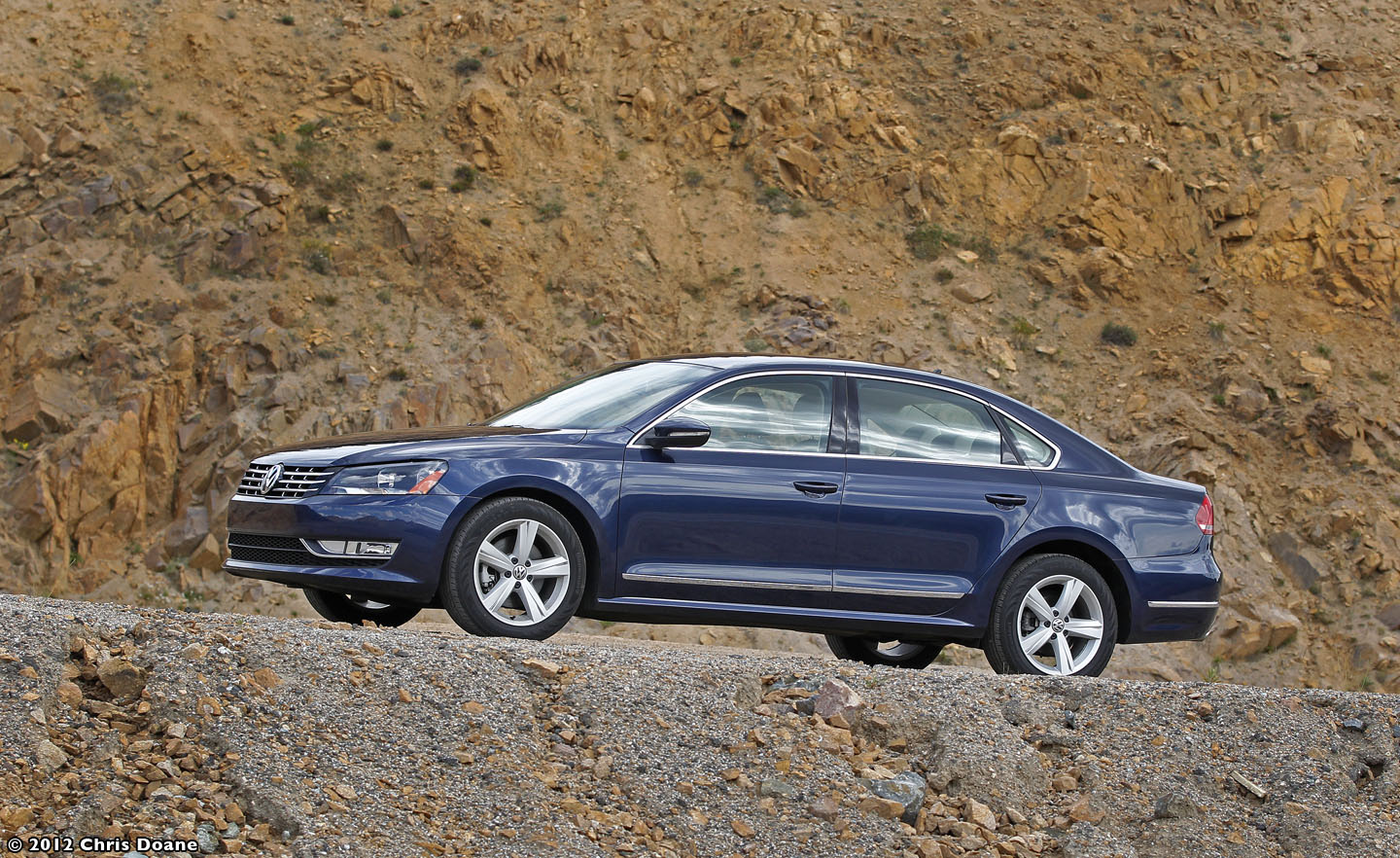
    The interior feels quite large, front and back, and the materials have not been cheapened in the way that the Jetta’s have. While I’m still pretty sure the only people fingering the dashboards are automotive writers, if you feel the need, you will find it’s fairly soft. More importantly, the 8-way power seats are “drive all day” comfortable.

    The most impressive part, and the reason you’ll buy this sedan, is the fuel economy. With the automatic transmission, the EPA says the Passat will get 30mpg in the city and 40mpg on the highway. However, that’s not really accurate.
    gallery_10485_524_260355.jpg

    One of the quirks with diesel engines is that it takes longer for them to break in than gasoline motors. 10,000 miles is usually the number most TDI aficionados use for a good break in period. During that break in period, the piston rings in the engine will become better seated and the compression in the engine will improve. The end result of that is even better fuel economy.

    The Passat I drove had nearly 17,000 miles on it by the time I slid behind the wheel, so this diesel engine should’ve been operating much closer to its full potential than a brand new engine. Much of the driving I did was on hilly roads, and with a less-than-light foot. Despite that, the Passat still averaged 42-44mpg. That’s 2-4mpg above the EPA highway rating while driving like a teenager who’d just got his license and the keys to dad’s car.

    Once I eased off the throttle and returned to a regular pace, the mpg started creeping towards 50mpg. Use the cruise control for all your highway driving, and a mileage number just past 50mpg wouldn’t be out of the question.

    On the downside, the Passat’s fun factor rates somewhere around “mashed potatoes.” The suspension is tuned much more for comfort than it is for cornering. There is a decent helping of body roll in the corners, and over large bumps, or rough road, the Passat can feel downright floaty. That’s great if your mom is in the passenger seat, but not so good if you want to go hunting for the corner apex.

    Additionally, the turbo lag is pretty noticeable. Floor the accelerator, and for the first two seconds, not much happens. That can make jumping out into traffic from a dead stop a pretty interesting gamble. Once the turbo is spooled up, power delivery is adequate.

    The Highway Choice

    In the end, I can forgive the Passat TDI for not being a sport sedan because that just isn’t what it’s supposed to be. In the same way that a hybrid or electric car makes sense for city drivers, this VW makes huge sense for people who spend most of their commute on the highway.

    Unfortunately, a fun-to-drive diesel doesn’t really exist in the U.S. market yet, but a midsize sedan that can achieve 50+ mpg can’t be ignored. Going out to the car the next morning and thinking “didn’t the fuel gauge say that yesterday morning?” was certainly not a bad feeling.

    2012 VW Passat TDI SEL

    Base price - $32,915

    Destination - $795

    Total = $33,710
    tn_gallery_10485_524_323508.jpg

    Album: 2012 Volkswagen Passat TDI

    6 images

    0 comments


    User Feedback

    Recommended Comments

    Diesel might be pricey, but it pays for itself in the long term and they have EPA approved CNG Conversion kits that mixed 10% diesel with 90% CNG and you still get your outstanding mileage. Those rock. :D

    Link to comment
    Share on other sites

    Hmmm big car 50 MPG, loads of interior room, decent materials and quality and all day comfortable chairs. Sounds like a reasonable replacement for the 2008 Impala. Too bad Chevy and Ford don't offer something comparable today.

    Link to comment
    Share on other sites

    My co worker has a new 13 Passat and he loves it. He has owned a series of Passats and has remained with the Gas power. He said he loved the drivability of the Diesel even better than the gas and the mileage but the cost was too much for him to justify. He said if it was an even cost he would have taken the Diesel.

    It is a nice car I just wish it was a little more sleek looking like the CC.

    Link to comment
    Share on other sites

    $34k for the top-of-the-line SEL model makes this an excellent value. I know there are legions of loyal TDI owners out there, but VW's reputation of reliability always worries me.

    I mentioned this a couple of times before. In 1978 my dad bought a Cadillac Seville Diesel, and we all know how GM's early diesels fared. A couple of years later, some family friends bought a MB 300SD, and that car just ran and ran and ran. MB's lineup started with the 240D, and the diesel models actually cost less than their gasoline counterparts, if my memory serves correctly. With the fuel crisis in the late 70s, MB was fortuitous in their number of diesel offerings..

    Link to comment
    Share on other sites

    part of that is the extra equipment made standard on the diesel. the engine itself is the easiest thing in the world to cost justify.

    Not when you want to pay that much and you can get nearly the same car for much less.

    I think he is like many Chevy owners much happier with the lesser price of a LT2 vs the LTZ. All I know is he is a dedicated Passat owner and fan of the Diesel and this is his fellings on the car. Love the engine not the price and chose the gas because of it.

    Link to comment
    Share on other sites

    One thing that must be considered too when buying a Diesel is they are not for everyone. Generally the harder they are driven the better. One thing we learned on the Old/GM Diesels and some other makes the harder they are driven the better the held up. The GM engines often in Cadillacs were bought by people who just putted around town and the engines leaked and often had issues.

    Now we also has some used buy salesman who were on the road all the time and a lot of highway miles and the engines leaked less to not at all and they seldom had issues with the engines. Most out lasted the body and frames of the cars.

    Link to comment
    Share on other sites

    One thing that must be considered too when buying a Diesel is they are not for everyone. Generally the harder they are driven the better. One thing we learned on the Old/GM Diesels and some other makes the harder they are driven the better the held up. The GM engines often in Cadillacs were bought by people who just putted around town and the engines leaked and often had issues.

    Now we also has some used buy salesman who were on the road all the time and a lot of highway miles and the engines leaked less to not at all and they seldom had issues with the engines. Most out lasted the body and frames of the cars.

    really wouldn't have been an issue if they wouldn't have built unreliable crap diesels in the first place. Yet, the euro makes and such built diesels that could purr reliably for 300-400k miles.

    There is no reason why with other makers testing the diesel waters again, and considering how GM is 'going global' now, that they can't find 3 or 4 cars in their stable here to sell about 50k diesels in the states every year, to the not everyone crowd.

    VW's plan is to become number one. One way they are accomplishing this is by selling 30k passat diesels a year.

    part of that is the extra equipment made standard on the diesel. the engine itself is the easiest thing in the world to cost justify.

    this is also in a way my reasoning with why the Impala should be offered as a diesel compared to the Malibu. Easier to bury the cost of the diesel with the extra kit.

    Link to comment
    Share on other sites

    The fact is the American car buying public is not sold on Diesels in a great degree and GM needs to sell the truth to them to get their attentions. Untill they drive them and understand the MPG they really see no reason to change. Most of the VW buyers are German or Import buyers to start with and out of 29K a small part converts from different makes.

    Diesel is like a Religion to some and they are faithful but others just are non believers or see a reason to change.

    I agree GM should go big with the Cruze or even a Regal Diesel but do you think a loaded LTZ Impala that now stickers over $42k will sell as well with the added cost of a Diesel? That car would be pushing $45K. At this point we have not even seen how the public will take to the higher priced Impala as it is.

    Lets get the Cruze out and see how it does and how well GM can sell the idea and expand from there. I hate to see GM go big on Diesels like they did on Hybrid trucks to only see them fail. If GM does not market the Cruzw Diesel well why bother with anything else.

    Link to comment
    Share on other sites

    An Impala diesel priced the same as the Passat and marketed head to head against it would make a great in your face to the VW bunch. It's not like they won't have the diesel for Europe anyways.

    Impala won't be priced at 45k in any shape or form if GM knows what is good for them. If they do, it will still only sell for so much...... and it won't fetch more than the LaCrosse.

    You can make the case that GM wastes all sorts of resources to build 'sports models' of some cars like an SS cobalt that sold for big bucks more and sold in very few numbers. So much for that. MPG, 2008+ is the new 'sports model', if GM is going to try to market to niches, performance is dead, they would get more mileage marketing to take direct hits on competitors market segments.

    Why a Cruze diesel? Why not the Verano instead?

    Oldsmobile alone sold over 125,000 diesels in 1980. If any US maker can push diesels, it's GM.

    Memo to GM, make it reliable, don't f*ck it up.......

    Edited by regfootball
    Link to comment
    Share on other sites

    Why Cruze Diesel because they have already anounced it. I would have chosen the Verano if it were up to me.

    Impala LTZ loaded will be around $42K per what I saw from GM and if you add a more expensive engine what is that going to do?

    As for the SS they change a holden grill I never made a case for a Cobalt SS they just did it and failed to market it. I am not even calling for a Cruze SS. I may own a HHR SS but I would have never advised to have built one.


    Olds sold a lot of diesels before they had issues and Diesel was cheaper and gas was up. Not difficult to do back then.

    Now I do agree with this "Memo to GM, make it reliable, don't f*ck it up."

    I have no issue with Diesel and the expansion of the engines at some point but before there is any heavy investment lets get the Cruze up and selling and show what it can do and then use it to sell what ever else they desire.


    If Diesel was such a slam dunk they would all be runnung to it like they are to the small CUV's.

    Let them get one right and then the rest can come petty quick if there is demand.

    Link to comment
    Share on other sites


    Join the conversation

    You can post now and register later. If you have an account, sign in now to post with your account.
    Note: Your post will require moderator approval before it will be visible.

    Guest
    Add a comment...

    ×   Pasted as rich text.   Paste as plain text instead

      Only 75 emoji are allowed.

    ×   Your link has been automatically embedded.   Display as a link instead

    ×   Your previous content has been restored.   Clear editor

    ×   You cannot paste images directly. Upload or insert images from URL.


  • Support Independent Automotive Journalism

    25 years of honest automotive coverage — because someone has to do it.

    Cheers & Gears has never been filtered by manufacturer relationships or driven by algorithm. Just real people, real opinions, and a genuine love of cars. Subscribers keep the lights on and get an ad-light experience starting at $2.25/month.*

    View subscription options

    *A small number of ads feature member-exclusive coupon deals and will still appear.

  • Similar Content

  • Posts

    • It really depends on how you're using it.  That Fiat has a really short range and a pretty slow charge speed. It's not for traveling like you do, it's for runs to the store in a city.  On the other end, something longer range 300+ miles like a Tesla, or some of the GMs and Hyundai/Kias, they make great touring vehicles.  Just look for a charging spot near your destination or most highways in the US have rapid charging now.   Now, public charging is usually not cheaper per mile than gas. If you're doing is to save money, an EV and relying solely on public charging nets out to the same as a similarly size gasoline vehicle, but no worse. It's pretty much just equal on fueling costs.  The EV pulls ahead slightly on maintenance costs, but probably not enough to justify a purchase in either direction.(*this is assuming US electric and gasoline prices, I don't know how the numbers shake out in the EU) One of the areas that don't see talked about much is convenience.  If you're in an area where you can charge at home and have decent public charger access, the convenience of EVs can't be beat. Just this week I had to go on a 200 mile round trip business trip. The night before I was so tired coming home I didn't stop to fill up the truck. If I had an electric, it wouldn't have mattered, but because it's gas, I had to budget extra time for stopping .  If it was a Silverado EV I could have made the trip twice on a single charge. Even a Chevy Bolt would have gotten up and back no problem without stopping.  What I'm getting at is that the range anxiety is a lot more overblown these days than it should be.  We're not all doing cannonball runs. We stop for food, bathroom, whatever. You can charge at most Walmarts and many grocery stores now while you shop. The only time I ever had to worry about range is when I return a rental car and they want it above a certain range before I return it.  
    • Dang, there are no ZDX within 200 miles of me and when I jump to 300 miles, they're more like 34-40k still...  Do you guys have a link to read more on this Costco discount? 
    • When people talk about electric vehicles and how they might fare for others, the other person's context needs to come into view. Last summer, I was driving through a beachside town on the Adriatic coast in Central Italy.  I couldn't believe what I was seeing, so I had to pull over and take a photo  This is evidently an electrified Fiat.  I don't know what this person's parking situation is, but it looks like they've got it parked on a narrow apron, are blocking the sidewalk, and the electricity is being borrowed from somewhere inside the house through a long cord. Unless a person in Italy has a detached home that has a garage or is in a condo tower that has garages at its base, they may not have a real tidy solution for electrifying the car while it's parked and they aren't doing something else or are sleeping.  A person could be in the exact same situation in the United States and Canada.   If you've got an EV and have a garage or carport, you can charge it as needed nightly if there are outlets available.  A friend of mine who lives in a Southern California suburb and has an 1,800 square foot house with a two car garage has 2 Teslas being charged while parked in the garage.  The same could be true in a personal garage somewhere in Europe.  But without the garage situation established and a vehicle yet to be decided on ... and if it looks anything like the above photo ... I don't expect to be buying an electric car this next time. 
    • I couldn't believe this.  Why was the truck even moving into an active runway or taxiway?  This is very sad and they gave some background on the two pilots who lost their lives, both of whom were fairly young and had their lives ahead of them.
  • Who's Online (See full list)

    • There are no registered users currently online
  • My Clubs

×
×
  • Create New...

Important Information

We have placed cookies on your device to help make this website better. You can adjust your cookie settings, otherwise we'll assume you're okay to continue.

Hey there, we noticed you're using an ad-blocker. We're a small site that is supported by ads or subscriptions. We rely on these to pay for server costs and vehicle reviews.  Please consider whitelisting us in your ad-blocker, or if you really like what you see, you can pick up one of our subscriptions for just $1.75 a month or $15 a year. It may not seem like a lot, but it goes a long way to help support real, honest content, that isn't generated by an AI bot.

See you out there.

Drew
Editor-in-Chief

Write what you are looking for and press enter or click the search icon to begin your search