Jump to content
Create New...
  • đź’¬ Join the Conversation

    CnG Logo SQ 2023 RedBlue FavIcon300w.png
    Since 2001, Cheers & Gears has been the go-to hub for automotive enthusiasts. Join today to access our vibrant forums, upload your vehicle to the Garage, and connect with fellow gearheads around the world.


  • William Maley
    William Maley

    2012 Mitsubishi Outlander GT S-AWC


    William Maley

    Staff Writer - CheersandGears.com

    August 7, 2012

    Mitsubishi, a brand that was riding high in the early to mid-nineties with vehicles like the Eclipse, Galant, Montero, and Diamante has fallen into obscurity very rapidly. In the same time frame, the crossover utility vehicle has become the ubiquitous go-to car for many American shoppers. As arguably one of the mostly hotly competitive sales segments, Mitsubishi's challenge is to make a stand out vehicle for shoppers drowning in a sea of model names.

    To overcome this challenge, Mitsubishi has brought not one, but two distinct crossovers; the Outlander and Outlander Sport. But, does standing out help or hurt a crossover like the Outlander or Outlander Sport. To find out, a 2012 Mitsubishi Outlander GT S-AWC was dropped off for a week long evaluation.
    gallery_10485_446_270104.jpg

    Next: The Outside Story


    Exterior

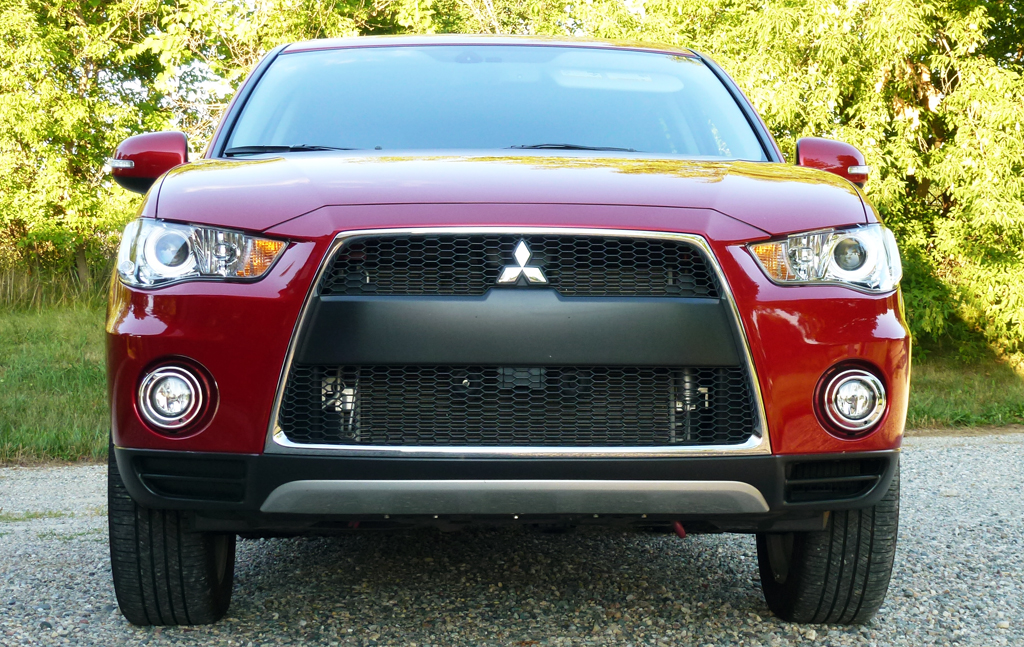
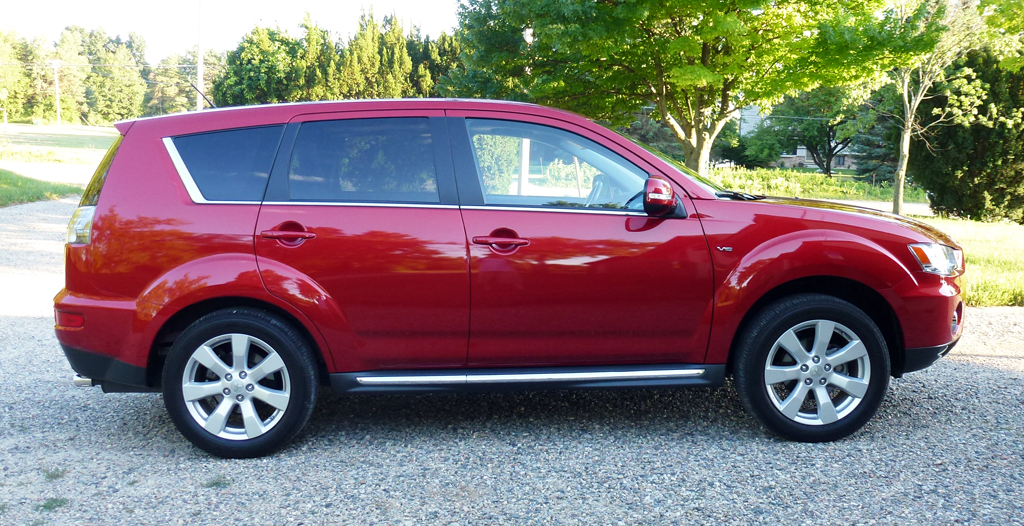
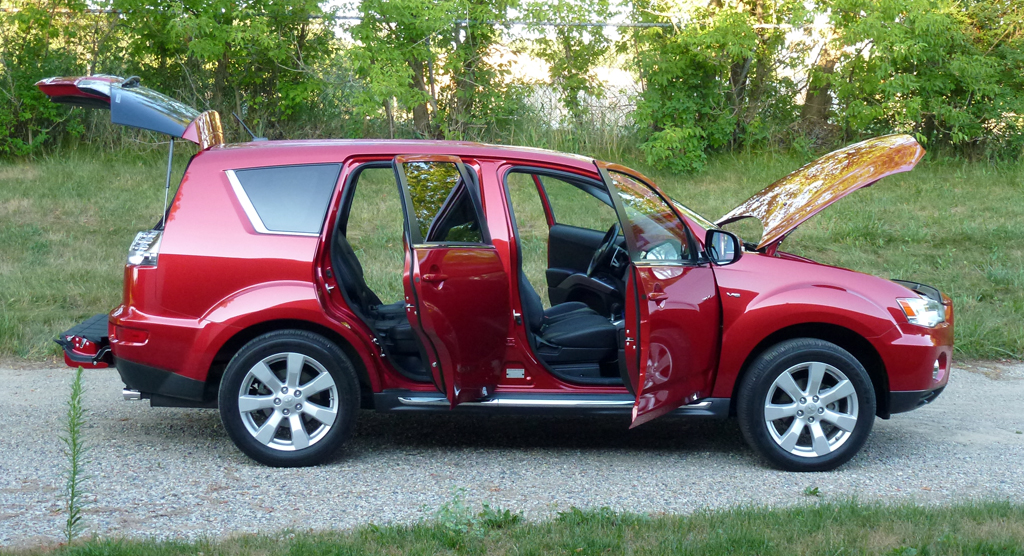
    Mitsubishi’s most well known model in production is arguably the Lancer Evolution. As such, you can hardly blame Mitsubishi for taking that look and injecting it into the rest of their lineup. The GT’s front end appears to be directly lifted from the Evolution, with its large, bold grille and chrome bar running around the perimeter. A set of projector headlights and fog lights sit on either side. On the side, flared wheel arches conceal a set of eighteen-inch alloy wheels, standard on the GT. The back end has angled d-pillars and chrome-like taillights.
    gallery_10485_446_430239.jpg

    Another design consideration Mitsubishi made with the Outlander GT was practicality. That’s very evident with the spilt opening tailgate. The rear window flips up while the tailgate base flops down. In most cases, this design would make it harder to get items into the back of a vehicle. But Mitsubishi designers made the base as short as possible to make it a non-issue.

    Visually, the Outlander is an interesting mix of Lancer Evolution DNA blended with the practicality of a crossover.

    Next: Welcome to the Interior


    Interior

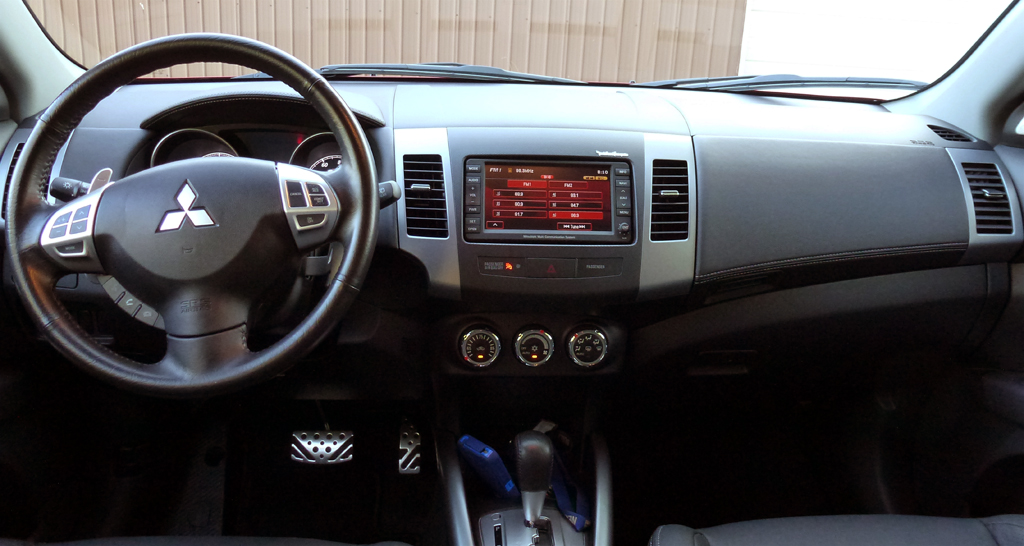
    At first glance, the Outlander GT scores very high with its interior. The design is very bold with a curved dash, and the use black and silver trim throughout. However, look and touch the interior a little bit closer and you realize there was some cost cutting.

    Opening the door to enter or exit the Outlander GT, you’ll notice the hollowness and tinny noise of the doors. This would be ok for a vehicle built in the 1980s, not for a vehicle built in 2012.

    Materials used throughout the vehicle range from ok stitched leather-like material to hollow, cheap plastics that are used in most parts of the dashboard. Build quality is mostly good, with no outrageous panel gaps or missing pieces.

    Our Outlander GT tester was equipped with a Navigation package that brought forth a five-inch touchscreen with a 40 GB hard drive for music storage and a backup camera. The interface and graphics felt a full decade behind the times and moving around was a pain due to the small buttons on either of the screen. Sound quality was a positive thanks to the 710-Watt Rockford Fosgate audio system which comes as part of the optional Premium package.
    gallery_10485_446_132140.jpg

    Another disappointment was there was no standard Bluetooth or a USB/Aux jack in our test Outlander. Bluetooth is prewired and the buttons to use the system are on the steering wheel. Also, the only aux jacks in the vehicle were RCA jacks. The only way to get USB and Bluetooth is to order the FUSE Hands-free Link System. With an as tested price of $33,605, it is not unreasonable to expect all of these features to be included.

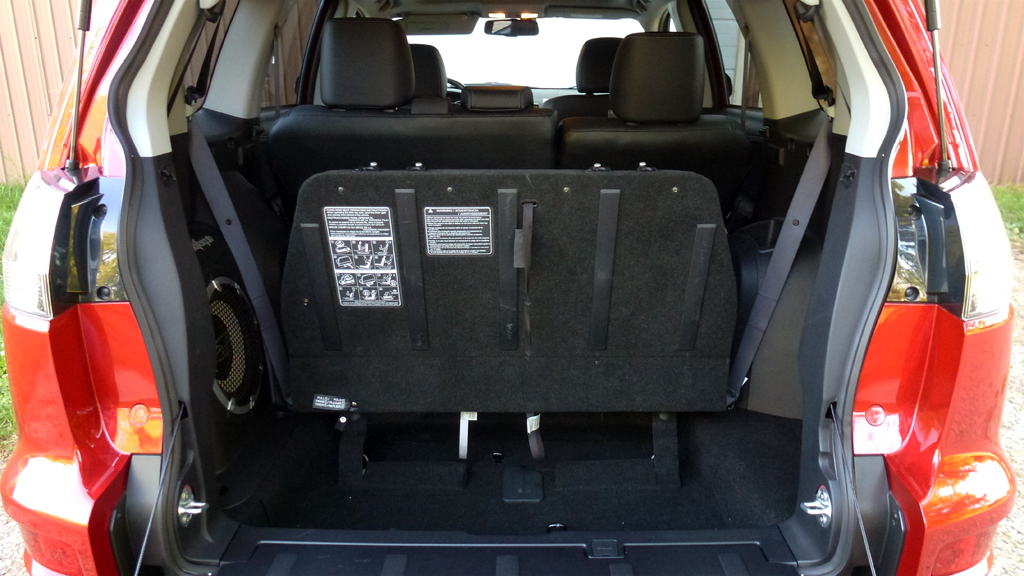
    As for comfort, the Outlander is a mixed bag depending on where you end up sitting. The front seats are soft, come heated, and provide a surprising amount of bolstering. The driver gets six-way adjustment and lumbar. The second row provides adjustment for recline and whether you want more legroom or cargo space. There is a third-row seat, but that is realistically for emergencies when you have to seat small kids. Trying to fit my 5’7 frame into the back seat was easier than expected. However, I wasn’t comfortable at all. Especially considering my knees were up to my nose.
    gallery_10485_446_133272.jpg

    Next: A Peek Under the Hood


    Powertrain

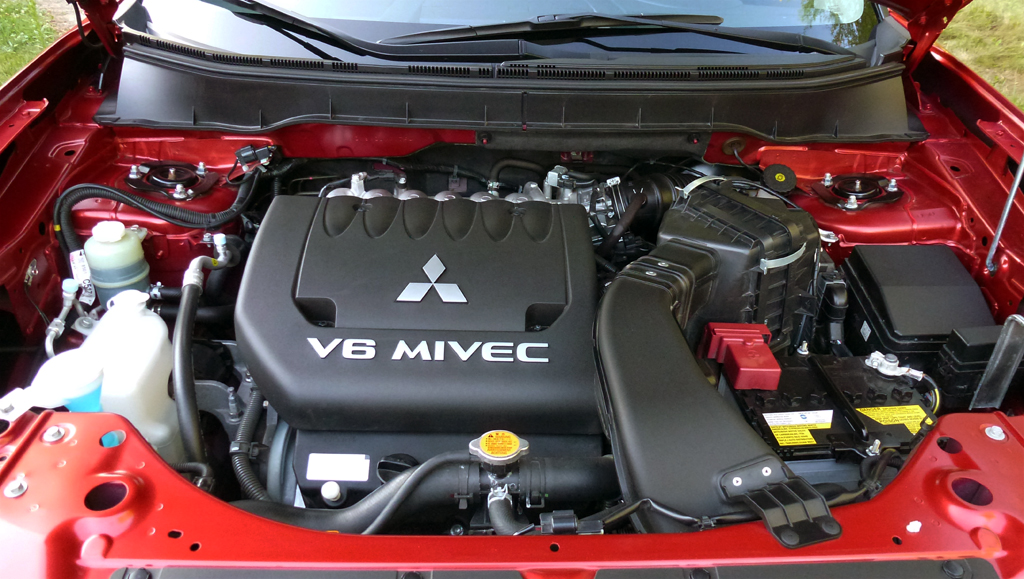
    The Outlander comes with the choice of either a four-cylinder or V6 motor. Our Outlander GT was equipped with the 3.0L MIVEC V6 producing 230 HP and 215 lb-ft of torque. The power is sent through a six-speed automatic to all four wheels courtesy of Mitsubishi’s S-AWC system.
    gallery_10485_446_368877.jpg

    Compared to its rivals, the Outlander GT is a bit down on power. That’s very evident when leaving a stop or making a pass as the V6 has to dig deep in RPMs to get the power. However the 3.0L V6 is very smooth, albeit a bit noisy. The six-speed automatic does its best to keep you in the power and delivers very smooth shifts. Mitsubishi also fitted magnesium paddle shifters from the Evolution to have a bit of fun. While very cool and fun to use while driving, I don’t see many owners using them at all.

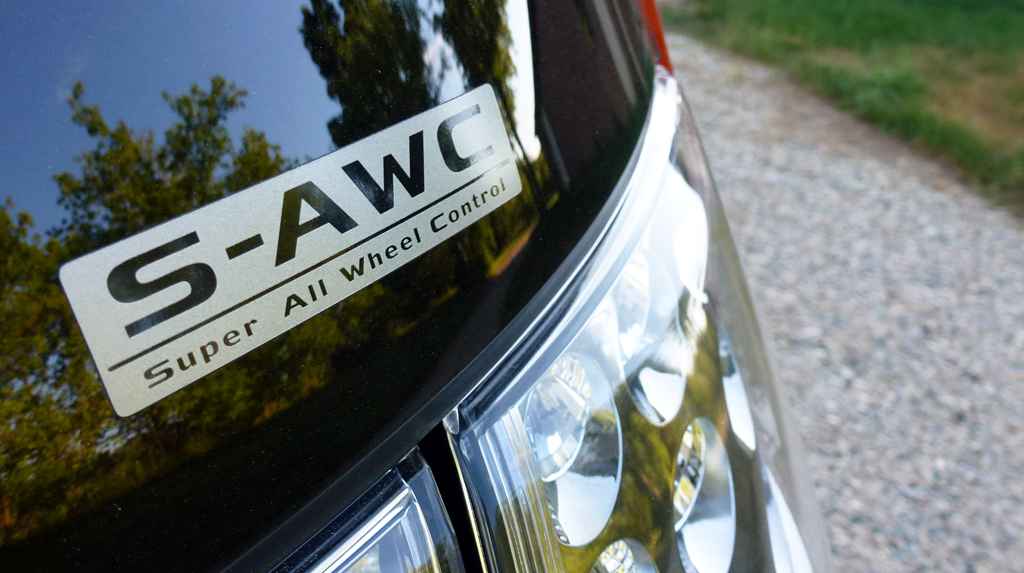
    And we get to final piece of the Outlander GT’s powertrain, the S-AWC system. S-AWC or Super All Wheel Control is one of Mitsubishi’s AWD systems that use a central differential to send power to whichever wheel to help improve traction. Also, S-AWC comes with a knob in the Outlander GT that changes the settings for the system for whatever weather conditions you find yourself in. The system has three settings; Tarmac, Snow, and Lock. The lock setting locks the central differential and provides increased traction for the worst conditions. This means the Outlander can actually go off-road unlike other crossovers.

    Fuel economy on the 3.0L is 19 City/25 Highway/21 Combined. My average for the week was a surprising 23.5 MPG.

    Next: Time to Drive


    Ride & Drive

    The Outlander GT was a bit of surprise on how much fun it was. The suspension is very firm and the steering is nicely weighted for enthusiastic driving. Combine those two items with the S-AWC system and six-speed automatic, and you have a very capable and fun crossover.
    gallery_10485_446_338985.jpg

    However, that firm ride does mean you will feel every single bump and distortion out on the road. Also, those looking for quiet ride should look away from the Outlander GT. There is too much tire noise at any speed and an abundance of wind noise when on the freeway. Engine noise is minimal.

    Next: And the Verdict...


    Verdict

    Style over substance? That was how I was going to start the verdict of the Mitsubishi Outlander GT, but then I thought about and changed it to this: style with a little bit of substance over substance?

    Why? Well, besides having a distinct exterior and interior design, the Outlander GT does bring forth some very good items. Those include the S-AWC system, comfortable seating (except for the third row), and a fun drive.

    However, you need much more than style and some substance to make a vehicle standout in its class. And in the case of the Outlander GT, it falls flat. Certain things like the stiff ride can be fixed by ordering a different model than the GT. But other items like the interior quality and engine make the Outlander feel old and outclassed.

    Mitsubishi has shown a new Outlander at the Geneva Motor Show earlier this year. Underneath the Outlander’s new sheetmetal lies a new vehicle architecture and will have the choice between gas and plug-in hybrid power. The new Outlander also gets revised interior and new safety equipment. The question is will the new Outlander be able to fix the problems of the current one?
    gallery_10485_446_576150.jpg

    Cheers:

    Exterior and Interior Styling

    S-AWC System

    Seating

    Steering

    Interior Build Quality

    Jeers:

    Quality of materials

    Firm Ride on Streets and Expressway

    V6 Engine (Power)

    Navigation Unit (outdated interface)

    No Standard Bluetooth/Aux Jack For The Price

    Disclaimer: Mitsubishi provided the vehicle, insurance, and one tank of gas.

    Year - 2012

    Make – Mitsubishi

    Model – Outlander

    Trim – GT S-AWC

    Engine – 3.0 SOHC MIVEC V6

    Driveline – All Wheel Drive, Six Speed Automatic

    Horsepower @ RPM – 230 @ 6250

    Torque @ RPM - 215 @ 3750

    Fuel Economy: City/Highway/Combined - 19/25/21

    Curb Weight – 3780 lbs

    Location of Manufacture – Mizushima, Japan

    Base Price - $27,895.00

    As Tested Price - $33,605.00 (Includes $810.00 Destination Charge)

    William Maley is a staff writer for Cheers & Gears. He can be reached at [email protected] or you can follow him on twitter at @realmudmonster.


    User Feedback

    Recommended Comments

    Great review, nice write up.

    I have to say Jeers to the Body design as it screams mini mini van to me and then has that freak-in ugly big black mouth for a front end. The dash while looking functional just screams minimalistic and makes me wonder what else was a short cut in cheapening the car to hit a certian price point.

    This is a car company that I do not see in the future just like Mazda unless it merges with some one.

    Link to comment
    Share on other sites

    "Mitsubishi, a brand that was riding high in the early to mid-nineties with vehicles like the Eclipse, Galant, Montero, and Diamante has fallen into obscurity very rapidly"

    Not rapidly enough...given the current market, I see the demise of Mitsu, Suzuki, Mazda, and a few other players.

    Nice write up on a dismal vehicle.

    Link to comment
    Share on other sites

    front row is comfy, second row is flexible, buttloads of cargo space for a small crossover because the cargo floor is lower and deeper.

    it's no more bland than a CRV or RAV4.

    AWC system is nice.

    Vehicle needs more soundproofing and perceived quality issues.

    Most outlanders that sell are four bangers for low to mid twenties, the loaded v6 is not a typical representation.

    The vehicle is a manageable size for many who don't want something heavy and larger.

    I know two people who own one and both like it a lot.

    Link to comment
    Share on other sites


    Join the conversation

    You can post now and register later. If you have an account, sign in now to post with your account.
    Note: Your post will require moderator approval before it will be visible.

    Guest
    Add a comment...

    ×   Pasted as rich text.   Paste as plain text instead

      Only 75 emoji are allowed.

    ×   Your link has been automatically embedded.   Display as a link instead

    ×   Your previous content has been restored.   Clear editor

    ×   You cannot paste images directly. Upload or insert images from URL.


  • Support Real Automotive Journalism

    Cheers and Gears Logo

    Since 2001, Cheers & Gears has delivered real content and honest opinions — not emotionless AI output or manufacturer-filtered fluff.

    If you value independent voices and authentic reviews, consider subscribing. Plans start at just $2.25/month, and paid members enjoy an ad-light experience.*

    You can view subscription options here.

    *a very limited number of ads contain special coupon deals for our members and will show

  • Similar Content

  • Posts

    • Canada's waterbomber fleet These guys Manitoba's fleet is 40 years old While Quebec's youngest fleet is also at 40 years old while its oldest is 53 years old.     Spain, Greece and France also have the same age range as Quebec's.  The older version which is the CL-215,  is 50 years plus in service for all that use it. They are still flying.  The next gen CL 415 is 30-40 years in service for all fleet users.  Canadair/Bombardier has sold the license to Viking and they are currently working on updating the airplane. It is called the CL 515.   European users are desperately wanting to replace their fleets.  Deliveries of the new CL 515 is said to be in early 2026.  With the water bombers, its not just cycles that put pressure on the sheet metal for metal fatigue. Its the weight of the water itself taking off from a lake. But mostly, when the water gets released.  HUGE amounts of pressure stresses  the structure when the water is released and all that weight that is released instantly and is no more.  
    • I also like black cats. I flew on a 747-400 within the last year or two.  I think it was about 25 years old.  It's an incredible machine.  I'm always a happy camper (without a Subaru) when I'm aboard one. 
    • @A Horse With No Name @oldshurst442 You guys are correct, cycle of take off and landing more than age. I should have expanded myself as my brother inlaw is a manager at Boeing with many patents for his specialty which is the airplane engines on the 737, 757, 777, 787 and the king 747. He has stated that the force of the engines cause fatigue in ALL aircrafts that hit 10 years and depending on the flying they have done, passenger versus freight, while a plane can go 20 or 30 years, many should have a very close inspection at 10 years for corrosion, metal fatigue, etc. Could be one reason some airline companies retire their aircraft after 10 years rather than continue to fly them.  Many things make up the age of an aircraft and years is only 1 little part of it, Force makes up a much bigger part.  Thank you for pointing out what I failed to expand on in my original post.
    • As one who deals with AI daily, building training, coding for data lakes to help others understand their data and what it can do for them, I have come to one reason for turning off copilot, the attempt that it makes over and over in correcting my writing and word use when it does not understand technical terms, legal terms, medical terms and then changes the whole meaning of a sentence due to the changes if I do not catch it. AI bots are great for helping find info on processes and configuration of a product such as our Dell PowerScale OneFS filer or our ObjectScale Object storage devices so that admins can quickly get the instructions on how to configure features. Otherwise, the rest of AI trying to tell me how I should do something makes it annoying and worse yet is the incredible amount of memory / CPU cycles it takes that I would rather use on other things that I do with my computer. Personally, I wish AI bots would not use any resources until I click on it and want it to work, once I close it, it should totally turn off rather than idle in the background listening to you.
    • Yes and ummmmm...no.  Yes.   Metal fatigue is a very real thing in aviation.  Its more about how many times the sheet metal has expanded and contracted  under stress rather than the age of the airplane itself.  10 years is somewhat too young for an airplane to be retired as airplanes are engineered fly double and even triple that age.  Unless of course the airplane in question has taken off, flown and landed enough times that would equal its maximum lifespan in 10 years.   This latest accident, UPS had a 34 year old McDonnel-Douglas MD-11 flying around.  Now...at 34 years of age, this airplane should been of concern... yes.   Like I said, airplanes' lifespans reach 30 years.  Sometimes more than that if maintenance is done properly and rigorously.   Using google and Wikipedia, if fact, 2 months prior, the airplane in question HAD been grounded for 6 weeks because cracks were found in the fuel tanks. Corrosion was also found in the structural beams in its fuselage. Repairs were made.  However, with airplanes, age is not a criteria for maintenance. But hours of flight and "cycles".   A cycle is 1 take-off and 1 landing sequence.  The airplane had logged 21000 and change cycles and the maintenance threshold for what had ultimately failed in the airplane was not due until 28 000 and 29 000 cycles.  Now...at 34 years old, maybe more vigilance was needed... This is how the airplane safety industry works. It takes an accident to amend and/or instate new safety regulations.  Maybe with this accident, NTSB will implement an age criteria too alongside flight hours and cycles.  At age 30 and a more rigorous inspection is to happen and not rely solely on cycles and flight hours.    https://en.wikipedia.org/wiki/UPS_Airlines_Flight_2976 The aircraft, N259UP, was a 34-year-old McDonnell Douglas MD-11F with manufacturer serial number 48417. The aircraft was first delivered to Thai Airways International in 1991 with the registration HS-TME,[7] after which it was converted to a cargo aircraft and delivered to UPS Airlines in 2006. It had flown 21,043 cycles and for about 92,992 hours,[8] and was equipped with three General Electric CF6-80C2D1F engines.[9][10][11] The last visual inspections of the left pylon aft mount were performed in October 2021. More rigorous "Special Detailed Inspections" for the mount lugs and wing clevis were not yet due, as the aircraft's 21,043 accumulated cycles were well below the 28,000 and 29,200 cycle thresholds required for those checks. Two months before the crash, it had been grounded for six weeks to repair a cracked fuel tank, and corrosion was later found along two structural beams in the fuselage. The aircraft re-entered service a few weeks before the crash.[12]    
  • Who's Online (See full list)

    • There are no registered users currently online
  • My Clubs

Ă—
Ă—
  • Create New...

Important Information

We have placed cookies on your device to help make this website better. You can adjust your cookie settings, otherwise we'll assume you're okay to continue.

Hey there, we noticed you're using an ad-blocker. We're a small site that is supported by ads or subscriptions. We rely on these to pay for server costs and vehicle reviews.  Please consider whitelisting us in your ad-blocker, or if you really like what you see, you can pick up one of our subscriptions for just $1.75 a month or $15 a year. It may not seem like a lot, but it goes a long way to help support real, honest content, that isn't generated by an AI bot.

See you out there.

Drew
Editor-in-Chief

Write what you are looking for and press enter or click the search icon to begin your search