
Leaderboard


Popular Content
Showing content with the highest reputation on 05/07/2025 in all areas
-
These seem so cheap to me inside, probably because they are. They're the new Cavalier.3 points
-
2 points
-
Less than zero interest in these, they do sort of look good, but about as exciting as a pre-owned roll of toilet paper. I want to continue to know less than nothing about them. I don't trust these tiny little engines.2 points
-
This is a vehicle where there's nothing really wrong with it but it has less than zero personality. I've had them as rentals a few times and I always wish I could have had a Grand Cherokee instead.2 points
-
As someone who lives in an area with actual bridge collapses (right around the corner from where we had lunch years ago @A Horse With No Name) I'm in favor of raising gas taxes to pay for these repairs. Luckily, no one was seriously injured in this. Many of our bridges around here have netting on their undersides to catch the chunks that fall off them. One bridge, before it was replaced, had another bridge built under it solely to catch concrete falling and was featured on John Oliver.
 2 points
 -
it would certainly force a lot of people into EVs. $1/gal in tax seems pretty insane. That's, what, 20-40%, depending on your state/area? That's pretty insane.2 points
-
I really want an EV for around town use. I have a really crappy Italian restaurant here in Columbus where you can get much less for a much higher price. Looks fantastic.2 points
-
I've got less than $3k left on the Avalanche loan. The Chrysler loan final payment is this month. I'll redirect that to finish off the Avalanche early. I've only got 63k miles on the Avalanche. $75k for an EValanche buys a lot of gas. We're heading into motorcycle season where the truck stays parked as much as possible. I think we're just going to be in a holding position on vehicles for a while.2 points
-
There does need to be some equilibrium. Yes it hits poor people the most because they tend to drive older and less efficient cars. At the same time, it really needs to be indexed to inflation the next time they decide to adjust it. I don't think they should do it all at once to the 50c+ that is being discussed here.2 points
-
The Feds cover a portion most interstates and some national highways. However, the funds are dispersed to the states to administer those highways within their boundaries. So, for example, I-80 across PA is maintained by PA, but paid for partially by the Feds. That's why when you cross the border on I-80 into Ohio, the quality of the road immediately improves. If you're seeing a lot of construction, it also could be the Biden Infrastructure plan. I love that they moved fast with funding these projects, but at least in my area, they seem to have started them all at once and made getting around very difficult.2 points
-
What matters is on the inside, right? Luckily, the Corvette already sports a sexy exterior, but for 2026, Chevrolet updated the interior to address some of the common complaints in the latest iteration of their legendary sports car. The biggest news is that the wall of buttons between the driver and passenger has been moved to a more conventional location under the screen, though not all buttons make the jump. Some functions such as heated/cooled seats are now controlled from the central touch screen. And screens they are aplenty! The updated infotainment screen increases in size to 12.7-inches diagonal, a larger 14-inch diagonal driver information cluster, and a new 6.6-inch diagonal auxiliary display to the left of the steering wheel. The drive mode selector has been relocated in line with the gear selector which opens up spaces for a new wireless phone charging pad, complete with a cover to keep the phone in place. The new left-side auxiliary screen display gives dedicated access to trip information or performance management. All three screens features sharper and more vivid graphics. The animations have been made smoother and cleaner. Drivers can select their preferred layout or allow the system to adjust automatically based on drive mode. The Performance Data Recorder's user interface has been completely redesigned to take advantage of the new, larger screens. For 2026, four new colors are available on all models: Sky Cool and Medium Ash Gray with Habanero accents: Monochrome cool grays with unexpected pops of bright Habanero Santorini Blue: Vivid shade of blue that is both vibrant and electric Very Dark Atmosphere: Rich chocolate brown paired with Jet Black and Natural Tan accents Ultimate Suede: Jet Black suede interior customizable through Adrenaline Red, Santorini Blue, and Competition Yellow accent stitch colors and matching seatbelts Customers can even spec a mixed seating option in Asymmetrical Adrenaline Red, with a racing-inspired Adrenaline Red Competition driver’s seat and a Jet Black GT2 passenger seat. The Ultimate Suede interior brings sueded microfiber to nearly all interior surfaces. Other new changes include: A new, available electrochromic roof, which allows customers to change the tint level of their targa roof glass at the press of a button – selecting between full, medium, and low tint options. The button to activate Charge+, which enables E-Ray drivers to replenish battery life more quickly or sustain battery charge for a track session, has been relocated to the steering wheel. Located just below the Z Mode button, Charge+ now has a more prominent location for ease of use. Two new exterior color options are available for all models: Roswell Green Metallic and Blade Silver Metallic. View full article1 point
-
Tariff Tuesday is the day where we cover how President Trump’s tariffs, if fully enacted, will impact the auto industry, increase costs, and limit consumer choice. We started this series on April 15, Tax Day for those in the United States, because Trump’s tariffs amount to one of the largest single increases in taxes on the American People. The tariffs which, if fully implemented, will raise $1.4 trillion in revenue, and increase costs per household between $1,900 to $7,600 per year. Manufacturers are shuffling their decks Since the Trump tariffs have gone into place, automobile manufacturers have been rushing to shift production to avoid tariffs and reciprocal tariffs imposed by other countries. This has lead to some breathless and inaccurate or incomplete headlines like: Mazda set to stop U.S. production on this popular model. Here’s what that means for you - Daily Dot First major auto manufacturer (Mazda) pulls plug on US production due to tariffs - MSN Massive blow to Trump as Japanese car giant (Subaru) moves manufacturing OUT of US in tariff twist - Daily Mail Trump tariffs cost U.S. millions as Subaru shifts supply to Japan - MSN While some of the above articles explain the truth in the body of the stories, in these days of click-bait headlines, it is important that we don't bury the lead. For both Mazda and Subaru, the production shifts are for vehicles built in the U.S. and bound for Canada. Because of Trump's tariffs on imported vehicles, Canada placed a reciprocal tariff on vehicles imported from the U.S. Going forward, Subarus sold in Canada will have a "Made in Japan" sticker on them. Prior to Trump's election, the popular Forrester model was slated start production in Indiana taking over allocation from the outgoing Subaru Outback. The new Subaru Outback Crossover is slated to be built in Japan, however that may change with the tariffs in place. Unlike the domestic manufacturers, Subaru does not have multiple plants in the U.S. to move overseas production to their Lafayette, IN plant. The Subaru CrossTrek entered into production in the U.S. in 2023, only certain trimlines are made here with the base and premium trims still built in Japan. It is likely that Subaru will shift all US Crosstrek production to Indiana. Subaru's sports car, the Subaru BR-Z, is unlikely to survive the tariff regime as we explained in our Sports Cars are Dead piece. The Mazda CX-50 is the only Mazda model offered for sale in the U.S. that is built in the U.S in Huntsville, Alabama. The Huntsville plant is a joint venture with Toyota who builds the Corolla Cross there as well. Mazda announced a pause in production of the CX-50 after the tariffs went into affect to regroup. The plant had been supplying roughly 11,000 CX-50s to the Canadian market. It is likely that Canadian CX-50s will be imported from China in future, though there has been no official word on that from Mazda yet. In a statement, Mazda says that overall production of the CX-50 at Huntsville should remain the same, meaning that factory's output will be entirely for the U.S. market. It is likely that Mazda expects sales of the CX-5, a roughly similar sized crossover at a lower price and imported from Japan, will fall as the tariffs push the price above the CX-50's price. It's also possible that Mazda sees opportunity for increased sales of the CX-50 being one of the few small crossovers built in the US. Audi, which paused all imports in early April and has no production in the U.S., is looking to move production of certain models to Volkswagen's Chattanooga TN plant. The Audi Q4 eTron is built on the same platform as the Volkswagen ID.4 built in Chattanooga while the next version of the Audi Q8 eTron could join production of the new Scout truck and SUV at that brand's new plant in South Carolina. The larger brands like Toyota, GM, and Ford have more flexibility to move production around. GM in particular is looking to restructure its supply lines on trucks if the tariffs remain permanent, however, that does not necessarily mean a return to US production if they can prove enough of their sourced parts come from the U.S. Playing the cards in their hand Across the board, manufacturers are digging into their supply chains to tag parts made in the U.S., Mexico, and Canada. In the new tariff requirements there is an exemption for raw materials and parts sourced from the U.S. in vehicles that have their final assembly in Mexico or Canada. Even with the supply-chain turmoil of the Covid-19 years, manufacturers do not have their parts content sourcing mapped to the raw material level. However, in order to qualify for that exemption, the vehicle must have 75-percent or more of its content sourced from North America. Calculating those savings correctly could make or break a model. According to The Peterson Institute for International Economics, Mexican built vehicles already have an average of 40-percent to as high as 50-percent U.S. content. (Automotive News - Subscription Required). Previously, an engine assembled in Mexico would be tariff free as long as some of the parts were made in the U.S. Now, manufacturers have to calculate which parts come from where, where were the raw materials sourced, and how much value was added in a particular country in order to calculate the tax. Unfortunately, even those calculations cost time and money manufacturers will pass an increase cost to consumers without an increase in value. Gotta know when to fold'em One of the many reasons cited by Trump for imposing these tariffs is to correct what he sees as an unfair trade imbalance between the U.S., Canada, and Mexico. Setting aside the fact that Canada has the same size population as the State of California and as such there would never be balanced trade between the U.S. and Canada, the unintended consequences are the reactions by auto manufacturers are making the trade imbalance worse with at least roughly 40,000 fewer U.S. built vehicles being exported to Canada and the remainder scrambling to prove their content sources to avoid the Trump tariffs and leave production in Mexico or Canada. Any trade imbalance is not going to be fixed by Audi moving a few low volume products to existing U.S. factories. This works out to a net loss for the American consumer. Read more Tariff Tuesday articles below: Tariff Tuesday - Big Trouble in Little Crossovers Tariff Tuesday - Buick Killing it in China; Killed in the U.S. Tariff Tuesday - Sports Cars are Dead View full article1 point
-
I so want to own an EV if I own another car.1 point
-
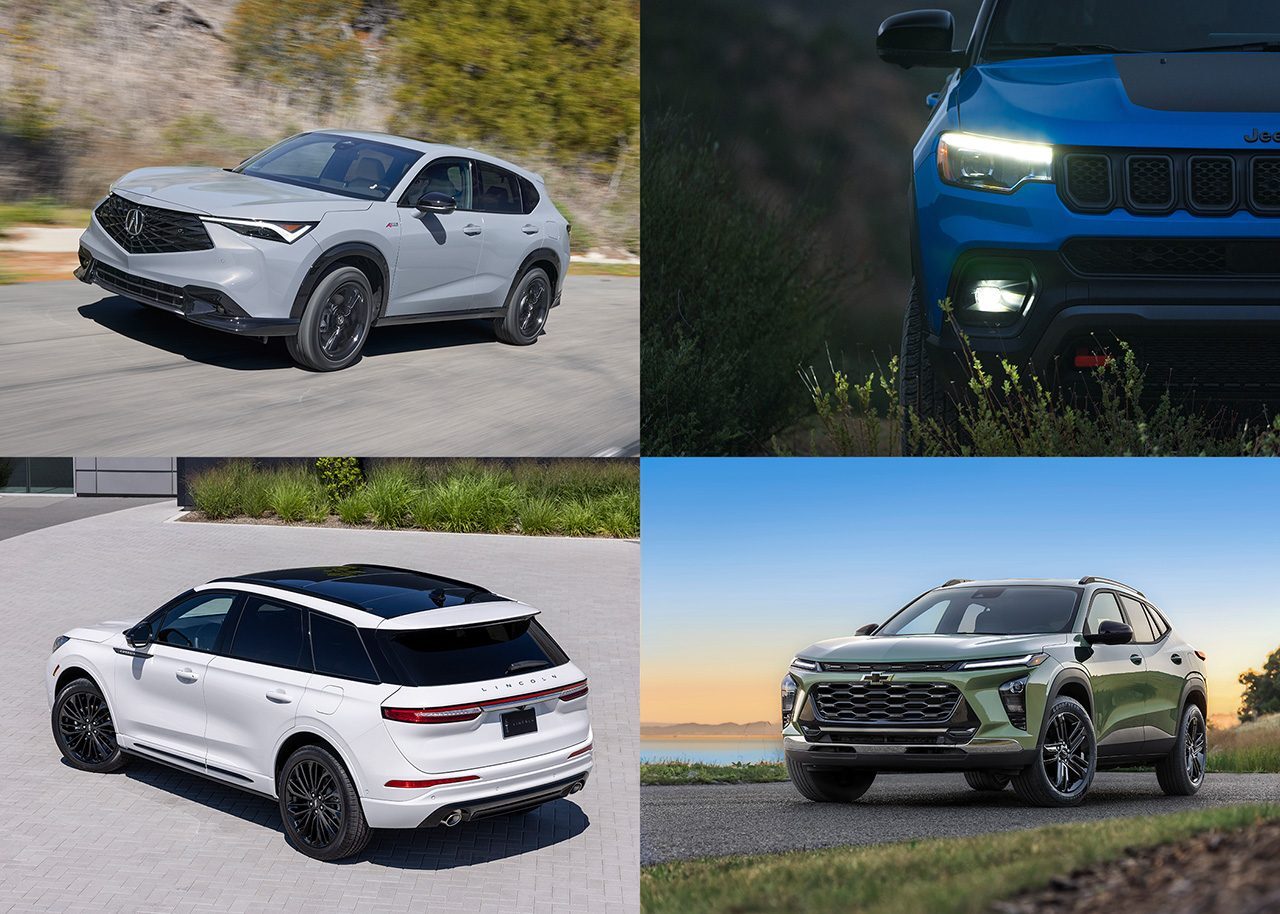 Tariff Tuesday is the day where we cover how President Trump's tariffs, if fully enacted, will impact the auto industry, increase costs, and limit consumer choice. We started this series on April 15, Tax Day for those in the United States, because Trump's tariffs amount to one of the largest single increases in taxes on the American People. The tariffs which, if fully implemented, will raise $1.4 trillion in revenue, an increase per household of $1,900 to $7,600 per year. Last week we discussed Buick's Tough Spot - Killing it in China, Killed in the U.S. and one of our readers brought up an excellent point: Big Trouble in Little Crossovers The little crossover segment is one of the hottest and most competitive segments in the industry. So much so that even before tariffs, a few models were already driven from the market without replacements. The Fiat 500X, Jeep Renegade, Nissan Rogue Sport, and Ford EcoSport were all models competing in this segment in the U.S. that just couldn't quite make it and were canceled after a single generation, though the Jeep Renegade lives on in other markets. The commentator above is right. With few exceptions, nearly all of the little crossovers available in the US are imported. Because there is a lot of fuzziness in the size of vehicles in this class, for this list we will generally be looking at the smallest crossovers a particular brand offers. We are also including vehicles regardless of price as the tariff impact in this size class appears to transcend price. Where Are Small Crossovers Built? Acura ADX - Mexico Alfa Romeo Tonale - Italy Audi Q3 - Hungary Audi Q4 eTron - Germany Audi has indicated they may move production of some models to the U.S., likely through partnership with parent company Volkswagen and their production facility in Tennessee. Audi has paused all imports of their vehicles to the U.S. due to the tariffs and is holding vehicles already in the U.S. at ports. BMW X2 - Germany BMW X3 - United States Buick Envista - South Korea Buick Encore GX - South Korea Buick Envision - China Cadillac XT4 - United States (model canceled) Cadillac Optiq - Mexico Chevrolet Trax - South Korea Chevrolet TrailBlazer - South Korea Chevrolet Equinox - Canada Chevrolet Equinox EV - Mexico Dodge Hornet - Italy Ford Bronco Sport - Mexico Ford Maverick - Mexico Ford Escape - United States Genesis GV60 EV - South Korea Genesis GV70 - South Korea GMC Terrain - Mexico Honda HR-V - Mexico Honda CR-V - United States Hyundai Venue - South Korea Hyundai Kona - South Korea Hyundai Ioniq 5 - United States as of 2025 model year to take advantage of EV Tax Credit eligibility from the Biden Inflation Reduction Act. Eligibility for the tax credit is still in limbo. Hyundai Tuscan - United States Infiniti QX50/QX55 - Mexico Infiniti has announced they have suspended all new orders of these models in the U.S. due to Trump's tariffs. The models remain in production for other markets. Jeep Compass - Mexico. Kia Soul - South Korea Kia Seltos - South Korea Kia Niro - South Korea Kia Sportage - United States Kia EV6 (exc. GT) - United States as of 2025 model year to take advantage of EV Tax Credit eligibility from the Biden Inflation Reduction Act. Kia EV6 GT - South Korea Range Rover Evoque - United Kingdom Discovery Sport - United Kingdom Lexus UX - Japan Lexus NX - Canada Lexus RZ - Japan Lincoln Corsair - Mexico Lincoln Nautilus - China Maserati Grecale - Italy Mazda CX-30 - Mexico Mazda CX-5 - Japan Mazda CX-50 - United States The Mazda CX-50 is produced in the United States, and until the tariffs, was exported to the Canadian market. Mazda has since shuffled production and will now supply the Canadian market from Japan. Mercedes-Benz GLA - Germany Mercedes-Benz GLB - Mexico Mercedes-Benz EQB - Hungary Mercedes-Benz GLC - Germany Mini, Mitsubishi, Porsche - Austria, Japan, and Germany respectively Nissan Kicks - Mexico Nissan Rogue - United States Polestar 2 - China Polestar 3 - United States Rivian R2 - United States (not in production yet) Rivian R3/R3X - United States (not in production yet) Subaru Crosstrek - Japan and starting in 2024 United States for select trims Subaru Forrester - Japan Tesla Model-Y - United States Toyota Corolla Cross - United States Toyota RAV-4 - United States and Canada Volkswagen Taos - Mexico Volkswagen Tiguan - Mexico Volkswagen ID.4 - United States Volvo EX30 - China Volvo EX40 - Belgium Volvo XC40 - Belgium Volvo C40 - Belgium The Impact on Consumers Of this list of 70-ish small crossovers, only eleven models plus some versions of a twelfth are assembled in the United States. For the sixteen that are assembled in Canada or Mexico, they may possibly qualify for reduced or exempted tariffs if they can prove compliance with the USMCA. However, meeting the USMCA regulations is an arduous process for a product with as many components as a vehicle. A vehicle with a significant amount of components produced outside of the USMCA zone will likely fail to qualify for a tariff exemption. For example, a vehicle assembled in Canada may lose its tariff exemption if the steel used in its construction was purchased from China or the stamping took place outside of the USMCA zone. It's a complex process for manufacturers to calculate, and some, such as Audi and Infiniti are simply opting to stop shipments for now. It's likely that EVs built in Canada or Mexico that currently qualify for the tax credit from Biden's Inflation Reduction Act will also qualify for a USMCA exemption. Some manufacturers are hit harder than others. Ford's recent smash hits, the Bronco Sport and Maverick truck are both built in Mexico and represent a significant portion of Ford's recent sales. Dodge, already struggling to move the Hornet crossover, will face significant price increases as it is not able to be exempted from tariffs via the USMCA. Toyota will gain an unusual prices advantage here with the RAV-4 and Corolla Cross being built in the United States, but can also afford to not discount prices much as demand will be higher. All of the burden of Trump's tariffs trickles down to the consumer eventually. Consumers will either pay higher taxes on imported vehicles, pay higher prices for manufacturers to comply with the USMCA, or lose choices and supply with lost model availability driving up the costs of the remaining options on the market. For one of the most competitive segments of the auto industry, this signals a time of turmoil with consumers taking the brunt of it.1 point
 -
The graphic images are all from the first link and you can organize the graph by state on regular gas or click the header for Diesel and get it shown by state for that fuel type. The second link show additional info but if you click the link in that second writing by the government, it takes you here where you clearly see the latest taxation per state. fueltaxes.xlsx Taxes have to go up if we are to have functional roads, bridges are coming to end of life and need to be replaced.1 point
-
The specs on the Leaf look pretty darn good, so I would expect them to carry over. Nissan and Mitsubishi might be back in the game.1 point
-
That is pretty much what I do. I find a protein shake or a bit of toast are perfect for dinner. I don't eat much alter in the day. Absolutely the kind of place I for no rational reason want to check out.1 point
-
Oh yes. Also, this way, I skip dinner and/or just eat a snack.1 point
-
IL's has skyrocketed in the last 5 years. It doubled in 2019 and has gone up every year since. I believe it's set to go up again in June or July. Your link and graphics aren't the same information. I am finding it difficult to get an accurate number.
1 point
-
I know most of us here love food. Here's what €14 got me for lunch: 4 spinach and ricotta cannelloni tubes, a nice piece of swordfish, steamed spinach with tasty garnishes, and a bottle of ice cold water. Delicious ... and good for you. I went here yesterday and they didn't have pasta and main choices that were as good. Big supermarkets tend to have a large cafe' section that features good lunch specials and the locals gladly go there. And I tend to be cheap, so ...
1 point
-
I think unless your forced to have to buy something, most people are going to wait and see where prices and availability heads. Recession here we come.1 point
-
I hate it as it has the same bunker look at the GM auto's and that high belt line with little green house and hard to see out, not a fan.1 point
-
Raising the gas tax also hits low income people the worst. Although if they are going to make the EV fee a thing then they should raise gas taxes also to balance it. They can let the 2017 tax cut expire, that will create a trillion dollars and do a lot more than trying to discourage EV purchases with a $250 annual fee.1 point
-
I do not think the current monitoring websites are current with all the new tax raises. Gas Taxes by State 2025 Average state tax rates for retail gasoline and diesel fuel nearly flat since July 2024 - U.S. Energy Information Administration (EIA) OUCH, Crazy the diesel tax rate of PA Gas taxes are no joke either.
1 point
-
I believe this will end in LESS variety and options for the U.S. consumer not more. This will push up prices and reduce variety leaving us behind the world in how we choose what we drive.1 point
-
@smk4565with all the good points lately! I also think that $50b over 10 years in new funding isn’t enough to cover the deficit the Highway dept is facing. If they’ve had to do $275b over 18 years, the math doesn’t add up.1 point
-
Bad idea for 2 reasons. First the avg amount paid in gas taxes for a person is about $100 a year, so you are penalized for a hybrid or EV. Second, if you are someone who doesn't drive much, or has a couple cars, maybe a fixed income senior with a Chevy Bolt that drives 4,000 miles a year, now you are paying $250 to drive 4,000 miles vs about $20 in gas tax.1 point
-
So one, cannot download the Movie, so cannot see how many gallons or anything, I am glad you can fuel so fast. My reality is that it takes much longer to fuel my ESV than most people and it is amusing how everyone assumes everyone drives autos with their tiny tanks and fuels all the same speed and rate. End result, even for me, gas station days are coming to an end. I fuel the ESV every 4 to 5 weeks now, charge at home and even on road trips in the EV, I am able to find a fast charger near where I am stopping to eat or visit and have not had any waste of time at a gas station. Drew pretty much hits all the points well about this.1 point
-
Have to laugh at this, in Texas. Seems to be pretty standard there for people driving up and attempting to go over a K rail. LOL1 point
-
Impressive recovery work. IMG_4778.HEIC1 point
-
These two statements that have changed based on what has been changed in society will be interesting to see if we get updates. L.A. is a great big freeway - BEEN REPLACED BY HOUSTON "26 lanes wide" Are parking cars and pumping gas - EVs IS MAKING THIS HISTORY. LOL1 point
-
Today I'm deep fried in "trinacria" ... Three days of this. I didn't want to leave and go to a more rural place with no view in another area. The outline across is the Italian mainland, so I'm about 30 miles south of Messina, where the distance across the strait is about a mere 1.5 miles. As I'm traveling south on the autostrada after checking out, this pullout with an Autogrill has a nice view of Mt. Etna. I went into a store to pick up some groceries and saw this: Fonzies and Cipster! Cipster is spelled for Italian phonetics because Chipster would be pronounced "Keep-stare." While going for a haircut based on Google reviews, I passed by this place. I had to take a photo showing the "team spirit."
1 point
-
Honestly, that's probably around when I'd buy again, too. I'm in no rush. I'd love a large EV SUV or truck, but I don't have the monies for an R1S, Lightning, Sierra EV or whenever the Scouts show up.1 point
-
 House Republicans, lead by Sam Graves, Republican for Montana and head of the House Transportation and Infrastructure Committee are proposing a $250 annual charge for electric vehicles as part of an effort to shore up funding for the national highway system and other transportation projects. Graves stated that with the increase in electric, hybrid and just overall efficiency in internal combustion automobiles that the federal tax collected per mile traveled has dropped, making it a challenge to keep the Federal Highway Administration funded. With the new fees, Republicans hope to raise $50 billion in new funding over the next 10 years. The additional money would go to pay for highway repairs and additional funding for air traffic control. Republicans point out that since 2008, more than $275 billion has been shifted from the general fund to pay for road repairs. The federal government has not raised fuel taxes, currently 18.3 cents per gallon, since October of 1993. The latest proposed fee schedule would be $250 per electric vehicle per year and $100 per hybrid-vehicle per year. An earlier proposal had the electric vehicle fee at $200 per year and also included a $20 per year fee for gasoline and diesel powered vehicles. The Federal fee would be on top of any state fees imposed. Many states have adopted EV fees to replace the loss in gas tax revenue at the local level. The federal fees are tied to inflation and would be recalculated each year and grow over time. The U.S. Energy Information Administration has pointed out that the proposed $250 fee would require the average EV owner to pay the equivalent 1366 gallons gas tax while hybrid owners would pay roughly the equivalent of 547 gallons of fuel tax on top of paying 18.3 cents at the pump. For an EV owner, they would be paying as much tax as someone driving 15,000 miles per year in an 11 mpg vehicle. The average amount of gas used by non-hybrid gasoline vehicles is roughly 489 gallons per year. This latest proposal comes just two months after the House attempted to propose a bill that would have killed the Biden-era electric tax credit system and funding for manufacturing of batteries to EVs. With state republicans worried about billions that would be lost due to killing of the IRA bill, house republicans have focused on how to make everyone pay more into the federal system. The GOP says it is only fair that Hybrid and Electric vehicle owners pay their fair share into the federal Highway Administration department.1 point
 -
Just last week, I saw a few newer Traxes. They are more sloped in the rear than the Trailblazer and there is no protuding "ridge" over the rear window. I'd say they are more attractive than the new Trailblazer. I know next to nothing about them.1 point
-
These are attractive little vehicles *for their class*. I'm slowly seeing more and more of them. Then again, I have no clue if I'm seeing the new Trax or Trailblazers...hahaha.1 point
-
MECHANICAL PHOTOS The engine bay is neatly arranged as it typically is in GM products, with dipsticks, reservoirs, and an easy to reach battery ... someone would have had to help me find the turbocharger One can see 3 exhaust manifold passages below the engine shroud The engine placard says 1.3 liters and long running OBD II diagnostics - - - - - END OF PHOTOS
1 point
-
Ford Maverick, Bronco Sport and Mach-E prices all went up $1100-2000 today. The 2025 Maverick is now $5000 more than a 2024 Maverick. That's a 20% increase in 1 year.0 points


_(2).jpg.2406aedeb63641d2d3391c6ff32ea436.jpg)


This leaderboard is set to New York/GMT-04:00