Jump to content
Create New...
  • 🚗 Your People Are Here. Get In.

    The internet is full of car content. This is the community.

    Cheers & Gears has been bringing enthusiasts together since 2001. Join the conversation, show off your garage, and find your people.

  • William Maley
    William Maley

    Honda Surprises All With New Engines & Transmissions

    Honda is known for many things; one of those things happens to be engine technology. The Civic CVCC and VTEC are some of technologies to done by Honda. However, during the past few years, Honda's engine technologies haven't changed much or fall flat on it's face (IMA Hybrid tech comes to mind).

    But now, Honda is coming out swinging with new powertrains and transmissions. At a event before the Tokyo Motor Show, Honda introduced a new range of four-cylinders ranging from 1.5L to 2.4L and a new 3.5L V6. All of the new engines will come equipped with direct injection and stop-start technology.

    The four-cylinders come with a new VTEC arrangement with an Atkinson cycle lower load cam plus extensive friction reduction technologies. The 3.5L V6 will replace the current 3.7L and 3.5L V6 and come with cylinder deactivation.

    Also new for Honda powertrains is a two-mode hybrid system. Replacing the disappointing IMA system, the new system will use a brand new 2.0L four-cylinder paired with electric motor and batteries. Honda claims the system will be the most efficient and deliver “enhanced driving performance.” First car to use the new system will be a plug-in hybrid model due next year while a non plug-in system will be out the year after.

    And, along with these new engines come new transmissions. Honda showed off a new range of CVT transmissions (alright stop moaning, they can hear you in Japan). The CVTs come with Honda's new “G-Design Shift”, which was created to help deliver more immediate throttle response. The transmissions are expected in the Civic, Accord and CR-V soon.
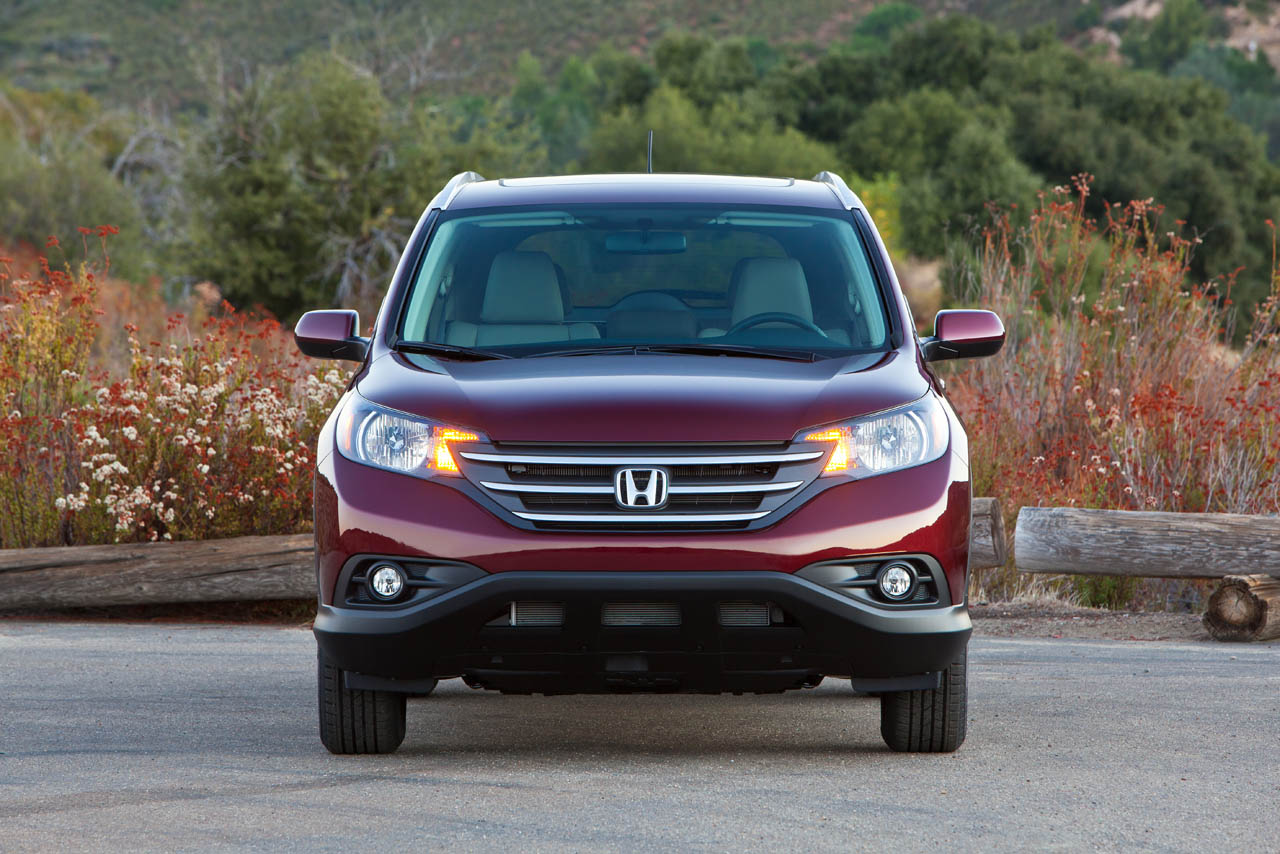
    gallery_10485_296_424824.png

    Source: Auto Guide, 2


    User Feedback

    Recommended Comments

    ^^^ good one. The 3.5 gets a nice update but I'm unmpressed with the inline 4's. The get a small bump in torque and probably a little more FE but not much else. Either way across the board Honda is not taking the lead with the new updates. They're still settling for "good enough."

    Link to comment
    Share on other sites

    GM started rolling out Direct Injection in.. what, 2004? Start-Stop (generation 1 eAssist) in 2008? Cylinder deactivation first in 1980 and then again in 2004.

    Honda started using DI in Japan around '02-'03, had Auto-stop in 2001, and they have been practicing cylinder size-reduction since the beginning... ;) lol

    Link to comment
    Share on other sites

    All their past and current hybrids have had the auto-stop (which actually started in 2000 with gen1 Insights). Now, I know the hybrids aren't quite high volume, they are all available in the US. Honda has also been using VCM (variable cylinder management) more and more, starting in around '05-'06.

    Those things aside, i'm just as baffled as you when it comes to the neglect of DI stateside. I really shouldn't attempt to answer based upon my complete uncertainty, but the only thing that I could think of is perhaps prolonged R&D, while thinking they could leave well enough alone...? I don't know off-hand, but I'm sure they have been implementing it in something over the years, and fine tuning.

    Edited by fuel_sipping
    Link to comment
    Share on other sites

    Why the reliance on 5-speed autos while the rest of the industry moved on to 6-speeds and greater? It's not like their 5-speeds are all that good in the first place, they've had reliability problems with the early ones and they've never really been smooth.

    Link to comment
    Share on other sites

    They are beginning the transition to 6-speeds for the heavy vehicles, as evident in the higher end models (Acuras and top Odyssey), but it seems for the rest of the range they are working to develop and build up their CVTs. Maybe not the most sound choice, speculatively, but that seems to be getting the blunt end of their R&D attention right now. All these things are just a matter of free speculation to me...

    Here is a more comprehensive article on Autoblog, which highlights their planned efficiency dominance.

    http://www.autoblog....gment-within-t/

    Edited by fuel_sipping
    Link to comment
    Share on other sites


    Join the conversation

    You can post now and register later. If you have an account, sign in now to post with your account.
    Note: Your post will require moderator approval before it will be visible.

    Guest
    Add a comment...

    ×   Pasted as rich text.   Paste as plain text instead

      Only 75 emoji are allowed.

    ×   Your link has been automatically embedded.   Display as a link instead

    ×   Your previous content has been restored.   Clear editor

    ×   You cannot paste images directly. Upload or insert images from URL.


  • Support Independent Automotive Journalism

    25 years of honest automotive coverage — because someone has to do it.

    Cheers & Gears has never been filtered by manufacturer relationships or driven by algorithm. Just real people, real opinions, and a genuine love of cars. Subscribers keep the lights on and get an ad-light experience starting at $2.25/month.*

    View subscription options

    *A small number of ads feature member-exclusive coupon deals and will still appear.

  • Posts

    • After doing a bunch of research on this, it isn't so much Honda/Acura are limiting charging speeds as it is the battery pack total size directly correlates to the rate of charge they can accept. The Prologue and non-SS Blazer EV have 85kWh batteries at 288 total volts and the ZDX/Lyriq/Blazer EV SS all have the larger 102kWh battery at 345 total volts.  Because of the way the Ultium platforms have multiple pack sizes that can and are linked together to make larger or smaller packs, the total pack volts varies based on the application and why the Hummer/Silverado/Sierra EVs can charge at 800v when they're still on 400v architecture.  Because kW = amps * volts, the bigger packs have more nominal volts because they have more cells.  Below is a Prologue example and change the 288v for the Prologue to 345v for the larger packs of the Lyriq, ZDX, or Blazer EV SS and you get 190kW for the maximum (or do the math for the other chargers, as well)
    • Is there a good 4150 four barrel TBI with DBW compatibility?
    • Is it possible to fit a Holley Dual Plane Intake on an '09 lacrosse super?
    • I was thinking, and theoretically, could it be possible to put the aces Mid-Rise, Single Plane, Carb Style, Cast, 4150 Style LS Intake Manifold on an '09 lacrosse super, and then throw on an aces kill shot fusion lite, and then use a T42 TCM for my tcm?
    • The Super would have the Northstar V8 and while the engine was mostly sorted out by then they are higher maintenance and are a Premium Fuel recommended car, so you have to be willing to be spending $5+ per gallon.  The 3900 V6 isn’t as exciting but it’s dependable and reasonably fuel efficient for such a large car
  • Who's Online (See full list)

    • There are no registered users currently online
  • My Clubs

×
×
  • Create New...

Important Information

We have placed cookies on your device to help make this website better. You can adjust your cookie settings, otherwise we'll assume you're okay to continue.

Hey there, we noticed you're using an ad-blocker. We're a small site that is supported by ads or subscriptions. We rely on these to pay for server costs and vehicle reviews.  Please consider whitelisting us in your ad-blocker, or if you really like what you see, you can pick up one of our subscriptions for just $1.75 a month or $15 a year. It may not seem like a lot, but it goes a long way to help support real, honest content, that isn't generated by an AI bot.

See you out there.

Drew
Editor-in-Chief

Write what you are looking for and press enter or click the search icon to begin your search