
Search the Community
Showing results for tags 'V6'.
-
 The last-generation Lexus LS felt a bit lost. It had many of the qualities of previous LS models, but it could not fully compete with the likes of Mercedes-Benz S-Class, Audi A8, and BMW 7-Series. People pointed out the somewhat plain design, lackluster performance of the V8 engine, or the confounding infotainment system as possible reasons. But I think the reason comes down to Lexus not having something that made the LS stand out. How do you right the ship of what many considered to be at one time, the best luxury sedan on sale? If you're Lexus, that means making some very drastic changes. Exterior Design Lexus has tended to play it safe with the LS' design to fit with the general idea of a flagship sedan - providing a presence without shouting. But this new generation decides to stray away from that idea. The front end features a lot of inspiration from LC coupe with a wide grille, protruding cutouts for the faux vent, and a lowered hood. A set of Z-shaped LED headlights help the LS stand out from other Lexus models. The rest of the design looks to be an evolution of the previous model with slightly wider fenders and a new trunk lid design. Interior Design and Materials One of the places that LS surprised me was the interior. The layout is quite attractive with a flowing dash and contours on the door panels. A clever touch is the horizontal slat pattern used on the center part of the dash that somewhat disguises the center vents. Material quality is top-notch with leather, real wood, and metal used throughout. Seating and Comfort This particular test vehicle was equipped with perforated leather upholstery which had a unique snakeskin pattern. I quite liked it, but some who rode in the vehicle found it to be a bit gaudy. This seat pattern is only available on the F-Sport, all other LS models have a plain design. The front seats are quite comfortable and provide numerous power adjustments, along with heat and ventilation. Rear seat passengers will find plenty of legroom, but tall passengers will be annoyed by their heads touching the roof liner, a major downside to the lower roofline. Infotainment The interior also houses a big disappointment; Lexus Remote Touch. The touchpad controller is still confounding and distracting to use as you need to be precise with your finger movements to correctly select the function you want. Otherwise, you'll end up on another screen and want to scream. This is disappointing considering that Lexus Enform has improved a lot. The system is noticeably quicker in various functions and can use Apple CarPlay and Amazon Alexa. Powertrain and Performance Despite the 500 designation, there is not a 5.0L V8 under the LS' hood. Instead, Lexus is using a twin-turbo 3.5L V6 engine with 416 horsepower and 442 pound-feet of torque. A ten-speed automatic routes power to either the rear or all four wheels like in my test vehicle. The twin-turbo V6 is disappointing when leaving a stop as there is a considerable amount of turbo lag between pressing the accelerator and the engine responding. Once you get past this, the V6 provides plenty of scoot. Never once did I think that the V8 would be better whenever I need to merge or speed out of a corner. It is also noticeably quieter and more refined than the old V8. Fuel Economy Fuel economy is rated at 18 City/27 Highway/21 Combined if you opt for AWD. Stick with RWD and the numbers rise to 19/30/23. My average for the week landed at 20.2 mpg on a 60/40 mix of highway and city driving. F-Sport Handling Picking the F-Sport trim will get you a revised suspension setup and uprated brakes. It will not transform the LS into something like an Alpina B7 or a Mercedes-AMG S63, but it does make the vehicle feel a bit more poised on a winding road. When put into S+ mode, Body roll is kept in check and the steering is quick to respond. The coil springs used on the LS F-Sport are a bit stiff, which will provide a more choppy ride. An optional air suspension is reportedly better at dealing with bumps and other imperfections, but I will need to try it out before saying it is better or not. Final Thoughts This drastic move by Lexus with the new LS could have gone wrong, but it pulls it off. The new model is more interesting to look at, luxurious and offers improved driving dynamics when ordered with the F-Sport package. There are still some thorns Lexus needs to extract such as the poor initial performance of the twin-turbo six and the mess that is Remote Touch. If you're willing to deal with these issues, then the 2019 LS is a very viable alternative to the Germans. How I would configure an LS 500: Most likely I would build one similar to the one seen here, although I would get it in red as I think the paint really makes the design pop. Alternatives to the LS 500 Mercedes-Benz S-Class: The S-Class is still considered by many to be the best of the best. Considering its wide range of engines, very smooth ride, and impressive interior quality, it is tough to argue this. But the LS comes very close to matching the S-Class's interior quality, along with a more eye-catching design. It doesn't help that the S-Class is about $7,000 more than the LS. Genesis G90: Still the bargain in the flagship sedan class with a base price of $69,350 and coming with almost every feature you would expect. The twin-turbo 3.3L V6 offers better off-the line performance than the 3.5 found in the LS. But the LS offers higher quality interior materials than what is available in the G90. Cadillac CT6: Another twin-turbo V6 flagship that offers sharp driving dynamics and strong value. The CT6 handles better than the LS, but Lexus has the edge in interior materials and refinement. Disclaimer: Lexus Provided the LS 500, Insurance, and One Tank of Gas Specifications and Pricing Year | 2019 Make | Lexus Model | LS Trim | 500 F-Sport Engine | 3.5L Twin-Turbo 24-Valve DOHC V6 Driveline | 10-Speed Automatic, All-Wheel Drive Horsepower | 416 @ 6,000 RPM Torque | 442 lb-ft @ 1,600-4,800 RPM Fuel Economy (City/Hwy/Combined) | 18/27/21 MPG (AWD) Curb Weight | 5,027 lbs Assembly Location | Tahara, Aichi, Japan Base Price | $84,420 As Tested Price | $88,605 (includes $1,025 destination charge) Options as Tested Mark Levinson Audio System with 23 Speakers | $1,940 24-Inch Heads-Up Display | $1,220 View full article
 -
2019 Lexus LS 500 F-Sport Review: A Bold Reinvention of Lexus's Flagship
William Maley posted an article in Reviews
 The last-generation Lexus LS felt a bit lost. It had many of the qualities of previous LS models, but it could not fully compete with the likes of Mercedes-Benz S-Class, Audi A8, and BMW 7-Series. People pointed out the somewhat plain design, lackluster performance of the V8 engine, or the confounding infotainment system as possible reasons. But I think the reason comes down to Lexus not having something that made the LS stand out. How do you right the ship of what many considered to be at one time, the best luxury sedan on sale? If you're Lexus, that means making some very drastic changes. Exterior Design Lexus has tended to play it safe with the LS' design to fit with the general idea of a flagship sedan - providing a presence without shouting. But this new generation decides to stray away from that idea. The front end features a lot of inspiration from LC coupe with a wide grille, protruding cutouts for the faux vent, and a lowered hood. A set of Z-shaped LED headlights help the LS stand out from other Lexus models. The rest of the design looks to be an evolution of the previous model with slightly wider fenders and a new trunk lid design. Interior Design and Materials One of the places that LS surprised me was the interior. The layout is quite attractive with a flowing dash and contours on the door panels. A clever touch is the horizontal slat pattern used on the center part of the dash that somewhat disguises the center vents. Material quality is top-notch with leather, real wood, and metal used throughout. Seating and Comfort This particular test vehicle was equipped with perforated leather upholstery which had a unique snakeskin pattern. I quite liked it, but some who rode in the vehicle found it to be a bit gaudy. This seat pattern is only available on the F-Sport, all other LS models have a plain design. The front seats are quite comfortable and provide numerous power adjustments, along with heat and ventilation. Rear seat passengers will find plenty of legroom, but tall passengers will be annoyed by their heads touching the roof liner, a major downside to the lower roofline. Infotainment The interior also houses a big disappointment; Lexus Remote Touch. The touchpad controller is still confounding and distracting to use as you need to be precise with your finger movements to correctly select the function you want. Otherwise, you'll end up on another screen and want to scream. This is disappointing considering that Lexus Enform has improved a lot. The system is noticeably quicker in various functions and can use Apple CarPlay and Amazon Alexa. Powertrain and Performance Despite the 500 designation, there is not a 5.0L V8 under the LS' hood. Instead, Lexus is using a twin-turbo 3.5L V6 engine with 416 horsepower and 442 pound-feet of torque. A ten-speed automatic routes power to either the rear or all four wheels like in my test vehicle. The twin-turbo V6 is disappointing when leaving a stop as there is a considerable amount of turbo lag between pressing the accelerator and the engine responding. Once you get past this, the V6 provides plenty of scoot. Never once did I think that the V8 would be better whenever I need to merge or speed out of a corner. It is also noticeably quieter and more refined than the old V8. Fuel Economy Fuel economy is rated at 18 City/27 Highway/21 Combined if you opt for AWD. Stick with RWD and the numbers rise to 19/30/23. My average for the week landed at 20.2 mpg on a 60/40 mix of highway and city driving. F-Sport Handling Picking the F-Sport trim will get you a revised suspension setup and uprated brakes. It will not transform the LS into something like an Alpina B7 or a Mercedes-AMG S63, but it does make the vehicle feel a bit more poised on a winding road. When put into S+ mode, Body roll is kept in check and the steering is quick to respond. The coil springs used on the LS F-Sport are a bit stiff, which will provide a more choppy ride. An optional air suspension is reportedly better at dealing with bumps and other imperfections, but I will need to try it out before saying it is better or not. Final Thoughts This drastic move by Lexus with the new LS could have gone wrong, but it pulls it off. The new model is more interesting to look at, luxurious and offers improved driving dynamics when ordered with the F-Sport package. There are still some thorns Lexus needs to extract such as the poor initial performance of the twin-turbo six and the mess that is Remote Touch. If you're willing to deal with these issues, then the 2019 LS is a very viable alternative to the Germans. How I would configure an LS 500: Most likely I would build one similar to the one seen here, although I would get it in red as I think the paint really makes the design pop. Alternatives to the LS 500 Mercedes-Benz S-Class: The S-Class is still considered by many to be the best of the best. Considering its wide range of engines, very smooth ride, and impressive interior quality, it is tough to argue this. But the LS comes very close to matching the S-Class's interior quality, along with a more eye-catching design. It doesn't help that the S-Class is about $7,000 more than the LS. Genesis G90: Still the bargain in the flagship sedan class with a base price of $69,350 and coming with almost every feature you would expect. The twin-turbo 3.3L V6 offers better off-the line performance than the 3.5 found in the LS. But the LS offers higher quality interior materials than what is available in the G90. Cadillac CT6: Another twin-turbo V6 flagship that offers sharp driving dynamics and strong value. The CT6 handles better than the LS, but Lexus has the edge in interior materials and refinement. Disclaimer: Lexus Provided the LS 500, Insurance, and One Tank of Gas Specifications and Pricing Year | 2019 Make | Lexus Model | LS Trim | 500 F-Sport Engine | 3.5L Twin-Turbo 24-Valve DOHC V6 Driveline | 10-Speed Automatic, All-Wheel Drive Horsepower | 416 @ 6,000 RPM Torque | 442 lb-ft @ 1,600-4,800 RPM Fuel Economy (City/Hwy/Combined) | 18/27/21 MPG (AWD) Curb Weight | 5,027 lbs Assembly Location | Tahara, Aichi, Japan Base Price | $84,420 As Tested Price | $88,605 (includes $1,025 destination charge) Options as Tested Mark Levinson Audio System with 23 Speakers | $1,940 24-Inch Heads-Up Display | $1,220
 -
Have you ever wondered by all the Bi-turbo V6 engines are always less impressive than you expect? Specific Output always seem to be worse compared to 4-cylinder counterparts. Maximum Torque seems to always arrive later and the engine always seem a tad lethargic. In short, they always seem to SUCK relative to the 4-cylinder turbo engines the same manufacturer puts out. They really SUCK compared to Inline-6 legends like the Nissan RB26 or the contemporary BMW N55. For example:- GM made a 2.0T (LTG) with 272 hp @ 5,500 rpm with 260 lb-ft at 1,700 rpm. That is 136 hp/liter and 130 lb–ft per liter. This same engine is later tuned to permit more mid-range boost with torque rising to 295 lb-ft @ 3,000 rpm (147.5 lb-ft/liter). This engine operates on 18 to 22 psi of boost and is able to get to full torque at 1,700 rpm or 3,000 rpm. At the same time, GM made the 3.6 Turbo (LF3) with 420 hp @ 5,750 rpm with 430 lb-ft @ 3,500 rpm. That is 116.7 hp/liter and 119.4 lb-ft per liter. This engine operates on a paltry 12 psi of boost but can’t seem to get to full torque until 3,500 rpm. Throwing really fancy and expensive stuff like Titanium Connecting rods and turbine wheels at the engine helps a bit. But, even the uprated 3.6TT (LF4) still took 3,500 rpm to reach 18 psi. A boost level the ubiquitous Malibu engine has no problem hitting at 1,700 rpm. Why? REASON The reason is very simple. And, it is not something you can conquer with expensive turbos or fancy materials. Just look at the diagrams below... In a 4-stroke engine, the exhaust valve opens once every two rotations of the crank for about half a rotation of the crank. In a 3-cylinder engine, or any bank of 3-cylinders, exhaust flow to the turbo is interrupted for significant periods with the exhaust valves closed on ALL cylinders. A V6 Bi-turbo engine is essentially two Inline-3s with each turbo is feeding off one bank of 3-cylinders. In an Inline-4, one exhaust period is always beginning while another is ending. Hence, while exhaust flow diminishes, it never really falls flat completely. In an Inline-6 the periods overlap generously ensuring a continuous exhaust flow to the turbine that does not diminish appreciably throughout the entire cycle of the engine. SOLUTION The solution is to use ONE Turbo for both banks of cylinders in an V6. But that is problematic. You either have to route the exhaust from one side to another -- which is both a packaging nightmare, a source of leaks and a measure which causes it to lose a lot of energy (heat) getting to the turbo. Or, you can use a Hot Vee design with the exhaust exiting in the valley of the Vee. A Hot Vee is problematic in the V6 because most of them are 60 degree engines which has little to no room in the Vee for a turbocharger. In addition, a single large turbo will stick through the hood in a Hot Vee. Hence, a Hot Vee is seldom used. When it is used, it is employed in a 90 degree V6 with two turbos -- which defeats still results in interrupted flow to the turbines. Hence, V6es continues to suck in turbocharged applications -- then, now and (probably) into the future!

-
 Fiat Chrysler Automobiles is considering replacing the Pentastar V6 with a brand new straight-six engine. A source tells Allpar the new engine will be based on their new four-cylinder Global Medium Engine (GME) - what is found under the hood of the Jeep Wrangler and Alfa Romeo Giulia. This will allow FCA to build the engine alongside the four-cylinder variant. Not many technical details are known about the engine aside from it being pegged around 2.9L to avoid taxes in certain European countries. We might expect larger displacements for trucks and SUVs. Production could take place at FCA's Dundee and Trenton, Michigan plants. It is expected that Ferrari will use a variant of this engine for Maserati vehicles. No timeframe as to when this new engine could debut. Allpar also mentions in their report that FCA was considering adding some sort of boost to the Pentastar, but ran into issues with the size and power constraints. Source: Allpar
- 19 comments
-
- 1
-

-
- fiat chrysler automobiles
- rumor
- (and 3 more)
-
Fiat Chrysler Automobiles is considering replacing the Pentastar V6 with a brand new straight-six engine. A source tells Allpar the new engine will be based on their new four-cylinder Global Medium Engine (GME) - what is found under the hood of the Jeep Wrangler and Alfa Romeo Giulia. This will allow FCA to build the engine alongside the four-cylinder variant. Not many technical details are known about the engine aside from it being pegged around 2.9L to avoid taxes in certain European countries. We might expect larger displacements for trucks and SUVs. Production could take place at FCA's Dundee and Trenton, Michigan plants. It is expected that Ferrari will use a variant of this engine for Maserati vehicles. No timeframe as to when this new engine could debut. Allpar also mentions in their report that FCA was considering adding some sort of boost to the Pentastar, but ran into issues with the size and power constraints. Source: Allpar View full article
- 19 replies
-
- 1
-
-
- fiat chrysler automobiles
- rumor
- (and 3 more)
-
 It is no secret Fiat Chrysler Automobiles has been dealing with a number of issues with the 2019 Ram 1500 launch. As we reported back in April, the Sterling Heights Assembly plant was only operating at 60 percent of where the company wants it to be due to various issues. FCA announced that it would be investing $300 million to try and get production back on track, along with extending the production schedule to six days a week and running though Independence Day and Labor day. But as Automotive News reports, there is a new issue that is likely driving customers away from the 2019 Ram 1500. Currently, the 1500 is only available with the 5.7L HEMI V8. The 3.6L V6 and 5.7L HEMI V8 with the 48-volt mild hybrid system are no where to be seen. "I have customers looking for them and asking about them every week," said an unnamed Ram dealer in Michigan. It is unclear why neither one of these powertrains are available. Automotive News has two possible guesses. One is that FCA engineers are still doing some fine-tuning work to the mild-hybrid system before putting them into production. The other comes down to the EPA becoming more stringent with automakers in terms of emission and fuel economy testing. While FCA is quick to point out that retail sales were up 18 percent in May to 27,011, we can't help but wonder if that increase is due to the massive incentives that are being put on the last-generation model. Through May, the average incentive on a last-generation Ram 1500 stood at $6.578 according to Autodata Corp. But the lack of new engines for the 2019 Ram 1500 is hurting, as year-to-date sales are down 8.4 percent. Dave Sullivan, a senior analyst with AutoPacific says the lack of V6 this long after the launch is becoming a problem. "In the old truck, the V-6 represented about 20 percent of sales," he said. Source: Automotive News (Subscription Required)
 -
It is no secret Fiat Chrysler Automobiles has been dealing with a number of issues with the 2019 Ram 1500 launch. As we reported back in April, the Sterling Heights Assembly plant was only operating at 60 percent of where the company wants it to be due to various issues. FCA announced that it would be investing $300 million to try and get production back on track, along with extending the production schedule to six days a week and running though Independence Day and Labor day. But as Automotive News reports, there is a new issue that is likely driving customers away from the 2019 Ram 1500. Currently, the 1500 is only available with the 5.7L HEMI V8. The 3.6L V6 and 5.7L HEMI V8 with the 48-volt mild hybrid system are no where to be seen. "I have customers looking for them and asking about them every week," said an unnamed Ram dealer in Michigan. It is unclear why neither one of these powertrains are available. Automotive News has two possible guesses. One is that FCA engineers are still doing some fine-tuning work to the mild-hybrid system before putting them into production. The other comes down to the EPA becoming more stringent with automakers in terms of emission and fuel economy testing. While FCA is quick to point out that retail sales were up 18 percent in May to 27,011, we can't help but wonder if that increase is due to the massive incentives that are being put on the last-generation model. Through May, the average incentive on a last-generation Ram 1500 stood at $6.578 according to Autodata Corp. But the lack of new engines for the 2019 Ram 1500 is hurting, as year-to-date sales are down 8.4 percent. Dave Sullivan, a senior analyst with AutoPacific says the lack of V6 this long after the launch is becoming a problem. "In the old truck, the V-6 represented about 20 percent of sales," he said. Source: Automotive News (Subscription Required) View full article
-
When you're buying a luxury flagship sedan, you are making a statement to the world. Drive an S-Class, 7-Series, XJ, or other sedans and the impressions can range from being someone important to just having a lot of money. But for some people, they don't want their luxury sedan to make itself known to the world. They want to enjoy the features available on their sedan, but without making so much noise. That's where the Genesis G90 could make some inroads. Part of Hyundai's new luxury brand, the G90 has its sights set on the stalwarts of the flagship luxury class by offering many of the features and luxury appointments found in them at a very low price. We spent a week in a G90 Premium to see if this ploy could work. Exterior Design Genesis has injected a bit of style into the G90's design. The key traits are a distinctive character line running the whole length of the vehicle and fenders that bulge out slightly. The rear end is slightly boring. However, the G90's front end doesn't quite fit in with the rest of the design. The flat nose and large grille borrowed from the smaller G80 seems a bit out of place. Interior Quality Step inside and the G90 seems to have the design and materials nailed down. It is quite handsome with a simple dash design, genuine wood trim, and a mix of Nappa leather and soft-touch plastics. But take a longer look and you begin to notice some glaring issues. The steering wheel is a good example as it doesn't feel like it is covered in leather. Instead, it feels like textured vinyl. This is odd since a couple of months after the G90, I spent some time in the G80 Sport and found the steering wheel to feel like leather. Another issue is the center stack's button and knobs which appear to be borrowed from Hyundai's parts bin. I'll admit I'm nitpicking, but it's the little things that can make or break a flagship luxury sedan. Seating and Comfort Settling in the G90, you cannot help but be impressed by the front seats. Upholstered in Nappa leather, the seats offer the right mix of cushioning and support for long drives. The driver's seat comes with 22-way power adjustments, while the passenger has to make do with 16-way power adjustments. One nice touch is the seat moving back whenever the door is open to allow for easier entry and exit from the vehicle. Those sitting in the back will have no complaints as there is a large amount of head and legroom on offer. A folding armrest has controls for climate control, audio, and heated seats. Ultimate models add more luxuries such as power adjustments and a rear-seat entertainment system. Infotainment A large 12.3-inch screen houses Genesis' infotainment system. This is controlled through either a controller knob on the center console or a set of buttons below the screen. Using the system is a breeze thanks to an easy to understand interface and the various control methods on offer. The screen is vibrant and allows you to have two functions up at the same time - having audio on one side and the navigation on the other. There are some areas Genesis can improve on. For one, the G90 doesn't offer Apple CarPlay or Android Auto compatibility - something most of the competition does. Also, it would be nice to have more than two USB ports - one in the front and the other in the rear - so that people are not fighting over who gets to charge their phone. Powertrain and Performance Genesis offers two engines on the G90. Our base Premium tester came with the 3.3L twin-turbo V6 with 365 horsepower and 376 pound-feet of torque. The uplevel Ultimate features the 5.0L V8 with 420 horsepower and 383 pound-feet of torque. An eight-speed automatic is equipped with either engine and there is a choice of rear-wheel or HTRAC all-wheel drive - our test car had the latter. Unless you want the rumble of the V8, the twin-turbo V6 is the engine to go for. For one, the V6 feels just as fast as the V8. Outlets who have timed both say the V6 can match the V8 in 0-60 mph. Plus, the V6 feels more eager to accelerate thanks to torque arriving at 1,300 rpm. The eight-speed automatic delivers smooth shifts and doesn't show any hesitation to downshift when more power is needed. EPA fuel economy figures for the 2018 G90 3.3T HTRAC AWD stand at 17 City/24 Highway/20 Combined. My average for the week landed around 20.2 mpg. Ride and Handling The G90's ride is similar to big 70's Buick or Cadillac, soft and pillowy thanks to the standard adaptive dampers. Even with the G90 set in Sport mode, the dampers were still able to keep road imperfections at bay. In terms of noise isolation, the G90 is towards the top. Road and engine noise are nonexistent inside. Only a little wind noise is noticeable. This makes the G90 a perfect car to take a long road trip. The trade-off to the soft ride is a fair amount of body roll in corners, even in the sport mode. Steering is light, but has a precise feel. If you're looking for a luxury sedan that is a bit fun on a winding road, we are happy to point you in the direction of a Cadillac CT6 or Jaguar XJ. Value and Final Thoughts The 2018 Genesis G90 significantly undercuts the competition when it comes to price. Our Premium tester came with a base price of $70,850 with the HTRAC AWD system. Add a $975.00 destination charge to get our as-tested price of $71,825. Considering that includes the 12.3-inch infotainment system, three-zone climate control, heated and ventilated front seats, heated rear seats, adaptive cruise control, lane keep assist, and surround view camera system, it makes the G90 very much a steal. The Genesis G90 may not shout out its intention of being a flagship sedan, but it goes about its business quietly. It delivers the smooth ride, long list of equipment, and understated looks a number of folks are looking for. The punchy twin-turbo V6 and low price are just the cherries on top. However, the G90 does cut some corners in terms of the materials. Considering the competition that the G90 is going up against, this is a big black mark for an otherwise excellent sedan. As they say, the devil is in the details. Disclaimer: Genesis Provided the G90 Insurance, and One Tank of Gas Specifications and Pricing Year | 2018 Make | Genesis Model | G90 Trim | 3.3T Premium HTRAC Engine | 3.3L Twin-Turbo DOHC 24-Valve V6 Driveline | Eight-Speed Automatic, All-Wheel Drive Horsepower | 365 @ 6,000 RPM Torque | 376 lb-ft @ 1,300-4,500 RPM Fuel Economy (City/Hwy/Combined) | 17/24/20 MPG Curb Weight | 4,784 lbs Assembly Location | Ulsan, South Korea Base Price | $70,850 As Tested Price | $71,825 (includes $975 destination charge) Options | N/A View full article
-
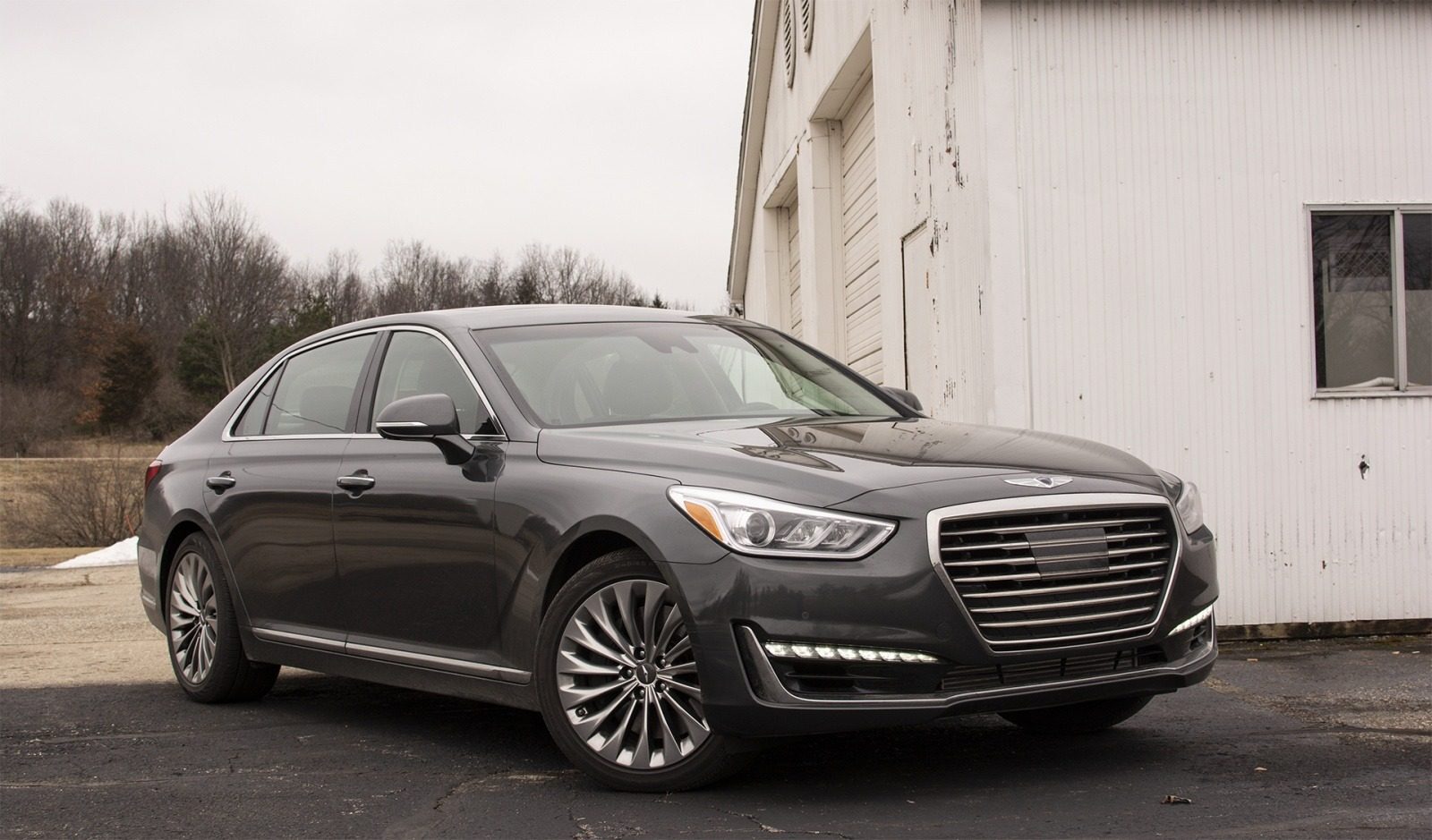 When you're buying a luxury flagship sedan, you are making a statement to the world. Drive an S-Class, 7-Series, XJ, or other sedans and the impressions can range from being someone important to just having a lot of money. But for some people, they don't want their luxury sedan to make itself known to the world. They want to enjoy the features available on their sedan, but without making so much noise. That's where the Genesis G90 could make some inroads. Part of Hyundai's new luxury brand, the G90 has its sights set on the stalwarts of the flagship luxury class by offering many of the features and luxury appointments found in them at a very low price. We spent a week in a G90 Premium to see if this ploy could work. Exterior Design Genesis has injected a bit of style into the G90's design. The key traits are a distinctive character line running the whole length of the vehicle and fenders that bulge out slightly. The rear end is slightly boring. However, the G90's front end doesn't quite fit in with the rest of the design. The flat nose and large grille borrowed from the smaller G80 seems a bit out of place. Interior Quality Step inside and the G90 seems to have the design and materials nailed down. It is quite handsome with a simple dash design, genuine wood trim, and a mix of Nappa leather and soft-touch plastics. But take a longer look and you begin to notice some glaring issues. The steering wheel is a good example as it doesn't feel like it is covered in leather. Instead, it feels like textured vinyl. This is odd since a couple of months after the G90, I spent some time in the G80 Sport and found the steering wheel to feel like leather. Another issue is the center stack's button and knobs which appear to be borrowed from Hyundai's parts bin. I'll admit I'm nitpicking, but it's the little things that can make or break a flagship luxury sedan. Seating and Comfort Settling in the G90, you cannot help but be impressed by the front seats. Upholstered in Nappa leather, the seats offer the right mix of cushioning and support for long drives. The driver's seat comes with 22-way power adjustments, while the passenger has to make do with 16-way power adjustments. One nice touch is the seat moving back whenever the door is open to allow for easier entry and exit from the vehicle. Those sitting in the back will have no complaints as there is a large amount of head and legroom on offer. A folding armrest has controls for climate control, audio, and heated seats. Ultimate models add more luxuries such as power adjustments and a rear-seat entertainment system. Infotainment A large 12.3-inch screen houses Genesis' infotainment system. This is controlled through either a controller knob on the center console or a set of buttons below the screen. Using the system is a breeze thanks to an easy to understand interface and the various control methods on offer. The screen is vibrant and allows you to have two functions up at the same time - having audio on one side and the navigation on the other. There are some areas Genesis can improve on. For one, the G90 doesn't offer Apple CarPlay or Android Auto compatibility - something most of the competition does. Also, it would be nice to have more than two USB ports - one in the front and the other in the rear - so that people are not fighting over who gets to charge their phone. Powertrain and Performance Genesis offers two engines on the G90. Our base Premium tester came with the 3.3L twin-turbo V6 with 365 horsepower and 376 pound-feet of torque. The uplevel Ultimate features the 5.0L V8 with 420 horsepower and 383 pound-feet of torque. An eight-speed automatic is equipped with either engine and there is a choice of rear-wheel or HTRAC all-wheel drive - our test car had the latter. Unless you want the rumble of the V8, the twin-turbo V6 is the engine to go for. For one, the V6 feels just as fast as the V8. Outlets who have timed both say the V6 can match the V8 in 0-60 mph. Plus, the V6 feels more eager to accelerate thanks to torque arriving at 1,300 rpm. The eight-speed automatic delivers smooth shifts and doesn't show any hesitation to downshift when more power is needed. EPA fuel economy figures for the 2018 G90 3.3T HTRAC AWD stand at 17 City/24 Highway/20 Combined. My average for the week landed around 20.2 mpg. Ride and Handling The G90's ride is similar to big 70's Buick or Cadillac, soft and pillowy thanks to the standard adaptive dampers. Even with the G90 set in Sport mode, the dampers were still able to keep road imperfections at bay. In terms of noise isolation, the G90 is towards the top. Road and engine noise are nonexistent inside. Only a little wind noise is noticeable. This makes the G90 a perfect car to take a long road trip. The trade-off to the soft ride is a fair amount of body roll in corners, even in the sport mode. Steering is light, but has a precise feel. If you're looking for a luxury sedan that is a bit fun on a winding road, we are happy to point you in the direction of a Cadillac CT6 or Jaguar XJ. Value and Final Thoughts The 2018 Genesis G90 significantly undercuts the competition when it comes to price. Our Premium tester came with a base price of $70,850 with the HTRAC AWD system. Add a $975.00 destination charge to get our as-tested price of $71,825. Considering that includes the 12.3-inch infotainment system, three-zone climate control, heated and ventilated front seats, heated rear seats, adaptive cruise control, lane keep assist, and surround view camera system, it makes the G90 very much a steal. The Genesis G90 may not shout out its intention of being a flagship sedan, but it goes about its business quietly. It delivers the smooth ride, long list of equipment, and understated looks a number of folks are looking for. The punchy twin-turbo V6 and low price are just the cherries on top. However, the G90 does cut some corners in terms of the materials. Considering the competition that the G90 is going up against, this is a big black mark for an otherwise excellent sedan. As they say, the devil is in the details. Disclaimer: Genesis Provided the G90 Insurance, and One Tank of Gas Specifications and Pricing Year | 2018 Make | Genesis Model | G90 Trim | 3.3T Premium HTRAC Engine | 3.3L Twin-Turbo DOHC 24-Valve V6 Driveline | Eight-Speed Automatic, All-Wheel Drive Horsepower | 365 @ 6,000 RPM Torque | 376 lb-ft @ 1,300-4,500 RPM Fuel Economy (City/Hwy/Combined) | 17/24/20 MPG Curb Weight | 4,784 lbs Assembly Location | Ulsan, South Korea Base Price | $70,850 As Tested Price | $71,825 (includes $975 destination charge) Options | N/A
 -
Nissan and Toyota are outliers in the full-size truck market as they only offer V8 engines. Nissan had announced that a V6 was coming, but it hasn't appeared. Michael Bunce, senior vice president-product planning for Nissan North America told Wards Auto said a V6 is still in the cards, but it will appear in the next-generation Frontier. “A new Frontier (small pickup) is on its way, and a V-6 is more geared toward that segment. Both (the Frontier and Titan) are built in the same plant in Mississippi, so that opportunity is being looked at for Titan also,” said Bunce. “I can’t give you any specific details on that, but we will be moving in that direction,” Bunce said when asked if the V6 would first appear in the Frontier before appearing the Titan. The V6 engine for trucks is mostly positioned for those buying them for fleet duty. Wards Auto reports that it is unclear what V6 engine will be used. Bunce also revealed the automaker is looking at a return to the off-road utility segment due to the resurgence of the segment due to models like the Jeep Wrangler. “We know (via research) the Millennial male, through devices they’re becoming more isolated. And they want to reconnect with friends, family, outdoors. And a vehicle is an expression, a way to do that. We’re doing a lot of work in the space to understand that customer very well.” Bunce also said the XTerra nameplate “is a great asset in terms of a name and a badge. It’s on the shelf right now, but it’s something we could utilize in the future.” The XTerra nameplate went away in 2015. Judging from these comments, it might mean the XTerra could be coming back. Source: Wards Auto View full article
-
Nissan Says A V6 is Coming for Titan, Hints Return of XTerra
William Maley posted an article in Nissan
 Nissan and Toyota are outliers in the full-size truck market as they only offer V8 engines. Nissan had announced that a V6 was coming, but it hasn't appeared. Michael Bunce, senior vice president-product planning for Nissan North America told Wards Auto said a V6 is still in the cards, but it will appear in the next-generation Frontier. “A new Frontier (small pickup) is on its way, and a V-6 is more geared toward that segment. Both (the Frontier and Titan) are built in the same plant in Mississippi, so that opportunity is being looked at for Titan also,” said Bunce. “I can’t give you any specific details on that, but we will be moving in that direction,” Bunce said when asked if the V6 would first appear in the Frontier before appearing the Titan. The V6 engine for trucks is mostly positioned for those buying them for fleet duty. Wards Auto reports that it is unclear what V6 engine will be used. Bunce also revealed the automaker is looking at a return to the off-road utility segment due to the resurgence of the segment due to models like the Jeep Wrangler. “We know (via research) the Millennial male, through devices they’re becoming more isolated. And they want to reconnect with friends, family, outdoors. And a vehicle is an expression, a way to do that. We’re doing a lot of work in the space to understand that customer very well.” Bunce also said the XTerra nameplate “is a great asset in terms of a name and a badge. It’s on the shelf right now, but it’s something we could utilize in the future.” The XTerra nameplate went away in 2015. Judging from these comments, it might mean the XTerra could be coming back. Source: Wards Auto
 -
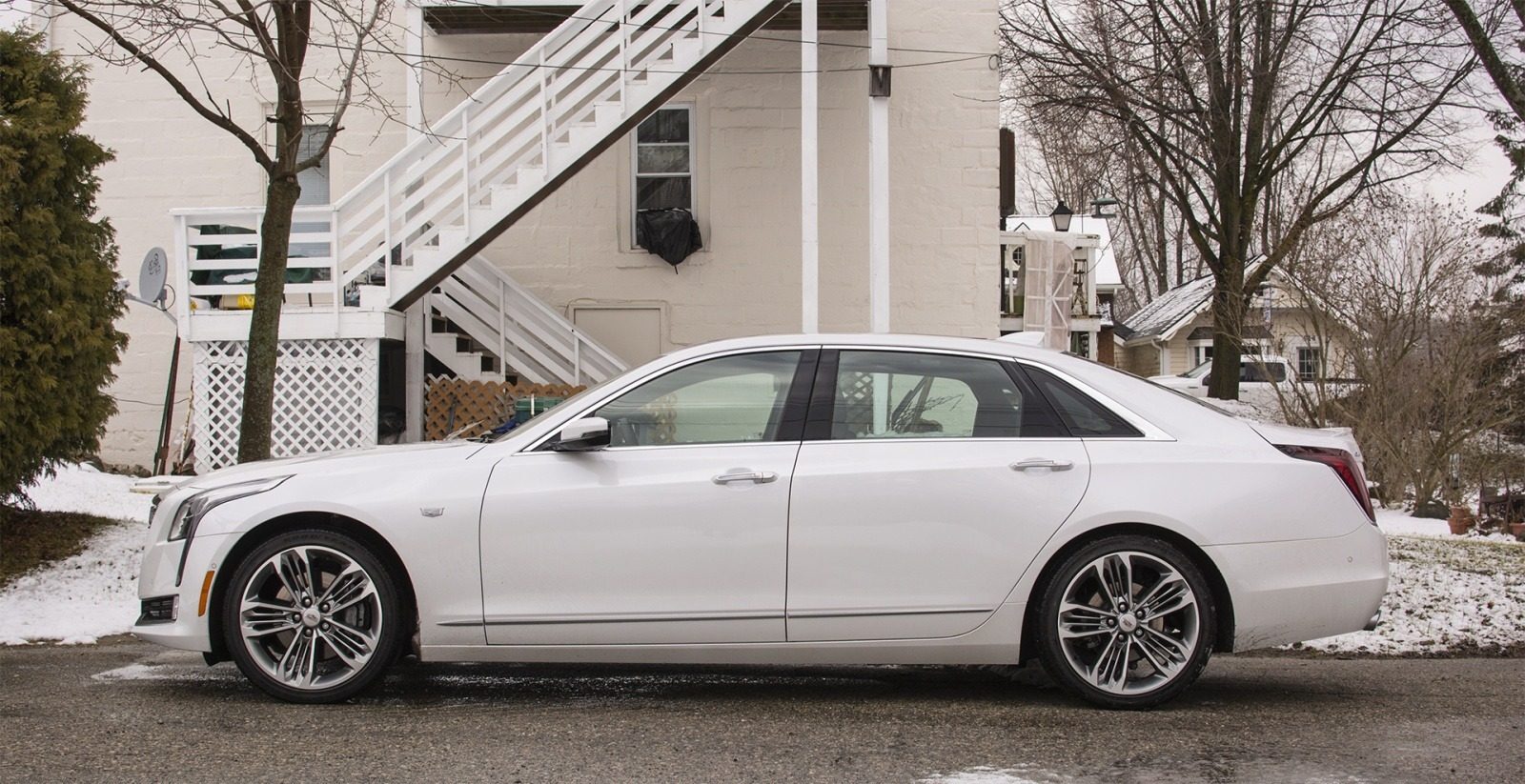 There has been a common theme for most of the Cadillac vehicles I have reviewed over the past few years. They are always so close to being up there with the best, but there is one thing or trait that knocks them down. Such examples include interior appointments that don't match up with the price being asked, confusing infotainment systems, and engines that don't quite match up with the image being portrayed. This was floating around in the back of my head when a 2017 Cadillac CT6 Platinum rolled up onto my driveway. This is an important model for Cadillac as it is taking on the likes of the BMW 7-Series and Mercedes-Benz S-Class. The little things can make or break a sedan in the class. Exterior Design Seeing the Cadillac CT6 for the first time at Detroit Auto Show a few years ago, I wasn't too impressed. The toned-down Art & Science design made me feel that the CT6 blended in with other luxury sedans. But after spending a bit of time with this CT6, I grew to like the design. Yes, the design language has lost some edge found on other Cadillacs, but there is still some sharpness with hard angles and bold lines. The Platinum adds some touches that really bring out the CT6's shape. A chrome grille helps give the model a more imposing front end and a set of optional 20-inch wheels finished in 'Midnight Silver' do an excellent job of filling in the wheel wells. Interior Quality and Comfort If there has been a consistent weak point to Cadillac's recent models, it has to be interior. On first glance, it seems they have it nailed down with a modern design and quality materials. But when you sit inside and begin to take a closer look, that illusion begins to go away. A fair amount of the materials used doesn't quite match up the luxury aura being presented such as the sheet piano black trim used for touch-sensitive controls on a number of Cadillac models. But the brand is improving as we noted in our XT5 review, and the CT6 is much the same. There is a noticeable step-up in terms of materials such as fine leather, carbon fiber accents, and wood trim. This comes wrapped in a handsomely-designed dashboard. There are some areas Cadillac still needs to do some work on such as the plasticity controls for the climate control system. The front seats are a treat to sit in thanks to the right amount of cushioning and support. The Platinum trim gets 20-way power seats for both the driver and passenger to help dial in the right position. Those sitting in the back will be pleased to find generous head and legroom. As added bonus, you can order heated and ventilated seats, power adjustments, and a rear entertainment system to make the back more luxurious. The only downside to sitting in the back is that the CT6 isn't long enough to take full advantage of the power adjustments. I felt somewhat cramped when I had the back seat fully reclined and my legs touching the back of the front seat. A few more inches in the wheelbase would fix this issue. CUE Infotainment Cadillac's CUE system has undergone some changes for the CT6. Most of the touch-sensitive buttons have either been dropped or replaced with actual, physical buttons. Being able to press a button or flick a switch to change a setting is a welcome change and less frustrating than the touch-sensitive controls. It would have been nice if Cadillac swapped the touch-sensitive volume strip for an actual knob, but at least you can adjust it via the steering wheel controls. Cadillac also added a touchpad controller (think Lexus' Remote Touch system) for CUE. It is a nice idea on paper, but the execution shows Cadillac needs to do a bit more work. The touchpad is hypersensitive and tends to overshoot from where you want the cursor. You're better off using the touchscreen. As for CUE itself, the system comes with a faster processor, some tweaks to the interface, and Apple CarPlay and Android Auto compatibility. These changes make CUE less frustrating to use on a daily basis. Powertrain and Performance There are three engines on offer for the CT6. The base is a turbocharged 2.0L four-cylinder, followed by a 3.6L V6. Our Platinum tester featured the big dog; a twin-turbo 3.0L V6 offering 404 horsepower and 400 pound-feet of torque (@ 2,500 - 5,100 rpm). Power goes to all four wheels via an eight-speed automatic. Performance for the twin-turbo six may not have same exuberance as V8s found in competitors, but it isn't a slouch. This engine rockets the CT6 at a surprising rate of speed. Those who have timed the vehicle say it will hit 60 mph in around five seconds and we would believe it. Torque is abundant throughout rev range, meaning you should have no issue trying to merge on the freeway or make a pass. The eight-speed automatic has the right characteristics you want in a flagship sedan, smooth and unobtrusive shifts. EPA fuel economy figures for the CT6 3.0TT stand at 18 City/26 Highway/21 Combined. Our average for the week landed around 22 mpg in mostly city driving. Handling and Ride Describing a sedan that measures 204 inches in overall length as 'agile' seems very disingenuous. But the CT6 is that. Drive it around a turn and the CT6 feels like a smaller sedan with nimble manners and well-controlled body motions. Some credit has to go Active Chassis package that comes standard on the Platinum and comes with the excellent Magnetic Ride Control system and rear-wheel steering. But most buyers who tend to buy a sedan of this caliber don't really care about handling. Ride quality is king here and that's where the CT6 begins to falter. When equipped with the Magnetic Ride Control system, the ride is just a touch too firm. You will feel more bumps in this than some of the CT6's competition. It would be nice if Cadillac could offer an air suspension for those who want comfort. On the upside, road and wind noise are kept to near silent levels. Value and Final Thoughts It seems somewhat surprising to call the CT6 Platinum a great value, but it actually is. The Platinum 3.0TT begins at $87,495 and our test car with a few options (20-inch wheels, white paint, and spoiler) comes in at $91,580. Considering you have to spend a fair amount more on competitors to match the level of equipment on offer, the CT6 Platinum is quite the steal. Most of Cadillac's vehicles have fallen into the cliche of 'being so close, yet so far' due to some odd or boneheaded decision. But the CT6 is the first Cadillac that has avoided this. It feels like Cadillac is starting to feel comfortable in this new identity that it has been putting out there since the mid-2000s, a legitimate competitor to the Germans. The CT6 stands out for a number of reasons; excellent driving dynamics, impressive interior, punchy V6, and being quite the value. There are some niggling issues such as a firm ride and questionable materials, but these can and should be addressed down the road. Whether the CT6 can draw people away from the usual suspects remains to be seen. If Cadillac can take what they have learned from the CT6 and implement them into future models, then we can say something that hasn't been used in a long time, 'Standard of the World'. Disclaimer: Cadillac Provided the CT6, Insurance, and One Tank of Gas Specifications and Pricing Year | 2017 Make | Cadillac Model | CT6 Trim | Platinum Engine | Twin-Turbo 3.0L DI DOHC with VVT V6 Driveline | Eight-Speed Automatic, All-Wheel Drive Horsepower | 404 @ 5,700 RPM Torque | 400 lb-ft @ 2,500-5,100 RPM Fuel Economy (City/Hwy/Combined) | 18/26/21 MPG Curb Weight | 4,085 lbs Assembly Location | Detroit, MI Base Price | $87,495 As Tested Price | $91,580 (includes $995 destination charge) Options as Tested 20" Midnight Silver Wheels | $2,095 Crystal White Tricoat | $500 Spoiler Kit | $495
 -
There has been a common theme for most of the Cadillac vehicles I have reviewed over the past few years. They are always so close to being up there with the best, but there is one thing or trait that knocks them down. Such examples include interior appointments that don't match up with the price being asked, confusing infotainment systems, and engines that don't quite match up with the image being portrayed. This was floating around in the back of my head when a 2017 Cadillac CT6 Platinum rolled up onto my driveway. This is an important model for Cadillac as it is taking on the likes of the BMW 7-Series and Mercedes-Benz S-Class. The little things can make or break a sedan in the class. Exterior Design Seeing the Cadillac CT6 for the first time at Detroit Auto Show a few years ago, I wasn't too impressed. The toned-down Art & Science design made me feel that the CT6 blended in with other luxury sedans. But after spending a bit of time with this CT6, I grew to like the design. Yes, the design language has lost some edge found on other Cadillacs, but there is still some sharpness with hard angles and bold lines. The Platinum adds some touches that really bring out the CT6's shape. A chrome grille helps give the model a more imposing front end and a set of optional 20-inch wheels finished in 'Midnight Silver' do an excellent job of filling in the wheel wells. Interior Quality and Comfort If there has been a consistent weak point to Cadillac's recent models, it has to be interior. On first glance, it seems they have it nailed down with a modern design and quality materials. But when you sit inside and begin to take a closer look, that illusion begins to go away. A fair amount of the materials used doesn't quite match up the luxury aura being presented such as the sheet piano black trim used for touch-sensitive controls on a number of Cadillac models. But the brand is improving as we noted in our XT5 review, and the CT6 is much the same. There is a noticeable step-up in terms of materials such as fine leather, carbon fiber accents, and wood trim. This comes wrapped in a handsomely-designed dashboard. There are some areas Cadillac still needs to do some work on such as the plasticity controls for the climate control system. The front seats are a treat to sit in thanks to the right amount of cushioning and support. The Platinum trim gets 20-way power seats for both the driver and passenger to help dial in the right position. Those sitting in the back will be pleased to find generous head and legroom. As added bonus, you can order heated and ventilated seats, power adjustments, and a rear entertainment system to make the back more luxurious. The only downside to sitting in the back is that the CT6 isn't long enough to take full advantage of the power adjustments. I felt somewhat cramped when I had the back seat fully reclined and my legs touching the back of the front seat. A few more inches in the wheelbase would fix this issue. CUE Infotainment Cadillac's CUE system has undergone some changes for the CT6. Most of the touch-sensitive buttons have either been dropped or replaced with actual, physical buttons. Being able to press a button or flick a switch to change a setting is a welcome change and less frustrating than the touch-sensitive controls. It would have been nice if Cadillac swapped the touch-sensitive volume strip for an actual knob, but at least you can adjust it via the steering wheel controls. Cadillac also added a touchpad controller (think Lexus' Remote Touch system) for CUE. It is a nice idea on paper, but the execution shows Cadillac needs to do a bit more work. The touchpad is hypersensitive and tends to overshoot from where you want the cursor. You're better off using the touchscreen. As for CUE itself, the system comes with a faster processor, some tweaks to the interface, and Apple CarPlay and Android Auto compatibility. These changes make CUE less frustrating to use on a daily basis. Powertrain and Performance There are three engines on offer for the CT6. The base is a turbocharged 2.0L four-cylinder, followed by a 3.6L V6. Our Platinum tester featured the big dog; a twin-turbo 3.0L V6 offering 404 horsepower and 400 pound-feet of torque (@ 2,500 - 5,100 rpm). Power goes to all four wheels via an eight-speed automatic. Performance for the twin-turbo six may not have same exuberance as V8s found in competitors, but it isn't a slouch. This engine rockets the CT6 at a surprising rate of speed. Those who have timed the vehicle say it will hit 60 mph in around five seconds and we would believe it. Torque is abundant throughout rev range, meaning you should have no issue trying to merge on the freeway or make a pass. The eight-speed automatic has the right characteristics you want in a flagship sedan, smooth and unobtrusive shifts. EPA fuel economy figures for the CT6 3.0TT stand at 18 City/26 Highway/21 Combined. Our average for the week landed around 22 mpg in mostly city driving. Handling and Ride Describing a sedan that measures 204 inches in overall length as 'agile' seems very disingenuous. But the CT6 is that. Drive it around a turn and the CT6 feels like a smaller sedan with nimble manners and well-controlled body motions. Some credit has to go Active Chassis package that comes standard on the Platinum and comes with the excellent Magnetic Ride Control system and rear-wheel steering. But most buyers who tend to buy a sedan of this caliber don't really care about handling. Ride quality is king here and that's where the CT6 begins to falter. When equipped with the Magnetic Ride Control system, the ride is just a touch too firm. You will feel more bumps in this than some of the CT6's competition. It would be nice if Cadillac could offer an air suspension for those who want comfort. On the upside, road and wind noise are kept to near silent levels. Value and Final Thoughts It seems somewhat surprising to call the CT6 Platinum a great value, but it actually is. The Platinum 3.0TT begins at $87,495 and our test car with a few options (20-inch wheels, white paint, and spoiler) comes in at $91,580. Considering you have to spend a fair amount more on competitors to match the level of equipment on offer, the CT6 Platinum is quite the steal. Most of Cadillac's vehicles have fallen into the cliche of 'being so close, yet so far' due to some odd or boneheaded decision. But the CT6 is the first Cadillac that has avoided this. It feels like Cadillac is starting to feel comfortable in this new identity that it has been putting out there since the mid-2000s, a legitimate competitor to the Germans. The CT6 stands out for a number of reasons; excellent driving dynamics, impressive interior, punchy V6, and being quite the value. There are some niggling issues such as a firm ride and questionable materials, but these can and should be addressed down the road. Whether the CT6 can draw people away from the usual suspects remains to be seen. If Cadillac can take what they have learned from the CT6 and implement them into future models, then we can say something that hasn't been used in a long time, 'Standard of the World'. Disclaimer: Cadillac Provided the CT6, Insurance, and One Tank of Gas Specifications and Pricing Year | 2017 Make | Cadillac Model | CT6 Trim | Platinum Engine | Twin-Turbo 3.0L DI DOHC with VVT V6 Driveline | Eight-Speed Automatic, All-Wheel Drive Horsepower | 404 @ 5,700 RPM Torque | 400 lb-ft @ 2,500-5,100 RPM Fuel Economy (City/Hwy/Combined) | 18/26/21 MPG Curb Weight | 4,085 lbs Assembly Location | Detroit, MI Base Price | $87,495 As Tested Price | $91,580 (includes $995 destination charge) Options as Tested 20" Midnight Silver Wheels | $2,095 Crystal White Tricoat | $500 Spoiler Kit | $495 View full article
-
Over a week ago, we brought you news that the upcoming Buick Regal GS would be powered by a V6 engine. We now have confirmation about this thanks to a document from the California Air Resources Board (CARB). The Truth About Cars obtained a CARB Emissions document for the 3.6L V6. On the last page, the document lists all of the models that will be equipped with this engine for the 2018 model year. One of them listed was a Buick Regal and it is believed to be the GS. The document also reveals the GS will only come with an automatic (a nine-speed). We still don't know how much horsepower the Regal GS will be packing. The 3.6L V6 offers between 305 to 335 horsepower depending on the model. We also learned what the Regal GS could look like. China Car News got their hands on photos showing off the Chinese-spec Regal GS that will be debuting this week at the Shanghai Auto Show. It looks to be featuring a more aggressive body kit, uniquely styled five-spoke wheels, and GS badging. It should be noted the Regal in the pictures is the sedan variant and that it will come powered by a turbocharged 2.0L four-cylinder. Source: The Truth About Cars, Car News China View full article
-
 Over a week ago, we brought you news that the upcoming Buick Regal GS would be powered by a V6 engine. We now have confirmation about this thanks to a document from the California Air Resources Board (CARB). The Truth About Cars obtained a CARB Emissions document for the 3.6L V6. On the last page, the document lists all of the models that will be equipped with this engine for the 2018 model year. One of them listed was a Buick Regal and it is believed to be the GS. The document also reveals the GS will only come with an automatic (a nine-speed). We still don't know how much horsepower the Regal GS will be packing. The 3.6L V6 offers between 305 to 335 horsepower depending on the model. We also learned what the Regal GS could look like. China Car News got their hands on photos showing off the Chinese-spec Regal GS that will be debuting this week at the Shanghai Auto Show. It looks to be featuring a more aggressive body kit, uniquely styled five-spoke wheels, and GS badging. It should be noted the Regal in the pictures is the sedan variant and that it will come powered by a turbocharged 2.0L four-cylinder. Source: The Truth About Cars, Car News China
 -
 We know from rumors that a GS variant of the next-generation Regal is incoming. But we have been wondering what would be powering it. Would it be a turbocharged-four like in the current GS or go with a V6? Thanks to a slip-up on Buick Canada's website, we might have an answer. The Truth About Cars reports that a couple of days ago, this line appeared on the Regal landing page of Buick Canada’s site. "Engineered to make getting there all the fun, the all-new Regal’s excellent driving performance is something to be experienced with available new powertrain and AWD system (3.6L V6 on GS and Twin Clutch AWD)." This was removed from Buick Canada's site, but if you do a Google for this line, you'll find it. This line is still cached in Google's servers. Unsurprisingly, a Buick spokesperson declined to comment. To us, the V6 option for the GS seems possibly legit and our reasoning behind it deals with the all-new Holden Commodore. As we have reported previously, the top engine for the Commodore will be a 3.6L V6 producing 306 horsepower and 273 pound-feet of torque. We wouldn't be shocked if this is what powers the Regal GS. We'll be keeping a close eye on this story. Source: The Truth About Cars
 -
We know from rumors that a GS variant of the next-generation Regal is incoming. But we have been wondering what would be powering it. Would it be a turbocharged-four like in the current GS or go with a V6? Thanks to a slip-up on Buick Canada's website, we might have an answer. The Truth About Cars reports that a couple of days ago, this line appeared on the Regal landing page of Buick Canada’s site. "Engineered to make getting there all the fun, the all-new Regal’s excellent driving performance is something to be experienced with available new powertrain and AWD system (3.6L V6 on GS and Twin Clutch AWD)." This was removed from Buick Canada's site, but if you do a Google for this line, you'll find it. This line is still cached in Google's servers. Unsurprisingly, a Buick spokesperson declined to comment. To us, the V6 option for the GS seems possibly legit and our reasoning behind it deals with the all-new Holden Commodore. As we have reported previously, the top engine for the Commodore will be a 3.6L V6 producing 306 horsepower and 273 pound-feet of torque. We wouldn't be shocked if this is what powers the Regal GS. We'll be keeping a close eye on this story. Source: The Truth About Cars View full article
-
 The Mustang is expected to get a refresh in 2018 and there is a possibility that the V6 engine will be dropped. This information comes to us from the Mustang6G.com's forums where a dealership employee posted the order guide for the 2018 Mustang. The guide revealed that the V6 engine order code was marked as “invalid.” Dropping the V6 would make the 2.3L EcoBoost the new base engine, which is close in terms of horsepower to the V6 (310 vs. 300). The order guide also reveals that the 2018 Mustang will get a 10-speed automatic and a set of MagneRide adaptive dampers as options. Source: Mustang6G.com
 -
The Mustang is expected to get a refresh in 2018 and there is a possibility that the V6 engine will be dropped. This information comes to us from the Mustang6G.com's forums where a dealership employee posted the order guide for the 2018 Mustang. The guide revealed that the V6 engine order code was marked as “invalid.” Dropping the V6 would make the 2.3L EcoBoost the new base engine, which is close in terms of horsepower to the V6 (310 vs. 300). The order guide also reveals that the 2018 Mustang will get a 10-speed automatic and a set of MagneRide adaptive dampers as options. Source: Mustang6G.com View full article
-
 The Buick Regal is currently the oldest passenger sedan in Buick's lineup at the moment. But we do know that a next-generation model based on the next Opel/Vaxuhall Insignia. The Truth About Cars has learned some intriguing information about the next Regal. According to a source, Buick is planning to reveal the next Regal sometime in the second quarter, possibly at the New York Auto Show. Designers at Buick have added their own touches to the Regal's exterior to have it stand apart from the Insignia. The interior is said to be more spacious, especially in the back. The source goes on to say that the Regal will gain a V6, though it is unknown what V6 it would be (most likely a variant of the 3.6). There is internal talk about offering a diesel, but that is something down the road if given the green light. The Tourx nameplate we first learned about back in December will be used for a high-riding Regal wagon with all-wheel drive. That is expected to be revealed sometime next year. Finally, the GS is expected to stick around, though no one is sure what form it will take. Source: The Truth About Cars Pic Credit: William Maley for Cheers & Gears
 -
The Buick Regal is currently the oldest passenger sedan in Buick's lineup at the moment. But we do know that a next-generation model based on the next Opel/Vaxuhall Insignia. The Truth About Cars has learned some intriguing information about the next Regal. According to a source, Buick is planning to reveal the next Regal sometime in the second quarter, possibly at the New York Auto Show. Designers at Buick have added their own touches to the Regal's exterior to have it stand apart from the Insignia. The interior is said to be more spacious, especially in the back. The source goes on to say that the Regal will gain a V6, though it is unknown what V6 it would be (most likely a variant of the 3.6). There is internal talk about offering a diesel, but that is something down the road if given the green light. The Tourx nameplate we first learned about back in December will be used for a high-riding Regal wagon with all-wheel drive. That is expected to be revealed sometime next year. Finally, the GS is expected to stick around, though no one is sure what form it will take. Source: The Truth About Cars Pic Credit: William Maley for Cheers & Gears View full article
-
Last week, we brought you the details of the 2017 Chevrolet Colorado and its new 3.6L V6 and eight-speed automatic. As we noted in our story, a similar announcement for the GMC Canyon was likely incoming. That day has come. Today, GMC has announced the 2017 Canyon would be getting the updated 3.6L V6 and eight-speed automatic. If you want more details on the updated powertrain, we highly recommend checking out our Colorado story. If you want the TL;DR version, 308 horsepower and 275 pound-feet of torque (up 3 horsepower and 6 pound-feet) Engine boasts a revised direct injection system, updated variable valve timing, and cylinder deactivation Eight-speed automatic (only on the V6) features a higher first-gear and lower rear-axle ratios Unlike the Colorado, the 2017 Canyon does come with a few more updates. First is a new All Terrain X model. Following in the footsteps of the Sierra All Terrain X, the Canyon variant gets a set of Goodyear Wrangler DuraTrac 255/65R17 all-terrain tires, distinctive 17-inch wheels, an off-road suspension, hill descent control, and a few other goodies. 2017 will also GMC launch the Canyon Denali which brings a number of luxury appointments such as leather upholstery, heated and ventilated front seats, heated steering wheel, Bose sound system, and a set of 20-inch wheels. The 2017 GMC Canyon arrives at dealers late this year. Source: GMC Press Release is on Page 2 GMC Canyon Extends Momentum with Broader 2017 Lineup New Canyon Denali, All Terrain X expand choices, offer new propulsion system DETROIT – Building on the momentum of an 18-percent sales increase so far this year, GMC today announced a broader 2017 GMC Canyon lineup led by the new, range-topping Canyon Denali and new, off-road-inspired All Terrain X. Like all GMC Denali models, the new Canyon Denali is distinguished by chrome exterior details and unique wheels, along with exclusive interior trim and content. It also features a new 3.6L V-6 engine that’s paired with a segment-first eight-speed automatic transmission. This new propulsion system is offered across the 2017 Canyon lineup, including the new All Terrain X package, which takes the popular All Terrain model farther down the trail, with Goodyear DuraTrac all-terrain tires, all-weather floor liners and more. “Canyon continues to carve out its own niche as the only premium truck in the midsize segment,” said Duncan Aldred, vice president of GMC Sales and Marketing. “With a broader 2017 Canyon lineup and the redesigned Acadia, GMC is offering more choices for finding the premium truck or SUV that matches customers’ design preferences and capability needs.” Additional new and revised features for the 2017 Canyon lineup include: New IntelliLink radio with 7-inch-diagonal color touchscreen Standard Teen Driver Mode through IntelliLink Available heated steering wheel Exterior colors Dark Slate Metallic, Mineral Metallic and Red Quartz Metallic Canyon Denali In addition to its Denali-signature chrome grille, the 2017 Canyon Denali features specific wheels — 20-inch ultra-bright machined aluminum with painted accents — along with tubular chrome assist steps, polished exhaust tip (V-6 only) and spray-on bedliner. Inside, a Jet Black interior features unique leather-appointed, heated and ventilated front seats — exclusive content in the Canyon lineup — along with unique instrument panel and console trim and Denali-logo sill plates and floor mats. Additional standard features include: Heated steering wheel GMC IntelliLink with Navigation and an 8-inch-diagonal color touchscreen 4G Wi-Fi hotspot Automatic climate control Full-color driver information center Remote start Bose® premium seven-speaker audio system Two USB charging ports on the rear of the center console and another inside the console Forward Collision Alert and Lane Departure Warning All Terrain X This special version of the popular All Terrain package offered on the SLE model is the most off-road-capable Canyon for those who travel beyond the paved path. The X adds Goodyear Wrangler DuraTrac P255/65R17 all-terrain tires and all-weather floor liners to All Terrain content, which includes: Off-road suspension and transfer case shield Body-color grille surround and rear step bumper Unique interior with red stitching and heated front seats Hill Descent Control Unique 17-inch aluminum wheels 3-inch-diameter round step bars Spray-on bedliner Remote start Automatic climate control and sliding rear window The All Terrain model requires the new 3.6L V-6/eight-speed automatic propulsion system. The 2.8L Duramax turbo-diesel engine is available. 3.6L V-6 and eight-speed automatic The new 3.6L/eight-speed propulsion system offers stronger, more confident acceleration and smoother shift performance than the Canyon’s previous V-6/six-speed combination. This new combination focuses on refining everyday driving performance, including accelerating from a stop, passing on the highway and cruising at a constant speed. The 3.6L leverages technologies such as continuously variable valve timing, direct injection and Active Fuel Management (cylinder deactivation) to balance performance and efficiency. It is rated at an SAE-certified 308 hp (230 kW) and 275 lb-ft of torque (373 Nm). Canyon’s new Hydra-Matic 8L45 eight-speed automatic complements the 3.6L with a technologically advanced design and control system that supports smoother, more refined performance. Smaller “steps” between the gears as the vehicle accelerates allow the transmission to shift quicker, with almost imperceptible upshifts. The 8L45 eight-speed also has a wider 7.0 gear ratio that enables a numerically higher first gear ratio — helping drivers start off more confidently with a heavy load or when trailering — and numerically lower overdrive ratios that reduce engine rpm on the highway. A lower engine speed has two benefits: It can reduce fuel consumption to enhance efficiency and it reduces engine noise for a quieter cabin. The new powertrain supports a 7,000-pound max trailering rating that is second in the segment only to the Canyon’s available 2.8L Duramax diesel, which is rated at 7,700 pounds. The 2017 model year updates, including the new V-6 and eight-speed combination, will arrive at dealerships in the fourth quarter of this year. View full article
-
 Last week, we brought you the details of the 2017 Chevrolet Colorado and its new 3.6L V6 and eight-speed automatic. As we noted in our story, a similar announcement for the GMC Canyon was likely incoming. That day has come. Today, GMC has announced the 2017 Canyon would be getting the updated 3.6L V6 and eight-speed automatic. If you want more details on the updated powertrain, we highly recommend checking out our Colorado story. If you want the TL;DR version, 308 horsepower and 275 pound-feet of torque (up 3 horsepower and 6 pound-feet) Engine boasts a revised direct injection system, updated variable valve timing, and cylinder deactivation Eight-speed automatic (only on the V6) features a higher first-gear and lower rear-axle ratios Unlike the Colorado, the 2017 Canyon does come with a few more updates. First is a new All Terrain X model. Following in the footsteps of the Sierra All Terrain X, the Canyon variant gets a set of Goodyear Wrangler DuraTrac 255/65R17 all-terrain tires, distinctive 17-inch wheels, an off-road suspension, hill descent control, and a few other goodies. 2017 will also GMC launch the Canyon Denali which brings a number of luxury appointments such as leather upholstery, heated and ventilated front seats, heated steering wheel, Bose sound system, and a set of 20-inch wheels. The 2017 GMC Canyon arrives at dealers late this year. Source: GMC Press Release is on Page 2 GMC Canyon Extends Momentum with Broader 2017 Lineup New Canyon Denali, All Terrain X expand choices, offer new propulsion system DETROIT – Building on the momentum of an 18-percent sales increase so far this year, GMC today announced a broader 2017 GMC Canyon lineup led by the new, range-topping Canyon Denali and new, off-road-inspired All Terrain X. Like all GMC Denali models, the new Canyon Denali is distinguished by chrome exterior details and unique wheels, along with exclusive interior trim and content. It also features a new 3.6L V-6 engine that’s paired with a segment-first eight-speed automatic transmission. This new propulsion system is offered across the 2017 Canyon lineup, including the new All Terrain X package, which takes the popular All Terrain model farther down the trail, with Goodyear DuraTrac all-terrain tires, all-weather floor liners and more. “Canyon continues to carve out its own niche as the only premium truck in the midsize segment,” said Duncan Aldred, vice president of GMC Sales and Marketing. “With a broader 2017 Canyon lineup and the redesigned Acadia, GMC is offering more choices for finding the premium truck or SUV that matches customers’ design preferences and capability needs.” Additional new and revised features for the 2017 Canyon lineup include: New IntelliLink radio with 7-inch-diagonal color touchscreen Standard Teen Driver Mode through IntelliLink Available heated steering wheel Exterior colors Dark Slate Metallic, Mineral Metallic and Red Quartz Metallic Canyon Denali In addition to its Denali-signature chrome grille, the 2017 Canyon Denali features specific wheels — 20-inch ultra-bright machined aluminum with painted accents — along with tubular chrome assist steps, polished exhaust tip (V-6 only) and spray-on bedliner. Inside, a Jet Black interior features unique leather-appointed, heated and ventilated front seats — exclusive content in the Canyon lineup — along with unique instrument panel and console trim and Denali-logo sill plates and floor mats. Additional standard features include: Heated steering wheel GMC IntelliLink with Navigation and an 8-inch-diagonal color touchscreen 4G Wi-Fi hotspot Automatic climate control Full-color driver information center Remote start Bose® premium seven-speaker audio system Two USB charging ports on the rear of the center console and another inside the console Forward Collision Alert and Lane Departure Warning All Terrain X This special version of the popular All Terrain package offered on the SLE model is the most off-road-capable Canyon for those who travel beyond the paved path. The X adds Goodyear Wrangler DuraTrac P255/65R17 all-terrain tires and all-weather floor liners to All Terrain content, which includes: Off-road suspension and transfer case shield Body-color grille surround and rear step bumper Unique interior with red stitching and heated front seats Hill Descent Control Unique 17-inch aluminum wheels 3-inch-diameter round step bars Spray-on bedliner Remote start Automatic climate control and sliding rear window The All Terrain model requires the new 3.6L V-6/eight-speed automatic propulsion system. The 2.8L Duramax turbo-diesel engine is available. 3.6L V-6 and eight-speed automatic The new 3.6L/eight-speed propulsion system offers stronger, more confident acceleration and smoother shift performance than the Canyon’s previous V-6/six-speed combination. This new combination focuses on refining everyday driving performance, including accelerating from a stop, passing on the highway and cruising at a constant speed. The 3.6L leverages technologies such as continuously variable valve timing, direct injection and Active Fuel Management (cylinder deactivation) to balance performance and efficiency. It is rated at an SAE-certified 308 hp (230 kW) and 275 lb-ft of torque (373 Nm). Canyon’s new Hydra-Matic 8L45 eight-speed automatic complements the 3.6L with a technologically advanced design and control system that supports smoother, more refined performance. Smaller “steps” between the gears as the vehicle accelerates allow the transmission to shift quicker, with almost imperceptible upshifts. The 8L45 eight-speed also has a wider 7.0 gear ratio that enables a numerically higher first gear ratio — helping drivers start off more confidently with a heavy load or when trailering — and numerically lower overdrive ratios that reduce engine rpm on the highway. A lower engine speed has two benefits: It can reduce fuel consumption to enhance efficiency and it reduces engine noise for a quieter cabin. The new powertrain supports a 7,000-pound max trailering rating that is second in the segment only to the Canyon’s available 2.8L Duramax diesel, which is rated at 7,700 pounds. The 2017 model year updates, including the new V-6 and eight-speed combination, will arrive at dealerships in the fourth quarter of this year.
 -
In light of fresh competition in the form of the refreshed Toyota Tacoma and new Honda Ridgeline, Chevrolet has announced some updates for the 2017 Colorado. First is a new 3.6L V6 producing 308 horsepower and 275 pound-feet of torque (up 3 horsepower and 6 pound-feet). Changes to the engine include a revised direct injection system, updated variable valve timing, and cylinder deactivation. We can't help but wonder if this is the same engine that resides in a number of Cadillac models. A new eight-speed automatic transmission is hooked up to the V6. The transmission features a higher first gear (helps with towing or hauling a heavy load) and lower rear axle ratios will improve fuel economy. At the moment, we don't have EPA numbers for the V6 or pricing details. We do know the 2017 Colorado will go on sale later this year. Expect a similar announcement for the GMC Canyon in the near future. Source: Chevrolet Press Release is on Page 2 Chevrolet Colorado Resets the Bar for Midsize Segment 2017 model updated with all-new V-6 and class-exclusive eight-speed automatic DETROIT – For 2017, the Chevrolet Colorado offers an all-new V-6 engine and class-exclusive eight-speed automatic. It is the latest major update for Colorado, which entered the market for model year 2015. Chevrolet is on track to sell more than 160,000 Colorados in the first 24 months on the market, reigniting the midsize segment. “Customers made the Colorado an overnight success and it remains one of the industry’s hottest-selling products,” said Anita Burke, Colorado chief engineer. “That fast success has justified our continued investment in midsize pickups, introducing new features for our customers such as the class-exclusive diesel engine, advanced technologies like Apple CarPlay and Android Auto and now a class-leading V-6 and eight-speed automatic powertrain combination.” Class-exclusive powertrain combination The most significant update for the 2017 Colorado is an all-new V-6 engine and eight-speed transmission, creating a combination that’s unmatched in the midsize segment. According to Stan Ludlow, chief engineer for the 2017 Colorado, the engine and transmission were calibrated to emphasize performance and refinement while optimizing fuel economy: “The Colorado is currently the most fuel-efficient pickup truck in America, with an EPA-estimated 31 mpg highway when equipped with the diesel engine. As such, for the new V-6 and eight-speed combination we focused on improving everyday driving performance. Drivers will immediately notice that it pulls harder when accelerating from a stop or passing on the highway; it is more confident pulling a trailer up a steep grade and it is more refined cruising at a constant highway speed.” This second generation of Chevrolet’s double-overhead-cam engine architecture retains the same 3.6L displacement as before, with an updated suite of advanced engine technologies. This includes improved variable valve timing for intake and exhaust, improved direct injection and for the first time, Active Fuel Management (cylinder deactivation), which disables two cylinders under light throttle applications. Horsepower and torque increase to an SAE-certified 308 hp (230 kW) at 6,800 rpm and 275 lb-ft (373 nM) at 4,000 rpm. The engine is mated to the class-exclusive eight-speed automatic. The GM-developed Hydra-Matic 8L45 is roughly the same size and weight as the 6L80 six-speed automatic it replaces. However, the eight-speed automatic offers a wider 7.0 overall gear ratio spread than the 6L80 transmission’s 6.0 ratio. This results in a numerically higher first gear ratio, helping drivers start off more confidently with a heavy load or when trailering, and numerically lower rear axle ratios that reduce engine rpm on the highway for improved efficiency. Extensive use of aluminum and magnesium, combined with similar packaging to the outgoing 6L80 transmission, equates to no increase in overall weight for Colorado models equipped with the new 8L45 transmission. The 2017 model year updates, including the new V-6 and eight-speed combination, will arrive at dealerships in the fourth quarter of this year. View full article
-
 In light of fresh competition in the form of the refreshed Toyota Tacoma and new Honda Ridgeline, Chevrolet has announced some updates for the 2017 Colorado. First is a new 3.6L V6 producing 308 horsepower and 275 pound-feet of torque (up 3 horsepower and 6 pound-feet). Changes to the engine include a revised direct injection system, updated variable valve timing, and cylinder deactivation. We can't help but wonder if this is the same engine that resides in a number of Cadillac models. A new eight-speed automatic transmission is hooked up to the V6. The transmission features a higher first gear (helps with towing or hauling a heavy load) and lower rear axle ratios will improve fuel economy. At the moment, we don't have EPA numbers for the V6 or pricing details. We do know the 2017 Colorado will go on sale later this year. Expect a similar announcement for the GMC Canyon in the near future. Source: Chevrolet Press Release is on Page 2 Chevrolet Colorado Resets the Bar for Midsize Segment 2017 model updated with all-new V-6 and class-exclusive eight-speed automatic DETROIT – For 2017, the Chevrolet Colorado offers an all-new V-6 engine and class-exclusive eight-speed automatic. It is the latest major update for Colorado, which entered the market for model year 2015. Chevrolet is on track to sell more than 160,000 Colorados in the first 24 months on the market, reigniting the midsize segment. “Customers made the Colorado an overnight success and it remains one of the industry’s hottest-selling products,” said Anita Burke, Colorado chief engineer. “That fast success has justified our continued investment in midsize pickups, introducing new features for our customers such as the class-exclusive diesel engine, advanced technologies like Apple CarPlay and Android Auto and now a class-leading V-6 and eight-speed automatic powertrain combination.” Class-exclusive powertrain combination The most significant update for the 2017 Colorado is an all-new V-6 engine and eight-speed transmission, creating a combination that’s unmatched in the midsize segment. According to Stan Ludlow, chief engineer for the 2017 Colorado, the engine and transmission were calibrated to emphasize performance and refinement while optimizing fuel economy: “The Colorado is currently the most fuel-efficient pickup truck in America, with an EPA-estimated 31 mpg highway when equipped with the diesel engine. As such, for the new V-6 and eight-speed combination we focused on improving everyday driving performance. Drivers will immediately notice that it pulls harder when accelerating from a stop or passing on the highway; it is more confident pulling a trailer up a steep grade and it is more refined cruising at a constant highway speed.” This second generation of Chevrolet’s double-overhead-cam engine architecture retains the same 3.6L displacement as before, with an updated suite of advanced engine technologies. This includes improved variable valve timing for intake and exhaust, improved direct injection and for the first time, Active Fuel Management (cylinder deactivation), which disables two cylinders under light throttle applications. Horsepower and torque increase to an SAE-certified 308 hp (230 kW) at 6,800 rpm and 275 lb-ft (373 nM) at 4,000 rpm. The engine is mated to the class-exclusive eight-speed automatic. The GM-developed Hydra-Matic 8L45 is roughly the same size and weight as the 6L80 six-speed automatic it replaces. However, the eight-speed automatic offers a wider 7.0 overall gear ratio spread than the 6L80 transmission’s 6.0 ratio. This results in a numerically higher first gear ratio, helping drivers start off more confidently with a heavy load or when trailering, and numerically lower rear axle ratios that reduce engine rpm on the highway for improved efficiency. Extensive use of aluminum and magnesium, combined with similar packaging to the outgoing 6L80 transmission, equates to no increase in overall weight for Colorado models equipped with the new 8L45 transmission. The 2017 model year updates, including the new V-6 and eight-speed combination, will arrive at dealerships in the fourth quarter of this year.


