

Leaderboard
-
Drew Dowdell
Editor-in-Chief18Points56,342Posts -
ccap41
New Member6Points11,856Posts -

G. David Felt
Premium Subscriber6Points38,396Posts -

balthazar
In Hibernation6Points40,855Posts


Popular Content
Showing content with the highest reputation on 03/29/2019 in all areas
-
3 points
-
2 points
-
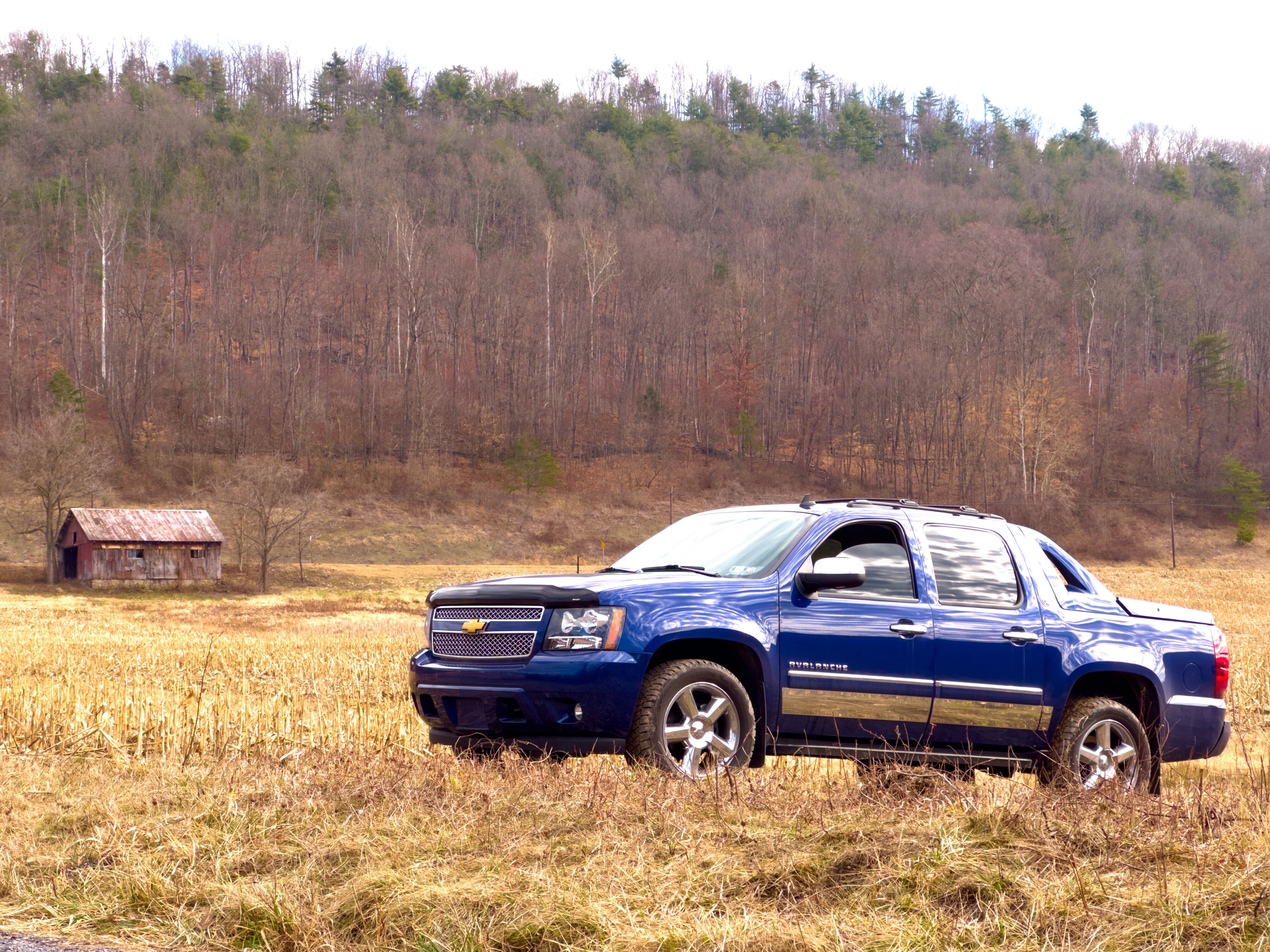
2 pointsI was on the bus yesterday and spotted that. I decided I would need a picture like that in the near future, so a snapped a shot quick.2 points
-
The problem is that some brands are regional. The French won't buy Nissans, nor will the Chinese. They'll buy Renaults. Everyone buys Jeeps. Americans won't touch Fiats, but Europeans are fine with them. Nissan does well in the US with cheap financing. So there will likely need to be some heavy rebadging going on and each brand stay in its home territory.2 points
-
2 pointsI recently read that WOW Air is shuttering. That's sad. They provided service to Europe on the cheap via Reykjavik from a lot of second tier American cities. Icelandair stays on, which is the country's flag carrier, as Air France and Lufthansa would be to France and Germany. WOW Air was a low cost alternative, similar to Southwest. They cited that they were doing fine, operating with smaller single aisle Airbus planes, and then overextended themselves with much more distant destinations for which they needed and added Airbus 330s, twin aisle aircraft with 8 seats abreast. Oh well. On the other hand, low cost Irish Ryanair has stuck to a business model of only Boeing 737s and has been around for at least a decade. If you can handle their nickel and diming for anything extra, they're a good way to go point to point within Europe. Two European carriers are actually reasonably priced for flights across the pond - Aer Lingus of Ireland and TAP Air Portugal, both national flag carriers. I've crossed the pond on both of them and they are pretty good. You just have to be on the lookout for specials. I'm all for the success of low cost carriers. Now, if they can just solve the Boeing 737 MAX's problems and get them off the ground again soon.2 points
-
2 pointsThank you Dwight, Yes in this case lack of refinement or not confidence inspiring is what I think of here. To me, be it a 30K Chevy or 73K Cadillac, this is not inspiring when put up against the competition. This is incompetence of the engineer who allowed this and the bean counter who figured people could just live with it. No need ever for these noises, especially on more expensive auto's. The noise one hears of the direct injectors is another of my pet peeves. This should not be on a luxury auto that is heard either inside or outside the auto.2 points
-
2 pointsI think more people might get it than some might think. So many people work inside cubes and the worst thing is that they are often the exact same color and shade ... from sea to shining sea! I am sure plenty of industrial psychologists have weighed in on how demoralizing they can be. I did the personalized plate thing once ... and only once. And it was on a Camaro that I once kept as a second "hobby" car ... the only car I've owned that wasn't bought new by either my parents (and then handed down) or myself. It had the 305 V8 and it was a P.O.S. Though only lightly used, I don't think it was broken in right. I've heard them called personalized plates and I've heard them called vanity plates. It must be regional, sort of like soda, pop, and soft drink.2 points
-
Another hit as FCA cuts jobs in Canada at the Mini Van assembly line. https://www.reuters.com/article/us-fiat-chrysler-canada-layoffs/fiat-chrysler-to-cut-shift-1500-jobs-at-canadian-minivan-plant-idUSKCN1R92RB 1,500 to be laid off. More signs the world needs a correction and debt needs to be paid down.2 points
-
2 points
-
I do wish that Cadillac brings back names (especially for the crossovers!). Those who own an Escalade brag about it all day.2 points
-
A DIRTY AIR FILTER WILL NOT REDUCE FUEL ECONOMY! Sounds counter intuitive, but it's true! Here's why... In a gasoline engine, the engine's output is controlled by choking it with the throttle body. It restricts the airflow to the engine at all times except when you put the gas pedal to the floor. Whatever the airflow happens to be, it is measured by the Air Flow Meter which then tells the engine how much fuel to inject. A dirty filter reduces airflow to the engine just like the throttle! The filter and the throttle restrictions combined results in the net airflow to the engine. If you have a clean filter, you'll end up using a slightly smaller throttle opening (gas pedal position) to accelerate at the same rate or maintain the same speed. If you have a dirty filter, you use a deeper throttle opening (gas pedal position). But in both cases, it is the net airflow that determines the amount of fuel you burn! The engine doesn't care what is restricting its breathing be it the throttle or the filter or both! Now, a dirty filter will limit the maximum airflow you can get to your engine. It will reduce maximum horsepower and torque. So, it will make your car slower when you are really trying to go fast. With a really dirty filter, wide open throttle may be like 70% throttle. However, that WOT application will have exactly the same power and fuel burn as 70% throttle with a clean filter. It may take you 40% throttle to maintain 70mph in top gear instead of 25% throttle.But, again, that 40% throttle will have exactly the same output and fuel use as 25% with a clean filter. To get this bad you need to not change your air filter for 300,000 miles or something.ridiculous. Even then -- when driving "normally" around town or cruising down the freeway -- it'll have NO EFFECT on your fuel economy at all! A dirty filter is like putting a limit on how far you can depress your gas pedal! A slightly dirty filter may allow you 99% of your throttle. An unchanged filter with 100,000 miles on it may limit you to 90% throttle or something. But, it'll be no different from putting a brick under your gas pedal such that you cannot depress it fully. ZERO EFFECT on your fuel economy! Don't believe me? Do a little experiment. Next time you do an oil change, don;t change the air filter (yet). Drive 10 miles down your favorite stretch of not so busy freeway at a fixed speed and measure your fuel economy with your trip computer. Now change the filter and drive down the same exact stretch at the same exact speed. You will notice ZERO difference in your mileage before and after.1 point
-
1 pointI like buying cars I can get into that moment and test drive. Tesla fails that test.1 point
-
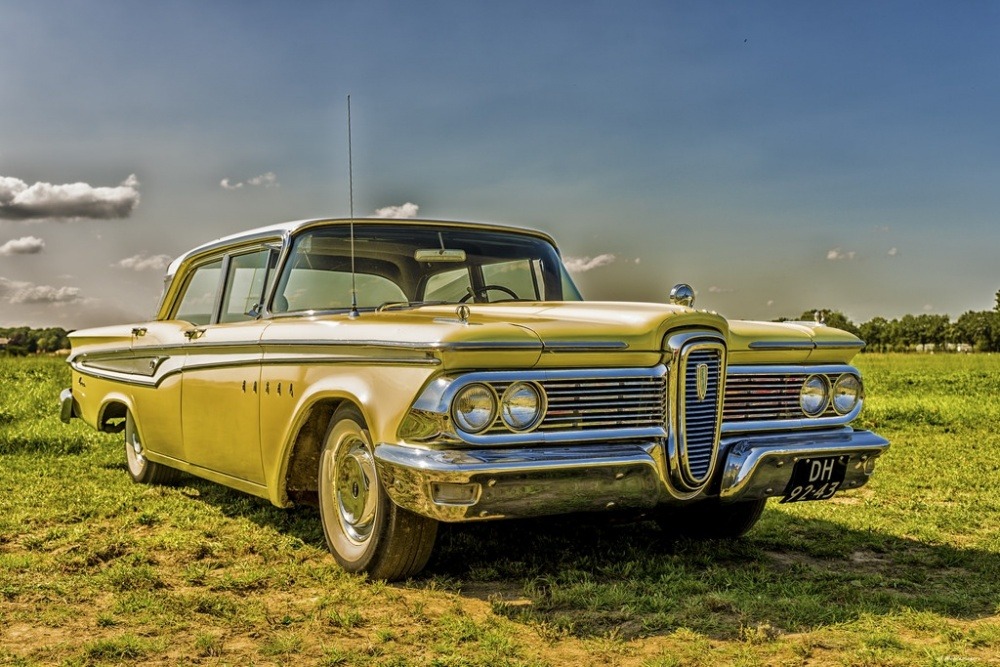
1959 Edsel Corsair! I am also keenly awaiting more inflammation about this Corsair. I will bet you a lot of money it will be cooler than the Cadillac TX4 or whatever it's called.
 1 point
 -
1 pointThat ship will be so far out of port by then... over the horizon, even1 point
-
Most W140 sedans, being top of the line, were originally upholstered in German leather. (1991-1999) BUT... going BACK IN TIME... US bound Mercedes Benz W126 sedans were upholstered in either genuine leather or MB Tex vinyl, most factory colors are available. Most W116 sedans were originally upholstered in either MB-Tex vinyl or German leather. W108 and W109 sedans were upholstered in either MB-Tex vinyl or German leather except for some Euro models The "Fintail" sedan's upholstery were available in either MB-Tex vinyl or German leather. From a website that specializes in Mercedes interior restoration materials. ? https://www.worlduph.com/mercedes_benz/1 point
-
1 point
-
1 point
-
1 pointWith Jeep and RAM... the C part of FCA is in a better position than they've been in years. They really don't need to merge with someone if they make smart use of the platforms they already have. Make a small entry-lux SUV on the Renegade platform for Chrysler in the same formula as the Buick Encore. Make a large crossover off the Pacifica, call it Aspen if you like. Make an Envision sized crossover off the Cherokee for Chrysler. Build it in the US and take all the sales from Buick. Make a new 300, Charger, and Challenger, off the Guilia platform The next Dodge Journey can be based on the extended Jeep Cherokee that we don't get. The Durango remains as is, an extended rebadge of a Grand Cherokee but with more street intentions than off-road. Sell the Chryslers and Jeeps in China and the EU. Dodge and Ram remain brands for the Americas. Punt Fiat back to Europe and leave it there. Alfa can stay if it can make a business case for itself through platform sharing.1 point
-
1 point
-
China is a very different market than what we have. They are moving to BEVs much faster. Will Daimler-BMW get to 500k units is anyone's guess, but I do think that China is where they will sell the majority of them.1 point
-
I only had an Escalade for a week as a rental and I bragged about it.1 point
-
FCA really has no debt to mention. One thing Sergio did before he died was pay that off.1 point
-
I prefer real leather also, my car has the Napa leather upgrade, I prefer to the MB Tex. But they offer leather on every car and upgraded leather to cars that do have leather standard. Those do look in great condition.1 point
-
What about on old cars without mass airflow sensors and such?1 point
-
@Drew Dowdell OK Guys, tell me what you think of my 13 year old seats in my 2006 Escalade ESV. Yes it sits in the Garage so it has added protection, but every time you open the doors you smell leather a new like smell. I am OCD about cleaning my auto's and using leather wipes to keep them clean and lotioned. There is no dirt on the head rests or around the stitched emblem. Yes there are the normal leather creases on the bottom side bolster areas, but I have seen new leather seats with this already.


 1 point
 -
1 pointDirect Injection resulted in the GREATEST LOSS OF ENGINE REFINEMENT in the last 50 years. A 1980s VW SOHC 8 valve engine is more refined at idle thann a direct injected BMW V12 of today. There is no getting around the fact that opening and shutting off a pintle with 1000+ psi of fluid pressure makes your engine clatter like a diesel. Manufacturers put acoustic insulation on their DI heads and use fuel rail accumulators to dampen the sound, but it'll never be quiet like port injectors working with tens of psi not thousands. The ONLY SOLUTION is what Toyota does on the Lexus engines. Use port injection at idle and low engine speeds. Switch on the direct injectors at higher RPMs and throttle openings. This also has the side effect of having fuel spray on the intake valves and keeping them clean of carbon deposits from the valve overlap and the PCV system. Only Lexus spends the money on having two fuel systems and two injectors per cylinder. That is why they are the king of refinement.1 point
-
1 pointYeah, it's too bad about WOW...had them here in Cleveland for about a year...my sister used WOW last year when traveling to Amsterdam for work. I'm interested in going to Iceland, on my bucket list.1 point
-
We also know BMW is very well known for underrating their engines. A "255" hp engine is very likely close to 300hp. Their previous 2.0T in the 3 Series at 240hp/255tq outran the 272hp/260tq ATS. They do, they just don't have those in "regularly available" trims. As soon as the CT5 comes out ditching that n/a 3.6, it will be great. V Sport is the 3rd engine up the line, V Series is obviously the top engine in the line, and the 3.0TT was also the top engine(above a 2.0T and the damn n/a 3.6) at the time until the 4.0TT comes/came out.1 point
-
I have no problem with faux leather seats. I just have a problem with getting them in a $40k+ car. In a Jetta... no problem.1 point
-
We need proof of this claim.. No way does it look new at 140,000 miles with a giant occupying the seat for those miles.1 point
-
1 pointBecause they lose money and their current business model isn't sustainable. From the article: It's trading that high because of the hype and that investors are wary of the other tech stocks out there.1 point
-
1 point
-
I would agree that the amount of difference is too small to measure. However, I would disagree on a few points as stated. There have been a number of tests pitting different air filters against each other on a number of criteria. Where the said differences are much more measurable were found with oiled fiber (cotton) air filters (such as K&N units). The cornerstone of oiled filter's advertising has been 'increased airflow', and therefore increased speed at a given RPM, but these comparative tests showed repeatedly that oiled filters airflow rates decreased almost from Mile 1, falling steadily and quickly dipping below traditional dry filters. IOW; they only had higher airflow rates when completely clean. This is one reason OEMs don't ever use them (maintenance is another). If one is using an aftermarket filter, this may be a measurable factor. A short stretch of highway driving is not the ideal methodology to test MPG, as at-cruise operation uses very little fuel/airflow. A much better (but harder to duplicate exactly) would be an 'around town' loop where from-stop accelerations were repeated- much more typical of real world driving and encompassing higher airflow draws. This is where drivers would be better familiar with how their vehicle was performing relative to what they are accustomed to. This is where increased throttle position to match expected/desired/usual performance has a strong potential to indeed be measurable. But again; how to accurately reproduce this loop on repeated cycles.1 point
-
1 pointIf you define "problem" as "indicative of mechanical failure or impending failure" it is not a problem. If you define "problem" as "lack of refinement or not confidence inspiring" it is a huge problem that damages the value of your brand! The LF3 (3.6TT) engine makes a rattling noise that sounds like a lose exhaust heat shield for about 5 secs when you start it. That's from the vacuum actuated turbo waste gates rattling before the engine build up enough vacuum to pull them open. The engine also makes a buzzing sound from the electric circulation pump after you shut it off for about 10 seconds. These are both normal and noted characteristics of the engine. But in a CTS VSport Premium that sells for $73K new, that is decidedly unrefined and I would have fired the engineer who allowed this kind of nonsense on the engine (were I in charge at the General).1 point
-
1 point1 pointThe MB-Tex could last longer than a lot of leather, the S-class never had MB-tex though. But anything E-class and down starts with MB-tex. And that stuff is durable, so there is a benefit there.1 point1 pointAs usual, MB gets the credit for "inventing" something that someone else invented. In this case, crossover "coupe" styling.
 1 pointAh....sunny days up ahead. EVs are gonna be profitable by 2025. ICE cars are gonna be dominant still in 2030. EVs are going to be selling like mad in 10-15 years from now. Many manufacturers are gonna stop with new ICE development sometime in 2025 or so... Car manufacturing world wide is at a slow down currently, but manufacturers are going bat shyte crazy throwing all of their R&D money on EVs and EV platforms when even Tesla is hitting a slowdown right about now... All kinds of merger talks and partnerships between different manufacturers because...sunny days up ahead. Ah those sunny sunny days. And somehow, with all these contradictory story lines, this tune seems quite fitting if you ask me. Sittin' stoned alone in my backyard Askin' myself "Why should I work so hard?" Sittin' dreamin' 'bout the days to come Half-undressed, just soakin' up the sun Sittin' here, I hope I don't get fried Two years ago, you know, I almost died And yet, there's nothin' better for your soul Than lyin' in the sun and listenin' to rock 'n roll Sunny days Oh, sunny, sunny, sunny days Ain't nothin' better in the world, you know Than lyin' in the sun with your radio1 point1 pointClever plate...I've thought of getting 'NO CUBE'. A lot of people wouldn't get understand it, though.1 pointIt will, naturally. It's just that a RWD profile tends to look more premium.1 pointI'm intrigued for obvious reasons, lol.1 pointI wish it all the success and hope folks do not confuse it with GM Corvair history.1 point1 pointGuys, the 2.0t hardly sold here anyway. The base engine is effectively the 3.6. This is a Chinese market move for a chauffeur driven car.1 point1 pointMe too. And I really dont think the "F" part of FCA is going to greenlight new engineering for new successors. They wont even greenlight the Giorgio platform for Chrysler or Dodge to use... I really hope NOBODY merges with FCA. RAM and Jeep will survive. Dodge and Chrysler wont, but continuing this way, Dodge and Chrysler wont survive anyway...and its an agonizing death as we all know its coming. Lets be honest with each other. Its coming. And...with nobody merging with FCA, Fiat and Alfa is going to the dogs too. Any serious money FCA is making IS with RAM and Jeep. And Dodge to a degree. Because the Challenger and Charger and 300 are selling at high enough numbers on a platform that has been paid for a while ago. The Durango helps a lot too...because its also on a Jeep platform that Jeep sells a ton of too. I dont think with Alfa's numbers that FCA is raking it in. Maybe Fiat in Europe is contributing to some profit? Maserati? I once supported the merger between Chryco and Fiat. But not anymore. This merger proves to be as destructive to Chryco as the one from Germany. But then again, Chryco was a goner anyway. At least we got another 2-3 years with a pseudo new Viper and a Hellcat-Demon-RedEye Challenger (Charger too). At least the FCA merger allowed Dodge annihilate the competition in this new modern era muscle car wars!1 point1 pointWould have been cool on some fronts. Dodge desperately needs to be in more niches, so does Chrysler. I dearly love the Charger/Challenger/300, and rue the day they no longer exist.1 point1 pointMuch of the overcapacity issues at FCA involve the Italian brands even being in production in the first place.1 pointThis leaderboard is set to New York/GMT-04:00


Important Information
We have placed cookies on your device to help make this website better. You can adjust your cookie settings, otherwise we'll assume you're okay to continue.